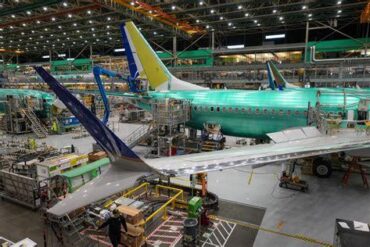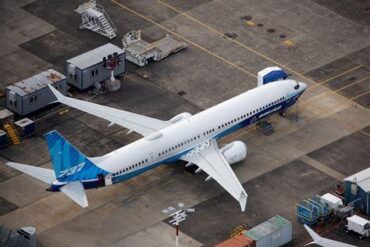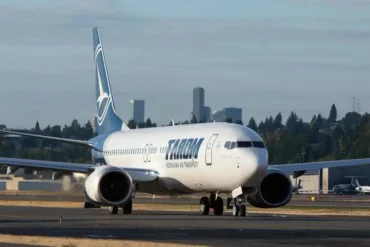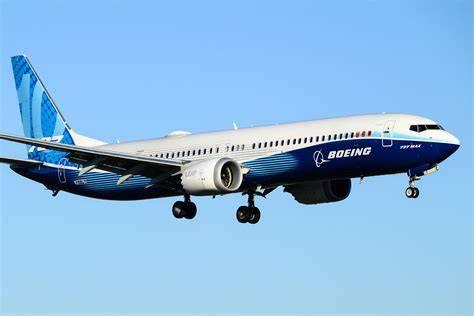
Boeing’s 737 MAX production rate in 2026 settled at roughly 42 jets per month, and that number is the single most important figure in commercial aviation this year. It is not the figure Boeing promised or the figure its customers need, but it is the rate the planemaker can sustain while converting a program recovering from a seven-year crisis into an assembly system capable of feeding a 4,813-aircraft backlog. Boeing delivered 114 737s in the first quarter of 2026 and another 129 in the second, taking the year-to-date total to 320 airframes by the end of August, an average of 40 jets per month. Deliveries lag production because jets are painted, fitted and flight-tested before handover, but the two figures track closely enough to describe a production rate of 41 to 42 aircraft per month, with 41 in September and 42 in August. The company began 2026 near that level, targeted 47 per month by mid-2026, and was still attempting to reach that figure through the autumn.
That five-aircraft monthly gap sounds trivial until multiplied across a year. 47 per month is 564 aircraft annually, the rate that would finally put Boeing within sight of the 580 737s it delivered in 2018, the last normal year before regulators grounded the type. Sitting at 42 strands roughly 60 aircraft a year on the ramp, worth billions of dollars that Boeing cannot collect until customers sign the delivery paperwork. For a company carrying $26 billion in net debt and a reputation still being rebuilt after two groundings, those sixty aircraft are a cash-flow problem rather than a statistical footnote, and they matter more than any marketing claim about recovery.
Boeing’s 2026 Delivery Rate Sits Below Its Own Target
The arithmetic explains why the ramp has been frustrating rather than failed in the aggregate. Boeing’s total through August averaged 40 a month and the rate held through September at 41, so the company needed a strong fourth-quarter push merely to stay in the low forties. In August Boeing handed over 32 MAX 8s, nine MAX 9s and a single 737-800A, a fleet concentrated almost entirely on two certified variants. The MAX 7 had not entered service, and the MAX 10 was still waiting on paperwork, so every delivery month was effectively a two-variant operation. Airlines that ordered the smallest or largest MAX variants are watching delivery slots slip while their aircraft sit unbuilt, a commercial cost that lands hardest on carriers planning entire fleets around one variant alone.
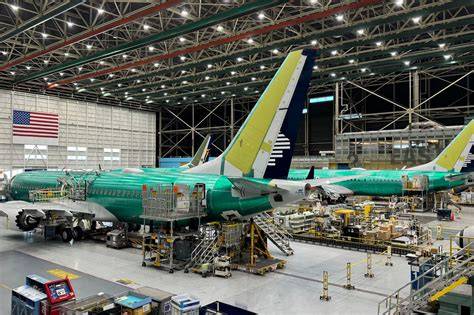
Boeing’s second-quarter filing showed exactly who is waiting. Of the undelivered MAX aircraft, roughly 264 were MAX 7s (6%), 2,550 were MAX 8s (58%), 220 were MAX 9s (5%) and 1,363 were MAX 10s (31%), which puts the two uncertified variants in front of more than a third of the entire orderbook. The MAX 8 is the workhorse of the line and the reason the rate can rise at all: its certification is settled and its supply chain mature. Until both clear, output is capped by what a single variant can absorb.
Why Boeing Cannot Reach 47 Jets A Month
Boeing CEO Kelly Ortberg said in September that stabilizing 737 MAX production at the 47-per-month target is taking “longer than expected,” and the reason is unusually specific. The constraint is no longer a regulator: the FAA once capped 737 output through a Production Limitation Record imposed after the door plug incident, yet the aircraft still do not arrive on schedule. Reuters reported that Boeing has not been able to build 737 wings fast enough to consistently feed a rate of 47 jets a month, a bottleneck sitting inside Boeing’s own supply chain rather than at a regulator’s desk or an engine manufacturer’s gate.
That distinction changes the fix. Engine shortages now constrain the whole industry, holding up A320neo deliveries and slowing the 787 below its 10-per-month target, but the 737’s immediate problem is structural assembly capacity. Three Renton lines running at 42 can absorb an occasional shortfall, but pushing all three toward 47 on the same wing feed produces the stop-start pattern Boeing has been fighting. The answer, announced in July, was to stop relying on Renton alone.
The North Line At Everett Is Boeing’s Fourth 737 Assembly Line
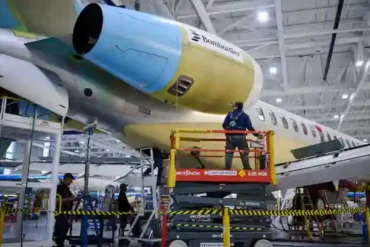
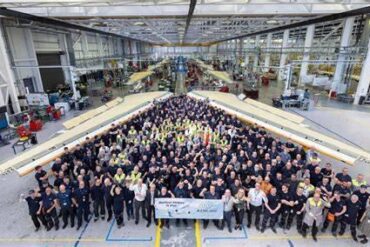
In July 2026, Boeing opened a fourth 737 production line at its Everett widebody complex, the first time in the program’s history that 737s have been assembled outside Renton. Teammates began work on the first MAX airframe built on the North Line, a facility converted and equipped with roughly $1 billion of investment. It is not there to replace Renton but to absorb component variability three lines cannot smooth out: a fourth feed point reduces the odds that one shortage drags the monthly total down with it.
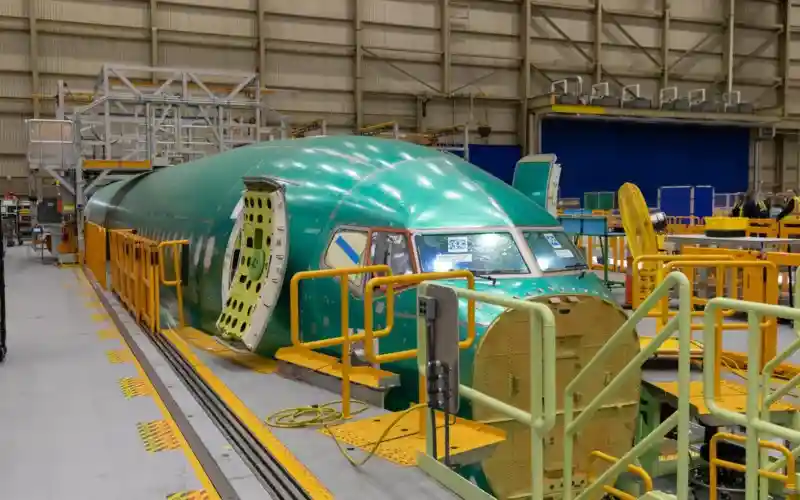
Boeing’s plan is deliberately slow, because a new line that ramps before it is stable simply imports defects into the fleet. The North Line builds at a low rate while crews work out tooling and sequencing, and the three Renton lines carry the ramp from 42 to a stable 47; only then does Everett add the next increment toward 52 aircraft per month in 2027, at which point Renton and Everett become a single river, extending toward the 70 jets per month Boeing is studying for the end of the decade as its long-term ceiling. That ceiling is a design brief, not a promise: the four lines are being configured as a single system rather than four separate workshops, the only way to move from the low forties to the seventies without repeating recent instability.
The MAX 7 Certification Adds A Delivery Bump, Not A Production Jump
The MAX 7’s certification in August was the clearest signal that the crisis is ending. After what the FAA called “almost a decade of extensive review,” the agency issued an amended type certificate and updated Production Limitation Record for the 737 MAX-7, language acknowledging years of work on complex technical issues rather than a single engineering fix. The variant was expected to reach airlines in late 2026 after Boeing spent much of the year forecasting a 2027 first delivery. Southwest told investors in September that it now expects MAX 7 deliveries before the year is out, and Reuters reported Boeing had already built 27 MAX 7s for Southwest.
Those 27 aircraft show the difference between a delivery bump and a production ramp: assembled earlier and parked, they wait for certification to turn inventory into revenue. Handing them over in the fourth quarter will lift Boeing’s delivery count without changing the production rate, and the pattern will repeat with the MAX 10, still uncertified at the time of writing. Its certification is in the final documentation phase; the last apparent obstacle cleared in early October, when the FAA’s Corrective Action Review Board found an unexpected software issue was no safety concern. Together, the 264 MAX 7s and 1,363 MAX 10s represent aircraft already in various stages of completion that will flow into fleets once each type certificate lands.
How Boeing’s 737 Rate Compares With Airbus A320 Output
The 737’s 42 per month looks more competitive against Airbus than the headlines suggest. Airbus delivered 425 narrowbodies in the first eight months of 2026, including 60 A220s, leaving 369 A320 family aircraft at roughly 46 per month: three A319neos, 136 A320neos and 230 A321neos in total. Airbus is working to raise its A320 rate toward 60 a month and aims for 70 to 75 by the end of 2027, but is likewise constrained by engine shortages and supply chain friction. Boeing’s target of 47 is thus not a number chasing a runaway rival; it is the threshold at which the 737 returns to parity in monthly output.
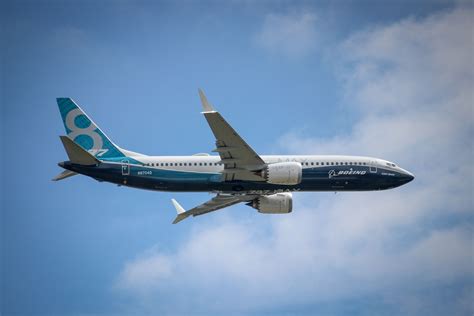
What separates them is backlog shape. Airbus reports 7,577 A320 family aircraft on order, mostly A321neos, and the A320 overtook the 737 in cumulative deliveries in early 2026 after two decades of steadier assembly. Boeing’s backlog of 4,813 737s, or 4,341 after the ASC 606 adjustment, is smaller, more concentrated in the MAX 8, and heavily exposed to variants that have only just begun to certify. A rate of 42 against an orderbook that size implies roughly nine years of production at the current pace, which is why the fourth line and the push toward 52 matter commercially as much as they do operationally.
What The 2026 Production Rate Actually Means
Boeing will end 2026 building 41 to 42 737 MAX aircraft per month and delivering close to that, a recovery unthinkable in 2024 yet short of the 47-per-month target and well below the 52 per month planned for 2027. The Everett line, the stored MAX 7s, the imminent MAX 10 certificate and the wing supply chain all point the same direction, and none delivers the step change the orderbook needs before 2027. Boeing has stopped shrinking. It has not yet started sprinting, and the distance between those two states is measured, quite literally, in the wings it manages to build each month.