President Donald Trump has opened a new front in the escalating U.S.-Canada trade dispute, targeting one of Canada’s most important aerospace manufacturers. On September 7, Trump declared that Bombardier should no longer be permitted to sell aircraft in the United States unless it begins manufacturing them on American soil. The statement, posted as Canada prepared to impose retaliatory tariffs on U.S. goods, immediately raised questions about whether Washington intends to impose an actual sales restriction or whether the threat is primarily another negotiating weapon.
Trump’s demand is particularly striking because Bombardier is already deeply integrated into the U.S. aerospace economy. The Canadian manufacturer employs thousands of Americans, operates major facilities in the country, buys components from thousands of U.S. suppliers, and manufactures important aircraft components in the United States. Consequently, any serious attempt to exclude Bombardier jets could affect American workers and companies as well as the Canadian manufacturer.
The latest confrontation also revives a dispute that began earlier in 2026, when Trump accused Canada of unfairly delaying certification of several Gulfstream business jets. At that time, he threatened to impose a 50% tariff on Canadian aircraft and even discussed decertifying Bombardier aircraft in the United States. Canada subsequently approved the Gulfstream G500, G600, G700 and G800, but the broader trade conflict between Washington and Ottawa continued.
Trump’s New Bombardier Ultimatum
Trump’s latest statement goes considerably further than the earlier Gulfstream dispute. Rather than demanding that Canada approve specific American aircraft, the president is now tying Bombardier’s access to the U.S. market directly to domestic manufacturing.
In his September 7 statement, Trump said there should be “no more selling Bombardier” in the United States and argued that the company must build in America if it wants access to the American market. He also criticized Bombardier’s products and accused Canada of treating the United States unfairly. The remarks came shortly before Canadian retaliatory tariffs on approximately $20 billion of U.S. imports were scheduled to take effect.
The immediate problem for Bombardier is that Washington has not explained precisely how such a ban would operate. A presidential social-media statement does not by itself establish a new aircraft certification regime or automatically prevent a private company from selling aircraft. Any concrete restriction would need a legal and regulatory mechanism, potentially involving tariffs, import restrictions, federal purchasing rules, or other trade authorities.
That uncertainty matters enormously in aviation. Business jets are expensive, highly regulated products that remain in service for decades. Customers need confidence not only that an aircraft can be delivered, but also that it can be registered, maintained, certified and supported throughout its operating life.
Bombardier Already Has a Major U.S. Manufacturing Footprint
The irony in Trump’s demand is that Bombardier is far from being a company without American manufacturing operations.
Bombardier says it employs roughly 3,500 people in the United States and works with approximately 2,800 American suppliers across 47 states. The company also spends more than $2.5 billion annually with U.S. suppliers. Its American footprint includes manufacturing, maintenance, service and defense-related activities.
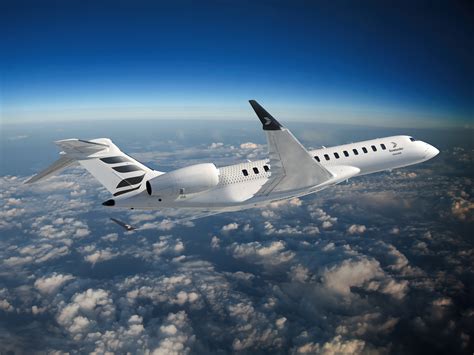
One of the clearest examples is the Bombardier Global 8000. Its wings are manufactured at Bombardier’s facility in Red Oak, Texas, while other major aircraft components are also sourced from the United States. Bombardier has additionally been expanding its American service and defense operations, including a planned facility in Fort Wayne, Indiana.
This means the phrase “build in America” is much more complicated than simply moving a production line across the border. Bombardier already participates in a North American production system in which Canadian final assembly is connected to American component manufacturing, suppliers, engines, maintenance facilities and customers.
Moving Final Assembly Would Not Be Simple
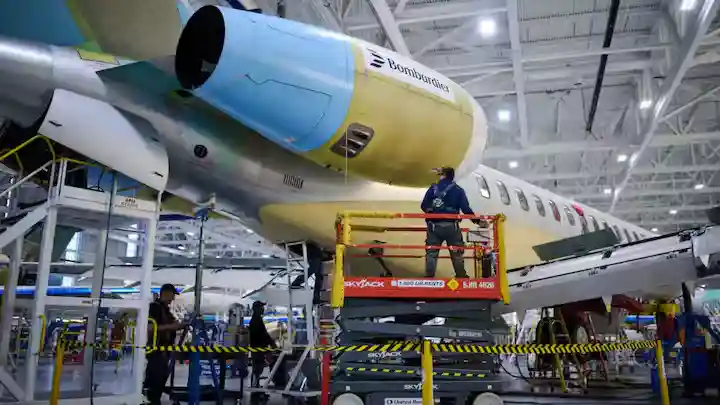
Bombardier’s current business-jet production system is built around highly specialized Canadian facilities. Challenger aircraft are associated with Bombardier’s Montreal production operations, while Global aircraft are assembled in the Toronto area. Recreating those final-assembly capabilities in the United States would require far more than constructing a large factory.
Aircraft manufacturing depends on specialized tooling, trained workers, supplier logistics, engineering certification, quality systems and years of accumulated production experience. Relocating an established assembly line could disrupt deliveries while forcing Bombardier to duplicate expensive infrastructure.
The alternative would be to create a second American assembly operation while keeping Canadian facilities active. That could satisfy a political requirement for U.S. manufacturing, but it would also require enormous capital expenditure and could increase the cost of every aircraft.
For a company operating in a relatively small but exceptionally high-value business-jet market, the commercial calculation would be difficult. Bombardier would have to determine whether the cost of establishing additional U.S. production is justified by protecting access to the world’s largest business-aviation market.
Which Bombardier Aircraft Could Be Affected?
The consequences would extend across Bombardier’s current business-jet portfolio. The company has largely transformed itself from a broad aerospace conglomerate into a manufacturer focused on Challenger and Global business jets, after exiting its commercial-aircraft programs.
The Challenger 3500 occupies the super-midsize segment and has become especially important to U.S. fractional operators. The Challenger 650 serves the large-cabin market, while the Global 5500 and Global 6500 address long-range missions. At the top are the Global 7500 and Global 8000, designed for ultra-long-range operations.
The Global 8000 is particularly significant because it represents Bombardier’s flagship technology and competes directly against Gulfstream’s newest long-range aircraft. Its advertised range reaches 8,000 nautical miles, placing it among the most capable business jets ever produced.
A U.S. sales restriction would therefore not simply affect one niche product. It could potentially disrupt Bombardier’s entire American business-jet strategy, from super-midsize aircraft to its most expensive flagship.

NetJets and Flexjet Face Significant Exposure
American fractional-ownership companies could become some of the most visible casualties of a Bombardier restriction.
NetJets has an especially large relationship with Bombardier. In 2024, Bombardier announced a firm order for 12 Challenger 3500 aircraft for the Berkshire Hathaway-owned operator, accompanied by options for another 232 aircraft. If all options were exercised, the agreement could cover as many as 244 aircraft and represent more than $6 billion in value.
Flexjet is another major Challenger operator. The company has built a substantial portion of its fractional fleet around Bombardier aircraft and has described the Challenger family as central to its operating strategy.
Airshare has also committed to additional Challenger 3500 aircraft, while Wheels Up has historically operated Challenger 300 and 350 aircraft. Consequently, any restriction covering newly manufactured Bombardier aircraft could create immediate complications for U.S. operators planning fleet replacements and expansion.
The effect would depend heavily on the eventual wording of any government action. A restriction on new imports would be very different from a broader measure affecting certification, aircraft registration, government purchases or maintenance support.
The Gulfstream Dispute Set the Stage
The current confrontation cannot be separated from the earlier Gulfstream certification dispute.
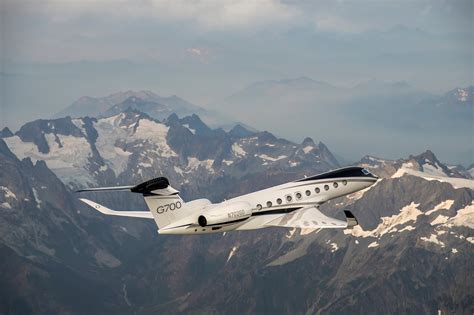
In January, Trump accused Canada of unfairly delaying certification for the Gulfstream G500, G600, G700 and G800. The aircraft had already received approval from the U.S. Federal Aviation Administration, but Canadian validation was required for easier commercial operation and sales in Canada.
Trump responded by threatening action against Bombardier, including a possible 50% tariff on Canadian aircraft. He also raised the possibility of decertifying Canadian-built Bombardier jets in the United States.
Canada subsequently approved the Gulfstream aircraft in February. The Canadian government maintained that its regulator was following the normal certification process rather than responding to American political pressure. The dispute temporarily faded, but it established a precedent for linking aviation certification with trade policy.
The 2017 CSeries Fight Offers a Warning
Bombardier has faced American trade pressure before. In 2017, during Trump’s first administration, the U.S. Commerce Department imposed proposed duties on Bombardier’s CSeries aircraft following complaints from Boeing after Delta Air Lines ordered the aircraft.
The dispute ultimately produced an unexpected result. The CSeries program became part of Airbus and was subsequently transformed into the Airbus A220, with final assembly established in Mobile, Alabama.
That history demonstrates how protectionist measures can create outcomes very different from those originally intended. An attempt to protect an American aerospace industry can sometimes encourage foreign manufacturers to establish American production, shift ownership or restructure supply chains rather than simply disappear from the market.
The same possibility exists now. If Washington genuinely wants Bombardier aircraft built in the United States, the company could eventually decide that American final assembly is preferable to losing access to U.S. customers. But achieving that outcome would take substantial investment and years of planning.
A Ban Could Also Hurt American Aerospace
The biggest complication for Washington is that Bombardier’s U.S. footprint makes a simple Canada-versus-America narrative difficult to sustain.
Every Bombardier aircraft incorporates an international network of components, suppliers and services. American engines, avionics, systems, manufacturing facilities and maintenance providers are already part of that ecosystem. Bombardier’s own U.S. investments support thousands of jobs beyond its direct workforce.
That creates a potential contradiction. A measure intended to force Canadian production into the United States could initially disrupt American suppliers that currently benefit from Bombardier’s Canadian assembly system.
There is also the customer side. American operators have invested billions of dollars in Bombardier aircraft and infrastructure. If new aircraft became unavailable, companies would have to consider alternatives from Gulfstream, Dassault or other manufacturers, potentially changing fleet strategies and delivery schedules.
What Happens Next for Bombardier?
For now, the central question is not whether Bombardier can instantly move production to America. It cannot. The more important question is what mechanism Washington might use to pressure the company.
The White House could pursue tariffs, import restrictions, procurement limitations or negotiations designed to encourage additional U.S. manufacturing. Each approach would have different legal and commercial consequences.
Bombardier, meanwhile, has already emphasized its American workforce, supplier network and manufacturing activities. The company has said it values its partnership with American companies and employees and intends to continue investing in U.S. communities.
The dispute therefore puts both sides in an unusual position. Trump wants more aircraft manufacturing inside the United States, while Bombardier can point to an existing American industrial footprint that already contributes billions of dollars to the U.S. economy.
The Bombardier showdown is ultimately bigger than one business-jet manufacturer. It tests how far Washington is prepared to use market access as leverage in aerospace and how much disruption American customers and suppliers are willing to absorb in pursuit of domestic manufacturing. With U.S.-Canada trade relations deteriorating and retaliatory tariffs now taking effect, Bombardier has once again become an unlikely symbol of a much larger economic confrontation.