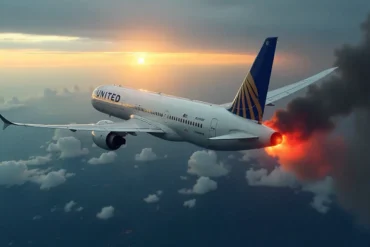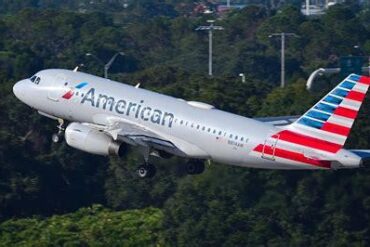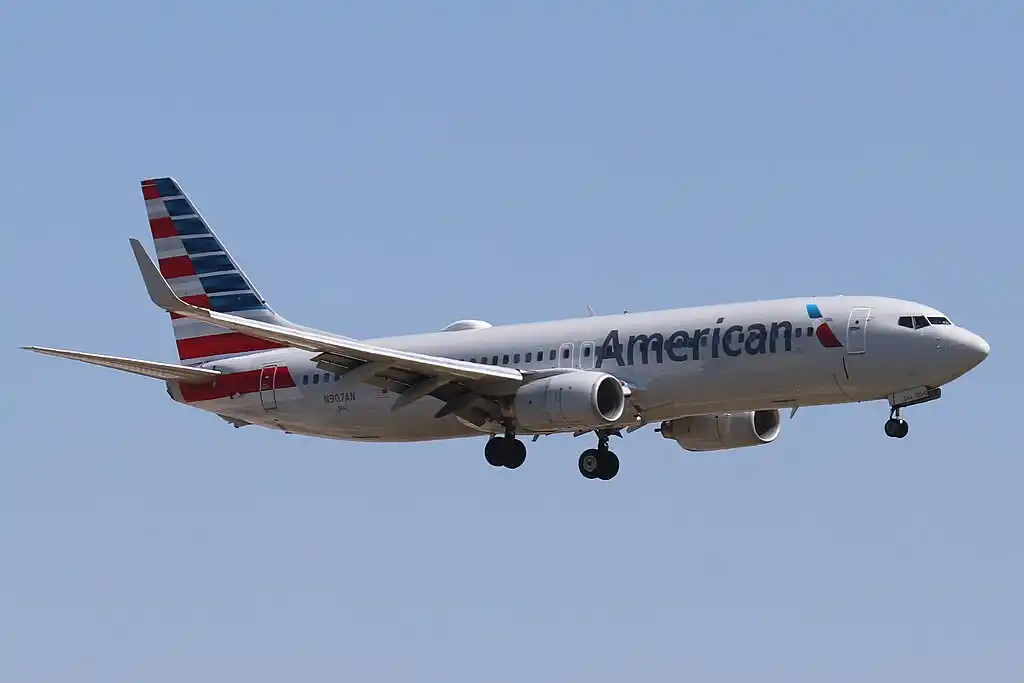
An American Airlines Boeing 737-800 bound for Dallas/Fort Worth was forced back to Chicago O’Hare International Airport on Friday, October 16, after smoke began pouring from a galley trash can minutes into the flight. The aircraft, operating as AA618, had barely cleared the Chicago suburbs when the crew declared a mayday and executed a sharp U-turn over Hinsdale, landing just 26 minutes after departure. No passengers or crew were injured, but the incident has drawn the attention of federal investigators and renewed scrutiny on one of aviation’s most overlooked safety risks: the ordinary cabin waste bin.
American Airlines Flight AA618: A Departure Cut Short at 4,875 Feet
Flight data from Simple Flying’s Live Flight Tracker shows the jet pushed back from the gate at 12:19 PM, nine minutes behind schedule, then taxied for a southwesterly departure from Runway 4R/22L. Climb performance stayed conspicuously shallow. The 737 topped out at roughly 4,875 feet (1,486 meters) before the crew reversed course, a clear sign that the pilots chose altitude discipline over attempting to troubleshoot in a climb. The decision came “out of an abundance of caution,” according to reporting from NBC Chicago, and emergency services were already staged on the runway when the aircraft touched down on 10C/28C. Although the initial radio call referenced a fire, the crew never discharged a fire extinguisher, suggesting the smoke source was controlled quickly by hand.
Why Smoke in the Cabin Demands an Immediate Return, Not a Divert
Cabin smoke ranks among the few in-flight conditions that leave pilots almost no room for negotiation. Unlike an engine anomaly that can be monitored across hundreds of miles, combustion inside the pressurized envelope can compromise avionics, contaminate breathing air with toxic gases, and incapacitate crew within minutes. A galley trash can is a deceptively dangerous ignition point because it sits steps from the flight attendant jumpseat and often holds paper, plastic wrap, and discarded coffee filters. The O’Hare crew’s choice to declare a mayday rather than a routine priority call reflects standard doctrine: treat any unidentified smoke source as a potential Class A fire until proven otherwise, and put the aircraft on the ground at the nearest suitable runway.
The Aircraft: N974AN, a 25-Year-Old Workhorse Still Earning Its Keep
The jet at the center of the incident carries US registration N974AN and manufacturer’s serial number 30098. American took delivery on October 31, 2001, following a first flight on October 10 of that year, meaning the airframe has logged roughly a quarter century with the same carrier. It is powered by two CFM56-7B24 engines and configured with 16 domestic first-class seats, 14 Main Cabin Extra seats, and 120 standard main cabin seats. The aircraft remained parked at O’Hare after the return and was scheduled to resume service the next morning operating AA2896 to Dallas/Fort Worth. American’s fleet includes 303 examples of the type, per ch-aviation, making the 737-800 the backbone of its domestic narrowbody network.
Passenger Recovery and the Three-Hour Ripple Effect
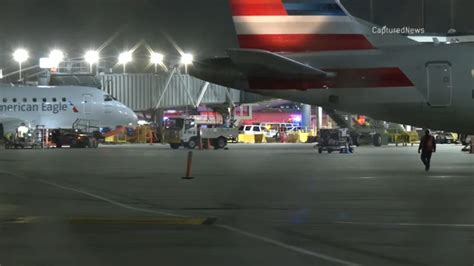
Once responders cleared the aircraft, travelers disembarked and returned to the terminal, where American rebooked them onto a replacement service under the same AA618 flight number. That second departure left O’Hare at 4:04 PM and reached Dallas/Fort Worth at 6:07 PM after a two-hour, three-minute leg, putting arrivals three hours and 14 minutes behind the original 2:53 PM schedule. The gap illustrates how a 26-minute flight can cascade into an afternoon of disruption across a hub operation, particularly when a jet must be inspected, cleaned, and cleared before returning to revenue service.
FAA Investigation and the Broader Trash Can Fire Problem
The Federal Aviation Administration has opened an investigation into what ignited the galley waste bin, and findings could shape future guidance on liner standards and disposal procedures. The case echoes a familiar pattern: smoke, not flame, is usually what crews detect first, because smoldering material in a confined bin produces dense vapor long before visible fire. Quick crew action, disciplined radio communication, and the willingness to surrender schedule integrity for safety margin turned a potentially catastrophic scenario into a textbook recovery with zero injuries.
What AA618 Teaches About Emergency Decision-Making at O’Hare
The 26-minute turnaround demonstrates why proximity to a major hub matters. Had AA618 already crossed into cruise over Missouri, the nearest suitable airport might have been hundreds of miles away, forcing the crew to manage smoke exposure for far longer than the eight or nine minutes it took to return to O’Hare. Instead, rescue crews were positioned before the wheels touched down, passengers were on the ground within the hour, and the airframe was quarantined for inspection under controlled conditions. The event also underscores that passenger safety on modern jetliners depends less on dramatic extinguisher deployments and more on early detection, conservative judgment, and the institutional habit of treating smoke as an emergency from the first whiff.