Commercial aviation relies on thousands of procedures designed to keep flights safe under every imaginable circumstance. Among the most recognizable signals in aviation is squawk code 7700, a four-digit transponder code that instantly tells air traffic control that an aircraft is experiencing a general emergency. While headlines frequently report that an airliner “squawked 7700” before diverting or returning to the airport, the phrase is often misunderstood by the traveling public.
Many passengers assume that a flight squawking 7700 is moments away from disaster. In reality, the code serves as an efficient communication tool that enables pilots, controllers, and emergency services to coordinate rapidly whenever abnormal situations arise. More often than not, aircraft declaring emergencies land safely without passengers ever facing significant danger.
Understanding what squawk code 7700 actually means offers valuable insight into how modern aviation manages risk and why commercial flying remains one of the safest forms of transportation in the world.
After all, in aviation, rapid communication can make all the difference, and few signals are more universally recognized than 7700.
How Aircraft Squawk Codes Work
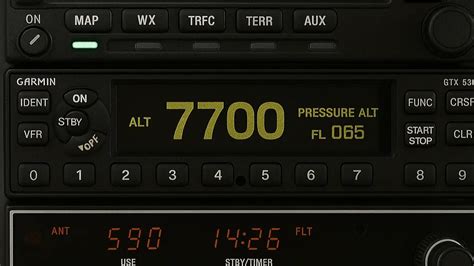
Every commercial aircraft carries a device known as a transponder. This electronic system communicates continuously with ground-based radar installations and air traffic control facilities, transmitting information that allows controllers to identify, monitor, and separate aircraft safely.
When an aircraft departs, air traffic controllers assign a unique four-digit transponder code, commonly called a squawk code. This code appears on controller radar displays, enabling them to distinguish one aircraft from hundreds of others sharing the same airspace.
Under normal circumstances, pilots maintain the assigned code throughout the flight. However, aviation regulations worldwide reserve several special codes that instantly convey specific emergency conditions without requiring lengthy radio transmissions.
The three most widely recognized emergency squawk codes are:
| Squawk Code | Meaning |
|---|---|
| 7500 | Unlawful interference or hijacking |
| 7600 | Radio communication failure |
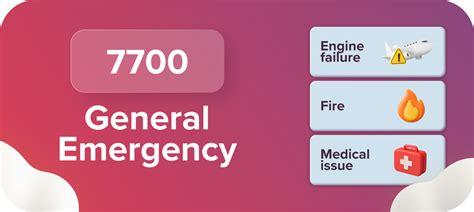
| 7700 | General emergency |
These codes are standardized internationally through the rules established by the International Civil Aviation Organization, ensuring that controllers in every country interpret them identically.
The brilliance of the system lies in its simplicity. Pilots facing a developing emergency may have only seconds to communicate. By entering 7700 into the transponder, the crew instantly alerts every controller monitoring the aircraft that urgent assistance or priority handling may be required.
What Does Squawk Code 7700 Actually Mean?
Squawking 7700 indicates that the aircraft is experiencing a general emergency. Importantly, this designation covers an enormous range of situations, many of which are precautionary rather than catastrophic.
The code does not mean:
- The aircraft is crashing.
- The aircraft has lost all engines.
- The crew has lost control.
- An accident is inevitable.
Instead, it means that pilots believe circumstances justify immediate priority and additional support.
Aviation philosophy strongly favors caution. If flight crews encounter an abnormal situation that could potentially worsen or requires expedited handling, they are encouraged to declare an emergency rather than delay action.
Controllers receiving a 7700 alert immediately recognize that the flight’s needs supersede routine traffic flows. Other aircraft may be rerouted, sequencing adjusted, and emergency responders placed on standby.
In many cases, passengers onboard may remain entirely unaware that an emergency has even been declared.
How Air Traffic Controllers Respond to a 7700 Declaration
Once controllers observe the emergency code on radar screens, an orchestrated response begins almost instantly.
Air traffic controllers first establish or maintain direct communication with the crew to determine the nature of the emergency. They gather essential information, including:
- The type of problem.
- Fuel remaining.
- Number of people onboard.
- Pilot intentions.
- Desired airport and runway.
Controllers then reshape surrounding traffic patterns to provide the distressed aircraft with the safest and quickest route.
At exceptionally busy airports such as Chicago O’Hare International Airport, Hartsfield-Jackson Atlanta International Airport, or Los Angeles International Airport, this priority handling can involve delaying departures, extending holding patterns for arriving traffic, or clearing large sections of airspace.
The objective is simple: reduce pilot workload and eliminate unnecessary complications during an already stressful situation.
The Many Situations That Can Trigger Squawk 7700
Public imagination often associates emergency declarations exclusively with severe mechanical failures. In practice, crews may select 7700 for an extensive range of operational scenarios.
Engine Problems
Engine-related abnormalities remain among the most frequent reasons for emergency declarations.
Modern jet engines are remarkably reliable, yet unusual vibrations, abnormal instrument readings, oil pressure warnings, or suspected damage can prompt pilots to declare an emergency. Even if the aircraft remains fully controllable, obtaining priority handling provides valuable operational flexibility.
A single engine issue aboard a twin-engine airliner rarely places the aircraft in immediate peril. Commercial aircraft are specifically designed and certified to continue flying safely following the loss of one engine.
Smoke or Fire Warnings
Aviation treats every smoke indication with extreme seriousness.
Smoke can rapidly compromise visibility, damage aircraft systems, and threaten passenger safety. Because crews cannot immediately determine whether a warning represents an actual fire or a sensor malfunction, standard procedures typically favor declaring an emergency immediately.
Even a faint odor in the cabin may justify squawking 7700 until pilots confirm conditions onboard.
Pressurization Failures
Cabin pressurization systems enable aircraft to cruise safely at high altitudes.
Should pressurization deteriorate unexpectedly, crews may need to perform emergency descents to lower altitudes where breathable air exists naturally. Such events require immediate coordination with controllers because rapid descents can intersect busy airspace.
Medical Emergencies
Medical events account for a significant percentage of emergency declarations worldwide.
Passengers suffering cardiac arrest, severe respiratory distress, strokes, or other life-threatening conditions may require immediate diversion to the nearest suitable airport. In these situations, the emergency concerns a person onboard rather than the aircraft itself.
Bird Strikes
Bird strikes occur thousands of times annually.
Although most cause minimal damage, collisions involving engines or critical structures may compel pilots to declare emergencies until the aircraft’s condition can be fully assessed.
The famous bird strike involving US Airways Flight 1549 remains one of aviation’s most remarkable examples of emergency decision-making.
Real-World Examples of Flights That Squawked 7700
Emergency declarations occur more frequently than many travelers realize, yet the overwhelming majority conclude safely.
One of the most widely reported examples occurred in January 2024 involving an aircraft operated by Alaska Airlines. A Boeing 737 MAX 9 experienced a dramatic cabin panel failure shortly after departure from Portland International Airport. The flight crew declared an emergency, returned to Portland, and landed safely.
Another historic case involved US Airways Flight 1549. After departing LaGuardia Airport, the aircraft struck a flock of geese, causing both engines to fail. Captain Chesley Sullenberger successfully ditched the aircraft in the Hudson River, and all 155 occupants survived.
More routine examples occur almost daily across global aviation networks. Flights frequently return shortly after takeoff due to warning indications, hydraulic abnormalities, unusual odors, or maintenance messages.
What these events share is that squawking 7700 rarely signifies catastrophe. Instead, it reflects aviation’s commitment to managing uncertainty proactively.
Why Pilots Are Trained Never to Hesitate
Modern airline training emphasizes decisive action.
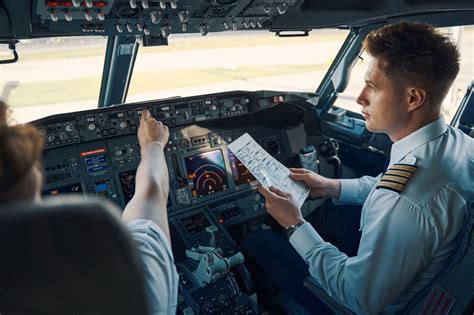
Pilots are taught that delaying an emergency declaration can remove valuable options later. Consequently, crews often adopt the philosophy: “declare early, cancel later if necessary.”
Consider an aircraft departing with a warning light indicating a possible hydraulic problem. The aircraft may continue flying perfectly normally, but if the issue worsens unexpectedly, having already declared an emergency ensures immediate support is available.
This conservative approach stems directly from decades of accident investigation. Aviation history repeatedly demonstrates that crews who treat uncertain situations seriously frequently achieve better outcomes.
Professional pilots do not view emergency declarations as failures. Rather, they regard them as standard safety tools designed to enhance operational margins.
What Happens After a Flight Squawks 7700?
Once an emergency declaration occurs, numerous organizations begin working together.
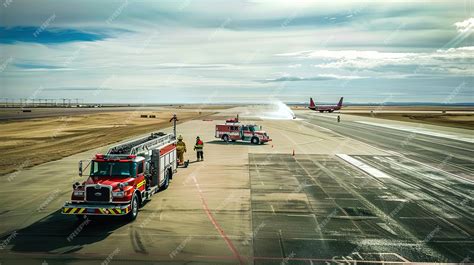
Air traffic controllers coordinate routing and traffic separation. Airport rescue and firefighting teams position themselves strategically near the runway. Airline operations centers monitor developments and provide technical support. Maintenance specialists prepare for post-flight inspections.
Depending on circumstances, crews may request additional time to complete emergency checklists, burn excess fuel, or configure the aircraft for landing.
When the aircraft arrives, emergency vehicles often line taxiways or stage adjacent to runways. While passengers may perceive this response as alarming, these precautions represent routine aviation practice.
Following touchdown, several outcomes are possible:
- The aircraft taxis normally to the gate.
- Emergency crews conduct visual inspections.
- Firefighters examine brakes or landing gear.
- Medical personnel board immediately.
- Maintenance teams inspect suspected faults.
Many flights resume service only after comprehensive technical evaluations confirm airworthiness.
Why Squawk Code 7700 Remains Essential to Aviation Safety
Despite remarkable advances in satellite communications, data links, and digital flight management systems, the humble four-digit emergency code remains indispensable.
Its enduring value stems from three characteristics: speed, simplicity, and universal recognition.
With only four numbers entered into a cockpit transponder, pilots can instantly communicate urgency to controllers anywhere in the world. No language barriers exist. No lengthy explanations are required. Every aviation professional understands precisely what the code signifies.
Most importantly, squawk code 7700 exemplifies modern aviation’s overarching safety philosophy: identify risks early, communicate clearly, and mobilize resources before a situation deteriorates.
For passengers reading headlines about flights that “squawked 7700,” the most reassuring fact is often the simplest one: in the vast majority of cases, the system works exactly as intended, and the aircraft lands safely with everyone onboard protected.