Understanding Squawk Codes: Aviation’s Silent Communicators
In the intricate world of aviation safety and surveillance, squawk codes play a crucial yet often overlooked role. These four-digit numerical codes, assigned by Air Traffic Control (ATC), act as a digital handshake between an aircraft and ground controllers. As aircraft traverse national and international airspace, squawk codes ensure constant, clear communication, contributing significantly to flight safety, airspace management, and emergency response protocols.
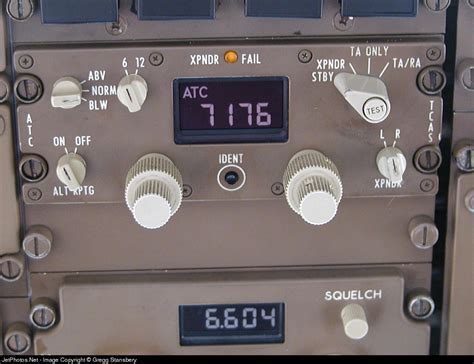
Squawk codes are not just random numbers. They are deliberately assigned within a specified range of values—each digit ranging from 0 to 7, allowing for 4,096 possible combinations. This octal limitation is dictated by Mode A and Mode C transponders, which translate squawk inputs into standardized radar returns. Once a pilot inputs a squawk code into the aircraft’s transponder, the code is instantly transmitted to radar stations, enabling real-time identification and monitoring of the aircraft’s position, altitude, and velocity.
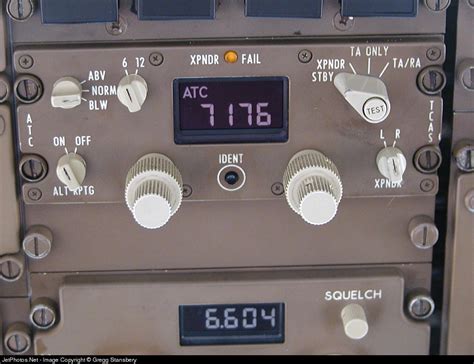
The Purpose and Functionality of Squawk Codes
Every aircraft, from commercial jets to private planes, is issued a unique squawk code before departure. This code remains associated with the aircraft throughout its assigned flight path, unless a change is requested mid-flight. This may occur when entering restricted airspace, transitioning between ATC zones, or switching to regional control centers.
Upon squawk code input, the transponder continuously sends signals to ground-based radar systems. These signals, or “pings,” carry encoded information tied to the squawk code. On ATC radar displays, the aircraft appears with a corresponding data tag, making it distinguishable among potentially hundreds of airborne vehicles.
This digital tagging system allows controllers to manage the complex choreography of flight operations with efficiency. Squawk codes reduce verbal communication overhead, freeing up radio bandwidth for critical instructions and emergency alerts.
Ensuring Aircraft Separation and Safety
Perhaps the most vital application of squawk codes lies in airspace deconfliction. Modern air traffic relies on precise positioning and separation standards. Aircraft flying at similar altitudes within congested air corridors must maintain minimum separation thresholds, both laterally and vertically. Squawk codes make this possible by allowing ATC to distinguish and track multiple aircraft concurrently.
A single incorrect squawk code—or worse, a deactivated transponder—can cause significant confusion and increase the risk of mid-air collisions. In high-density environments such as the New York, London, or Tokyo Flight Information Regions (FIRs), even a brief disruption in transponder communication can be a safety-critical event.
Reserved Emergency Squawk Codes
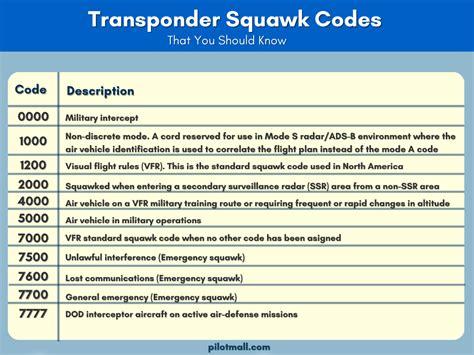
While most squawk codes are assigned dynamically for routine operations, several are universally reserved by the International Civil Aviation Organization (ICAO) for emergency use. These codes instantly alert all monitoring agencies and ATCs of a critical in-flight situation.
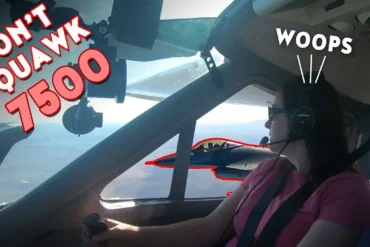
Squawk 7500 – Unlawful Interference (Hijacking)
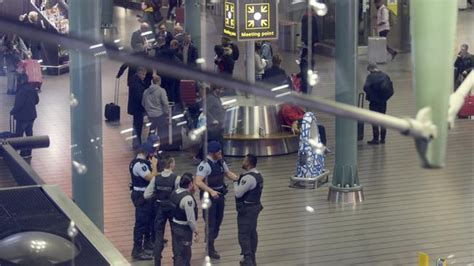
This code is used when an aircraft has been hijacked. Upon receiving a 7500 code, ATC initiates security protocols, notifies law enforcement and military units, and prepares for crisis intervention. Due to its severity, Squawk 7500 is carefully monitored and rarely entered unless absolutely necessary. Its misuse can lead to widespread panic, airport lockdowns, and law enforcement deployment.
Squawk 7600 – Radio Communication Failure
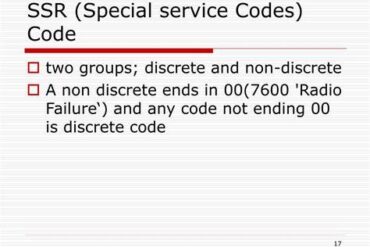
An aircraft transmits 7600 when it experiences loss of radio communication with the control tower. ATC will attempt to reach the aircraft through secondary communication methods, such as data links or visual light signals. Pilots are trained to follow standard lost communication procedures, which include continuing the flight as previously cleared and landing at the destination airport unless instructed otherwise.
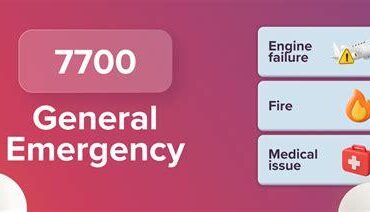
Squawk 7700 – General Emergency
This is the broadest emergency code, indicating any situation where the aircraft is in distress. It may involve mechanical failure, medical emergencies, engine anomalies, or even structural issues. Squawk 7700 automatically alerts all nearby ATCs, who will prioritize the aircraft for landing clearance and route assistance.
Case Studies: Real-World Incidents Involving Squawk Codes
Air Europa 7500 False Alarm
In 2019, a Madrid-bound Air Europa A330 triggered a full-scale emergency after a pilot inadvertently entered Squawk 7500 during boarding. The airport was shut down, passengers were evacuated, and tactical units deployed—all because the code signaled a hijack scenario. This incident highlights how critical and sensitive squawk code inputs are, especially during ground operations.
British Airways A320 – Cabin Anomaly
In December 2022, a British Airways Airbus A320 squawked 7700 and returned to London Heathrow following reports of a strange odor in the cabin. While the incident was resolved without injury, it demonstrated how squawk codes give pilots the flexibility to initiate immediate action without waiting for voice confirmation.
Korean Air Flight – 9/11 Incident
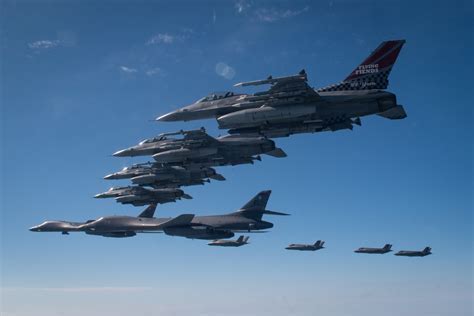
One of the most dramatic misuses of squawk codes occurred during the September 11, 2001 attacks. A Korean Air flight from Seoul to New York was mistakenly thought to be hijacked after ATC requested the crew to input Squawk 7500 based on a suspicious message. The crew complied, not knowing the implication, leading to the evacuation of Canadian cities and military engagement protocols. The incident was later deemed a misunderstanding, yet it underscored the grave consequences of squawk code miscommunication during times of elevated national security.
Transponders: The Backbone of Squawk Codes
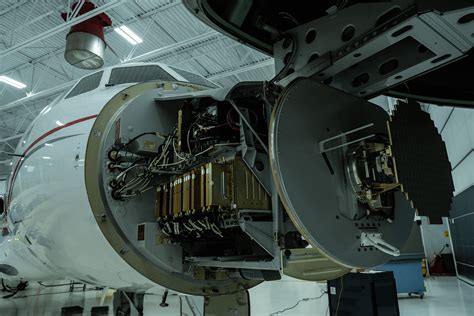
Modern aircraft are equipped with Mode S transponders, which provide not only squawk code transmission but also automatic dependent surveillance-broadcast (ADS-B) capabilities. These systems transmit precise aircraft data—including GPS position, barometric altitude, and aircraft ID—directly to ATC and other aircraft.
Mode S transponders have significantly improved situational awareness in complex airspaces and have been integral to NextGen air traffic systems. They allow squawk codes to be paired with advanced telemetry, ensuring accuracy in emergency scenarios and minimizing the chances of miscommunication.
The Future of Squawk Codes in Evolving Airspace
With air traffic projected to double by 2040, the aviation industry is exploring ways to modernize communication systems while maintaining backward compatibility with existing infrastructure. Digital datalink systems, satellite-based tracking, and artificial intelligence routing aids are becoming commonplace. However, squawk codes remain a fallback standard—their simplicity, speed, and universal recognition make them invaluable in both conventional and disrupted communication scenarios.
As urban air mobility (UAM) concepts like eVTOLs and autonomous drones enter controlled airspace, squawk code systems will likely evolve to accommodate new vehicle classes and higher traffic volumes. Integrating these platforms with existing air traffic management (ATM) will require updated protocols, but the fundamental logic of squawk codes—signal, identify, respond—will continue to underpin global aviation safety.
FAQ
What is a squawk code and why is it important?
A squawk code is a four-digit identifier entered into an aircraft’s transponder. It enables ATC to monitor and communicate with the aircraft effectively. These codes are vital for maintaining safe separation and rapid response in case of emergencies.
What happens if a pilot enters the wrong squawk code?
Entering an incorrect squawk code can lead to ATC confusion, loss of aircraft identification, or trigger unnecessary emergency protocols. In worst-case scenarios, it may cause airspace violations or national security alerts, as demonstrated in multiple real-world incidents.
Are squawk codes the same worldwide?
Yes, while most squawk codes are assigned dynamically by local ATC, certain emergency squawk codes like 7500, 7600, and 7700 are internationally standardized under ICAO regulations. This ensures consistent response protocols regardless of geographic location.