Morse Code is a unique form of communication that was originally designed for sending text messages letter by letter via telegraph systems. Over time, it has been adapted for wireless use, including signal lamps and audio devices, as well as in long-range radio communications and navigation.
In the 1830s, several inventors in Europe, England, and the United States were working on long-distance communication systems using wires. Among them were Samuel Morse, Joseph Henry, and Alfred Vail, who created what they called an electrical telegraph system. This system sent electrical pulses through wires to activate an electromagnet at the receiving end. The electromagnet could then make marks on paper, produce sounds, or light up a bulb. To make this system practical, a standardized transmission code was essential.
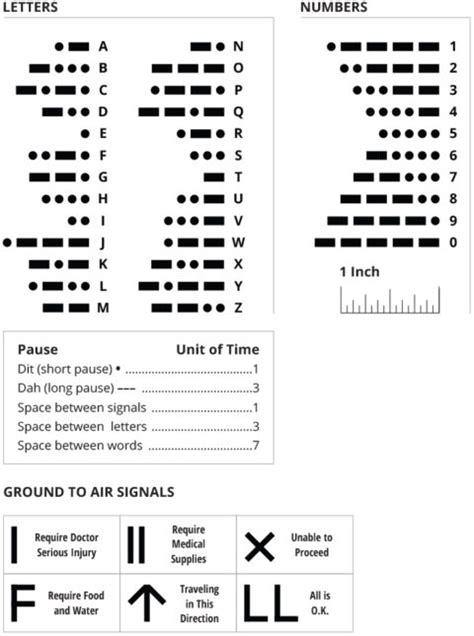
Samuel Morse laid the groundwork for the code that carries his name, but many others also contributed to its development. The International Morse Code represents each letter of the basic Latin alphabet, Arabic numerals, and a limited set of punctuation marks and procedural signals. These elements are encoded as sequences of short and long electrical pulses known as “dots” (short) and “dashes” (long), or “dits” and “dahs.” Here’s a brief overview of the code:
A (a) · − B (b) −· · · C (c) −· −· D (d) −· · E (e) · F (f) · ·−· G (g) − −· H (h) · ·· · I (i) · · J (j) · − − − K (k) − · − L (l) · − · · M (m) −− N (n) −· O (o) − −− P (p) · −−· Q (q) −−· − R (r) · −· S (s) ·· · T (t) − U (u) ·· − V (v) · · · − W (w) · − − X (x) − · ·− Y (y) −· − − Z (z) −−· · 1 · − −−− 2 ·· −−− 3 · ·· −− 4 ··· · − 5 · · · · · 6 −· · · · 7 − −· · · 8 − −−· · 9 − −−−· 0 − −−−− Period [ . ] ·− ·− ·− Comma [ , ] − − ··− − Question [ ? ] · · − −· · Exclamation [ ! ] ·− ·− − − Parenthesis Open [ ( ] − ·− − · Parenthesis Close [ ) ] −·− − ·− Colon [ : ] − −−· · · Semi Colon [ ; ] − · − ·− · Start −· −· − End of Work · · · −· − New Page · −· −· Wait · −· · · Understood · · · −· Error · · · · · · · ·
For effective communication, specific transmission protocols are vital for Morse Code. The dot is the basic time unit, while the dash lasts three times longer. The time space between parts of a character equals a dot, between characters is a dash, and between words is two dashes.
In aviation, Morse Code has historically been used for long-range communication, proving more reliable than early voice circuits. Aircraft had dedicated radio operators and often utilized trailing wire antennas for in-flight communication. Ground navigation aids continuously transmitted their alphanumeric identification in Morse Code, a practice still in use today. For example, the VOR station at Manchester Airport is identified as MCT, and this code is transmitted in Morse on its radio frequency. Pilots can confirm that the station is operational by listening to its Morse signal. If a facility is not functioning properly, it may transmit the sequence T-E-S-T (−· ·· · −) to indicate it should not be used. To ensure safe navigation, pilots must identify stations before relying on them for guidance. Many modern navigation receivers automatically convert Morse Code into displayed letters, making identification easier.