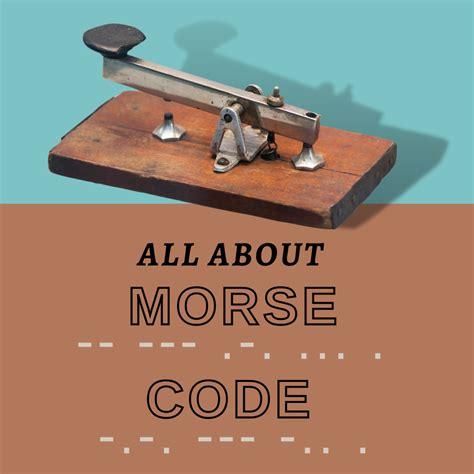
Morse code, once the lifeblood of long-distance military communication, has seen its prominence decline dramatically in the digital age. Born out of the genius of Samuel Morse and Alfred Vail, this dot-and-dash language revolutionized the way humans communicated across vast distances. However, in the highly digitized 21st century, it now plays a far more limited role within the armed forces. And yet, even in the face of rapid technological evolution, Morse code has not been completely abandoned — especially not by the U.S. Navy.
The question of whether the U.S. Navy still uses Morse code isn’t simply a matter of technological progression. It’s also about redundancy, resilience, and survival in hostile or degraded communication environments. Although the heyday of Morse code has long passed, it retains a sliver of its former relevance in a very specific set of circumstances.
The Legacy of Morse Code in Naval Communication
The U.S. Navy was one of the earliest military adopters of Morse code, integrating it into shipboard communication as early as the 19th century. With the ability to transmit messages across oceans, Morse code became the backbone of strategic communication — enabling not just tactical coordination but also real-time updates across the globe during major conflicts like World War I and World War II.
In these times, Morse code was used extensively through radio transmissions and visual signaling, including blinker lights, signal flags, and even heliographs. Navy Radiomen — later known as Information Systems Technicians — were trained extensively in Morse code transmission and reception, often reaching speeds of over 20 words per minute.

As decades passed, however, technology surpassed the capabilities of Morse code. The advent of satellite communication, encrypted radio channels, and automated digital data links made the once-crucial skill seem increasingly antiquated.
A Quiet Retirement: The Phasing Out of Morse Code
By the 1990s, it was clear that Morse code was nearing obsolescence in mainstream military use. The final blow came in 1999, when the global maritime community — including the U.S. — officially replaced the Morse code-based distress signal “SOS” with the Global Maritime Distress and Safety System (GMDSS). This digital communication platform, used widely on U.S. Navy aircraft carriers, offers far more efficient and automated emergency signaling.
Soon after, the Navy formally discontinued routine training in Morse code for most personnel. Flashing light signals — one of the last remaining visual Morse applications — were also phased out as a primary method of communication. Instead, military ships began using secure digital systems, often automated and far less prone to human error.
Still, the Navy never completely severed its ties with Morse code. While no longer mainstream, it survives as a redundant backup system — not unlike an old compass kept beside GPS for emergencies.
The Current Role of Morse Code in the U.S. Navy
Though largely removed from day-to-day operations, Morse code retains a strategic and tactical niche aboard U.S. Navy vessels. It serves as a fail-safe communication method, particularly useful in situations where other systems might fail or when ships are under radio silence protocols.
Modern visual signaling using Morse code is still technically supported through:
- Signal lamps (Aldis lamps): These are high-intensity lights capable of blinking Morse messages between ships.
- Flag signaling: Rare but still recognized, this allows for Morse-based communication through sequences of nautical flags.
However, even this version of Morse signaling has been modernized. Encoders and decoders are now computerized, eliminating the need for sailors to memorize and manually interpret code. This automation speeds up transmission while reducing the likelihood of error.

This use case has become increasingly rare, and only specific roles — such as cryptologic technicians or sailors involved in emergency operations — receive training that includes Morse code today. The system is primarily used in:
- Ship-to-ship communication during radio silence
- Visual signaling when electronic systems fail
- Training exercises involving analog fallback scenarios
The Evolution of Morse Code Training in the Military
The once intensive Morse code training regimen has been streamlined significantly over the years. In 2007, the traditional 21-week course was slashed to just 16 weeks. Now, most Morse code training is self-paced, and can be completed in under a month.
The training responsibility has also shifted branches. In 2015, the U.S. Air Force took over the Morse instruction program, relocating it to Goodfellow Air Force Base in San Angelo, Texas. According to David Germain, head of the program, Morse code is still taught because it is:
“Cheap, easy, effective, and reliable to use. There will always be a need for it.“
Germain’s sentiment echoes a practical understanding of military preparedness. In environments where satellites may be jammed or electronics compromised, Morse code remains a dependable alternative — simple, effective, and resistant to cyber threats.
Why the Navy Keeps Morse Code Alive — Barely
The U.S. Navy’s retention of Morse code isn’t due to nostalgia. It’s about strategic resilience. In naval warfare, even momentary lapses in communication can spell disaster. With modern adversaries developing advanced electronic warfare capabilities, including signal jamming and cyber sabotage, Morse code remains a last-resort method of ensuring communication continuity.
In essence, it serves a role similar to that of manual compasses, paper maps, and analog systems — tools that might seem obsolete but are kept operational just in case the digital systems fail. Morse code’s extreme simplicity makes it incredibly hard to disrupt.
Moreover, some of the United States’ adversaries and allies still use Morse code in certain operations, especially where electromagnetic stealth is prioritized. Knowing how to interpret such signals gives Navy personnel a tactical edge in intelligence gathering and decoding.
The Cultural Impact and Symbolic Power of Morse Code
Despite its operational decline, Morse code has left a cultural and symbolic imprint on the Navy. From the tapping of POWs communicating through walls to its appearance in military ceremonies and traditions, Morse code endures as a symbol of military ingenuity and resilience.
The famous “SOS” — three dots, three dashes, and three dots — remains universally recognized. Even civilians are often taught the sequence in survival courses, and knowing it could be life-saving in isolated situations, with nothing more than a flashlight, mirror, or whistle to transmit it.

The Final Word: A Legacy Preserved Through Utility
So, does the U.S. Navy still use Morse code? The short answer is yes — but not in the way it once did. Today, Morse code occupies a backup role, largely eclipsed by encrypted digital systems and satellite communications, but it is never fully forgotten.
Its survival is a testament to its simplicity, durability, and universal recognizability. As long as naval ships sail in contested waters, far from digital infrastructure or under threat of cyberattack, Morse code will remain on standby — a silent signal ready to shine through the darkness when all else fails.
In the theater of modern warfare, where complexity can be a vulnerability, sometimes the oldest tools are the most reliable.