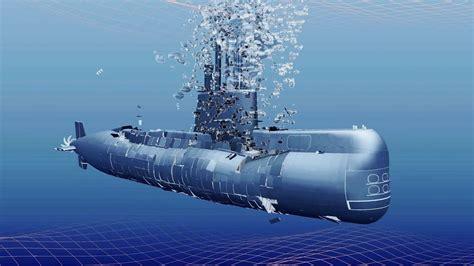
The ocean’s deepest regions remain one of the most hostile environments humans attempt to explore. Beneath the surface lies a world governed by crushing pressure, freezing temperatures, and complete darkness. When a submarine or submersible descends thousands of feet below the waves, it enters a realm where physics becomes brutally unforgiving. A submarine implosion is not a slow leak or a dramatic flooding scene like those portrayed in films—it is a catastrophic structural collapse that occurs in milliseconds.
Understanding what happens during an implosion requires looking at the immense forces present in the deep ocean. At sea level, the atmosphere presses down with roughly 14.7 pounds per square inch (PSI). This pressure is barely noticeable because humans are adapted to it. However, underwater pressure increases rapidly with depth. By the time a vessel reaches 13,000 feet beneath the surface, like the depth reached by deep-sea exploration vehicles visiting the Titanic wreck, the surrounding pressure climbs to more than 6,000 PSI.
That means the hull of a submersible is enduring thousands of pounds of force pushing inward from every direction. Every square inch of the vessel must withstand this relentless squeeze. If even a tiny weakness develops—whether in a weld, a joint, or a composite material layer—the ocean does not hesitate. It rushes in with devastating speed.
Why Deep-Sea Pressure Is So Destructive
Unlike aircraft or spacecraft, which are engineered primarily to contain pressure inside, submarines must perform the opposite task. They are designed to keep immense pressure out. This distinction creates a radically different engineering challenge.
Water is dense and incompressible compared with air, meaning the deeper a vessel travels, the greater the surrounding force becomes. At extreme depths, the pressure presses equally from all directions—above, below, and along every surface. The hull must distribute this stress evenly to avoid structural failure.
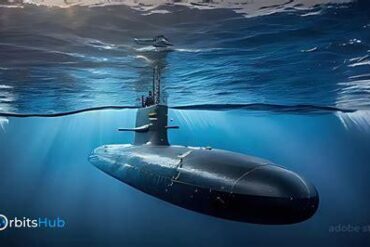
To manage these forces, most military submarines rely on thick steel or titanium hulls shaped into cylindrical forms. Cylinders naturally distribute pressure along their curved surfaces, minimizing stress concentration. These vessels undergo years of testing, repeated inspections, and strict operational limits to ensure structural integrity.
Experimental deep-sea submersibles sometimes use alternative materials such as carbon fiber composites. Carbon fiber is lightweight and exceptionally strong under tension, but its behavior under compression is less predictable. Metals tend to bend or deform before breaking, offering warning signs like dents or structural fatigue. Carbon fiber, by contrast, can fail suddenly.
Inside composite structures, microscopic damage can accumulate invisibly. Engineers call this phenomenon delamination, where layers within the material begin separating from one another. Tiny cracks propagate through the composite layers until the structure can no longer withstand the crushing pressure outside.
When that failure point arrives, the collapse is almost instantaneous.
The Violent Physics of a Submarine Implosion
When a hull fails at extreme depth, the ocean rushes inward at extraordinary speed. The pressure difference between the inside and outside of the vessel causes water to accelerate through the breach at velocities exceeding 1,500 miles per hour.
In practical terms, the submarine does not simply flood. Instead, the surrounding water crushes the structure inward so violently that the entire hull collapses. The air trapped inside the vessel compresses rapidly, generating enormous heat and shock energy.
Within fractions of a second, the submarine is effectively crushed like an empty soda can. The implosion releases an intense burst of energy as the internal atmosphere collapses. The rapid compression of air can even produce temperatures comparable to a brief flash of combustion.
For anyone inside the vessel, the event happens faster than human perception. Experts in underwater robotics and deep-sea engineering often note that the crew would likely never even realize what was happening. The structural collapse occurs in milliseconds—far quicker than the brain can process the situation.
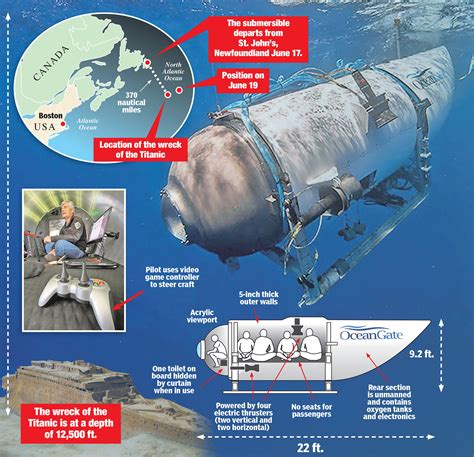
Lessons from Historical Submarine Implosions
While modern headlines have drawn attention to deep-sea exploration accidents, submarine implosions are not a new phenomenon. Naval history contains several tragic examples that demonstrate how unforgiving deep-sea pressure can be.
One of the most famous incidents occurred in 1963 with the USS Thresher, a nuclear-powered submarine undergoing deep-diving tests in the Atlantic Ocean. A faulty weld in a seawater pipe reportedly failed, allowing water to flood into the engine room. The electrical systems malfunctioned, and the crew lost control of the ballast tanks that normally help regulate depth.
Without the ability to expel water and regain buoyancy, the submarine descended past its crush depth—the point where the hull can no longer resist external pressure. The vessel imploded, killing all 129 crew members aboard. The disaster remains one of the deadliest submarine accidents in history.
Five years later, another U.S. submarine vanished under mysterious circumstances. The USS Scorpion disappeared in 1968 while returning to Norfolk, Virginia. Months later, investigators discovered the wreck nearly 10,000 feet beneath the Atlantic Ocean.
The submarine’s hull had split apart under immense pressure. Although the exact cause remains debated—ranging from battery failure to a malfunctioning torpedo—most theories conclude that the vessel sank below its safe operating depth before the ocean crushed it.
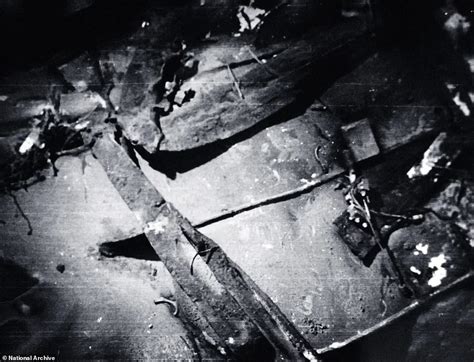
What Remains After an Implosion
The aftermath of a submarine implosion is starkly different from typical shipwrecks. When surface vessels sink or aircraft crash into water, investigators often find large intact sections of wreckage. In an implosion, the destructive forces are far more severe.
The hull almost always fails at its weakest structural points, such as material junctions, access hatches, or connections between components. Once the collapse begins, shock waves ripple through the vessel as the outer structure folds inward.
What remains is typically a scattered debris field across the seafloor. Pieces of metal may be twisted beyond recognition, structural components ripped apart, and internal equipment shattered.
Search teams studying implosion sites often find only fragments: a distorted titanium cap, sections of steel plating, or mechanical components separated from the main structure. In many cases, the central hull—the portion that once held the crew—has been completely destroyed.
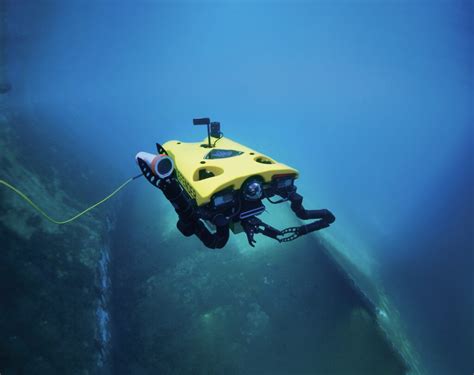
Modern recovery missions rely heavily on remotely operated vehicles (ROVs) and deep-sea sonar to locate and examine the debris. These robotic systems map the ocean floor and identify wreckage fragments, allowing investigators to reconstruct the sequence of failure.
Across decades of submarine disasters—from USS Thresher to USS Scorpion and other deep-sea incidents—the pattern remains consistent. Once a vessel descends beyond the structural limits of its hull, the ocean exerts forces no engineering mistake can forgive.
An implosion is not merely an accident; it is the inevitable outcome of physics overwhelming human design. At extreme depths, pressure never relents. The ocean simply continues pushing until the structure fails, and when it does, the collapse is instantaneous.