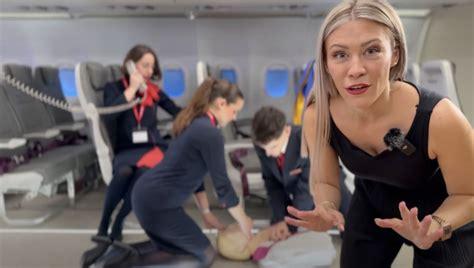
Most travelers see airline safety rules as routine announcements repeated before every flight. Seatbelts, tray tables, upright seats, open window shades, devices in airplane mode, remain seated when the sign is on. Familiar words often become background noise. But inside the cabin, those instructions are never random. Every rule exists because somewhere in aviation history, something went wrong.
Flight attendants understand this better than anyone. They are not simply there to serve drinks or point toward exits. Their primary role is safety, emergency response, evacuation management, conflict control, and passenger protection. When a traveler ignores instructions, it does not create a minor inconvenience. It can disrupt carefully planned procedures designed to protect hundreds of people in a confined space thousands of feet above the ground.
Passengers often assume nothing serious will happen if they stand early, unbuckle during turbulence, or grab a suitcase in an evacuation. In reality, small acts of non-compliance can quickly become major risks. What looks harmless from seat 24A can appear dangerous from the jumpseat.
By the time cabin crew give a direct instruction, they usually have a reason that passengers cannot yet see. That reason may be turbulence ahead, smoke investigation, a medical issue, taxiway congestion, suspicious behavior, or a developing emergency.
Why Safety Rules Exist on Every Flight
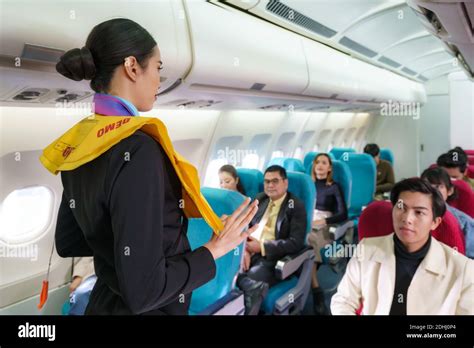
Commercial aviation is built on layers of protection. Aircraft are engineered with redundancies, pilots follow strict procedures, and cabin crew enforce operational rules that reduce risk during critical moments. Safety rules are one of those layers.
Take the seatbelt sign. Many passengers treat it like a suggestion. Flight attendants know sudden turbulence can strike without warning. A calm cabin can become violent in seconds. Unbelted passengers may hit overhead bins, armrests, other travelers, or even the ceiling. Loose children, laptops, drinks, and bags can also become hazards.
The request to raise tray tables and return seatbacks upright before takeoff and landing is equally important. During an evacuation, blocked movement costs time. Aviation certification standards require rapid evacuation, often within 90 seconds under extreme conditions. Narrow aisles and crowded rows do not forgive obstacles.
Open window shades are another misunderstood rule. Cabin crew need visibility outside to assess fire, smoke, debris, water, or blocked exits. If the crew cannot see external danger quickly, evacuation decisions slow down.
These procedures are simple because emergencies are not.
What Flight Attendants Notice During Boarding
Boarding is not just about scanning boarding passes and greeting customers. It is one of the most important observation periods of the entire flight. Cabin crew quietly assess the mood and readiness of the cabin.
They look for intoxicated passengers, escalating arguments, aggressive behavior, confusion, illness, suspicious baggage handling, and anyone unable or unwilling to follow instructions. A person loudly refusing basic rules on the ground is a far bigger problem once the aircraft door closes.
Experienced flight attendants also watch body language. Someone overly agitated, heavily impaired, or confrontational may create safety issues later. If necessary, crew can alert gate agents, supervisors, pilots, or airport security before departure.
Many inflight incidents begin with warning signs during boarding. That cheerful hello at the door often comes with a professional risk assessment behind the smile.
The Most Common Rules Passengers Ignore
Not every violation is dramatic. Most are ordinary habits that passengers underestimate.
One of the biggest examples is standing up before the aircraft has parked. The wheels may be on the ground, but taxiing aircraft can brake suddenly. A standing passenger can fall instantly, often pulling others down.
Another common issue is using overhead bins while the seatbelt sign remains on. During turbulence, an open bin door plus shifting luggage is a bad combination.
Some travelers also remove seatbelts immediately after takeoff or refuse to wear them low and tight across the lap. Others ignore crew requests to store bags fully under the seat or in overhead bins, leaving evacuation obstacles in foot space.
Then there is headphone isolation. Passengers wearing noise-canceling headphones through safety announcements sometimes miss urgent commands later. In an emergency, seconds matter, and repeated instructions waste them.
What Happens If Someone Refuses to Comply
Cabin crew are trained to de-escalate first. Most conflicts start with a polite reminder, then a firmer instruction if needed. The goal is compliance, not confrontation.
If a passenger still refuses, the matter becomes official. The crew document behavior, inform the purser or lead attendant, and notify the pilots. Depending on severity, consequences can escalate quickly.
If the aircraft is still on the ground, the traveler may be removed before takeoff. That often means meeting airport security at the gate and losing the trip entirely.
If the aircraft is airborne, options become more serious. Authorities at the destination can be requested to meet the flight. In severe cases, pilots may divert to another airport. That means delays for everyone, operational disruption, missed connections, and potentially enormous costs.
Passengers who caused the diversion may face fines, civil claims, airline bans, or criminal charges depending on jurisdiction and behavior.
Ignoring a flight attendant is not like ignoring a restaurant server. It can be treated as interference with safety duties.
Why Emergency Evacuations Become Chaotic
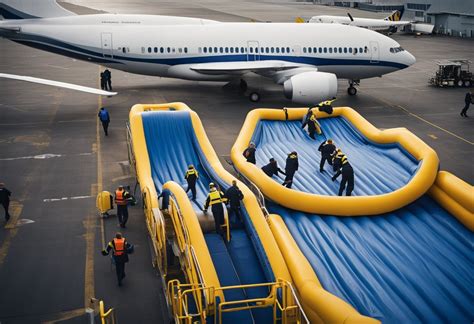
Nothing reveals passenger psychology like an evacuation. Alarms sound, smoke may appear, commands are shouted, exits open, slides deploy—and some people still stop to collect baggage.
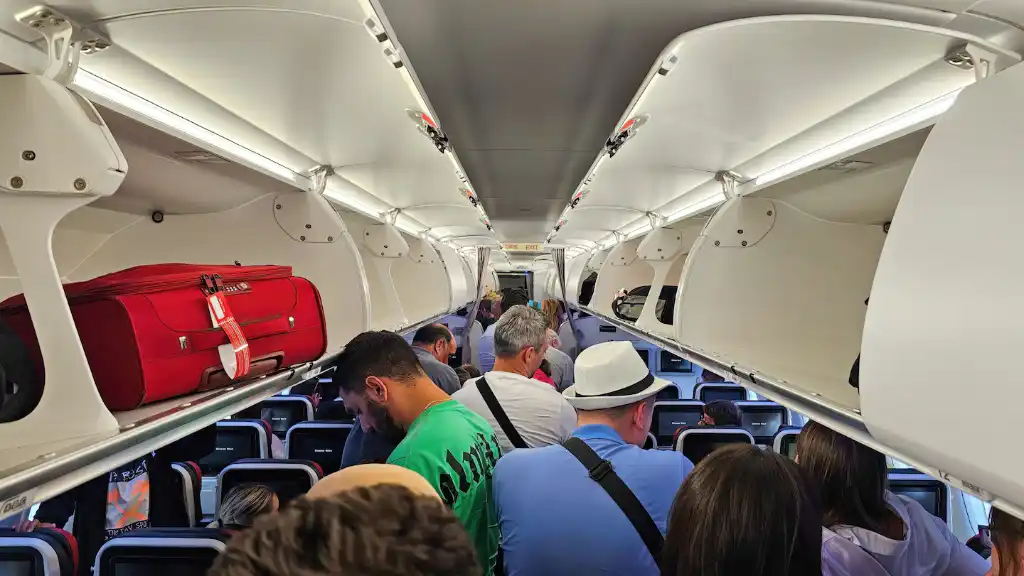
This happens repeatedly around the world. Travelers reach for backpacks, roller bags, laptops, and souvenirs while others wait trapped behind them. It is difficult to overstate how dangerous this is.
Suitcases jam aisles. Hard luggage can tear evacuation slides. Delays trap passengers behind smoke or fire. Every pause multiplies panic.
Many people do it because stress drives strange decisions. In crisis, some freeze. Others cling to possessions because belongings feel normal in an abnormal moment. A passport, wallet, phone, or laptop may seem essential. But no object is worth slowing the exit path for an entire cabin.
Flight attendants shout “Leave everything!” for a reason. They are trying to save time, and time saves lives.
Real Incidents That Proved the Point
History offers painful lessons.
During the Asiana Airlines Flight 214 crash in San Francisco in 2013, many survived because cabin crew acted decisively under terrifying conditions. Yet reports and images showed some passengers leaving with baggage despite visible danger.
In the British Airways Flight 2276 engine fire evacuation in Las Vegas in 2015, passengers removed luggage during escape. Investigators later noted that behavior increased risk.
In the Aeroflot Flight 1492 accident in Moscow in 2019, baggage retrieval reportedly slowed evacuation from a burning aircraft. Delays inside a smoke-filled cabin can become fatal with horrifying speed.
On the positive side, the 2024 evacuation of Japan Airlines Flight 516 drew praise because passengers reportedly left hand luggage behind, allowing a smoother and faster escape.
The pattern is clear: when passengers listen, survival odds improve.
Why Some Travelers Break Rules Anyway
The reasons are surprisingly human.
Some passengers feel flying anxiety and cope by mentally dismissing safety information. If they do not think about danger, they feel calmer.
Others are tired, rushed, stressed, or irritated after security lines, delays, missed sleep, family logistics, and cramped seating. In that mindset, even simple instructions can feel like one demand too many.
A few travelers mistake confidence for competence. Frequent flyers sometimes believe experience exempts them from procedures. Ironically, routine familiarity can create complacency.
Then there are entitlement cases: people who assume personal preference outranks shared safety. These are the passengers who say, “I know the rules, but…”
Cabin crew hear that phrase often. It never improves the situation.
The Hidden Role of Flight Attendants
Many passengers only notice service moments—meals, drinks, blankets, trash collection. The unseen side of the profession is far more intense.
Flight attendants train for firefighting, decompression response, medical emergencies, CPR, security threats, evacuations, dangerous goods awareness, crowd control, and survival procedures. Recurrent training ensures skills remain sharp.
When crew insist on compliance, they are applying training built from accident investigations and real-world events. Every command is shaped by lessons learned, often at high historical cost.
That is why tone sometimes changes from friendly to firm. It is not personal. It is procedural.
If smoke entered the cabin, no one would ask for a “customer service style” response. Urgency sounds urgent because it should.
How Passengers Can Make Flights Safer
Good passengers do more than sit quietly. They become part of the safety system.
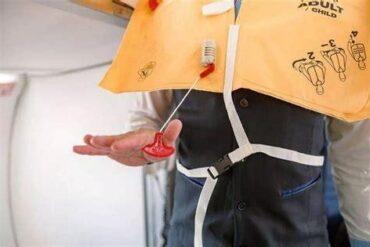
Watch the briefing even if you have flown a hundred times. Aircraft types differ. Exit locations differ. Life vest designs differ. Safety cards matter more than people admit.
Keep your seatbelt fastened whenever seated. Turbulence does not schedule appointments.
Store bags correctly. Keep aisles clear. Remove headphones when crew make announcements. If seated in an exit row, take the responsibility seriously.
During abnormal events, follow commands immediately and avoid debate. The crew may know something you do not.
And if evacuation happens, leave belongings behind. Your suitcase can miss you for a few hours. Your life should not miss you forever.
What Consequences Can Follow After Landing
Many disruptive passengers assume the matter ends once the aircraft reaches the gate. Often, that is when consequences begin.
Authorities may board first. Statements are taken from crew and witnesses. Video evidence from passengers or cabin systems may exist. Airlines can place travelers on internal no-fly lists or broader partner restrictions.
Civil penalties can be steep. If a diversion occurred, costs may include fuel, landing fees, crew duty disruptions, hotel rebooking, passenger reaccommodation, maintenance checks, and schedule knock-on effects.
In some jurisdictions, interfering with crew duties is a criminal matter. A moment of stubbornness at 35,000 feet can become months of legal trouble on the ground.
Final Thoughts From the Cabin
Passengers rarely see the full picture from their seat. Flight attendants do. They see weather reports, passenger behavior patterns, cabin hazards, time pressure, and the fragile balance required to move hundreds of people safely through a metal tube in the sky.
That is why safety rules deserve respect, not eye-rolls.
Most flights are uneventful precisely because aviation takes small risks seriously before they become large ones. Fasten the belt. Stay seated when told. Listen during briefings. Leave bags behind if it ever matters.
These actions seem minor—until the one day they are not.
And if a flight attendant gives a firm instruction, it is worth remembering a simple truth: they are not trying to control your trip. They are trying to protect everyone on it.