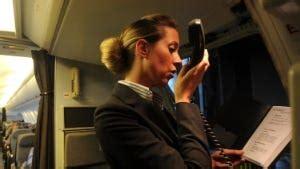
The aviation industry has long celebrated the balance between efficiency, profitability, and passenger comfort. Yet, when it comes to aircraft interior features, particularly on new narrowbody models like the Airbus A321XLR, flight attendants’ voices often go unheard. These frontline professionals, who spend hours navigating cramped aisles, managing complex service routines, and ensuring passenger safety, provide invaluable insight into how interior layouts affect both operations and customer experience. Despite this, airline decision-makers frequently overlook these warnings, prioritizing financial metrics and production timelines over human factors.
The Airbus A321XLR, a narrowbody aircraft designed for “long and thin” routes such as New York to Edinburgh, exemplifies this tension. Introduced with high expectations, it promised airlines the ability to expand internationally without the operational costs of a widebody aircraft. The aircraft features premium cabins, a transatlantic range, and an optimized layout aimed at maximizing seating capacity. However, early reports from flight attendants revealed a starkly different reality. Issues including cramped galleys, awkward lavatory placements, and compromised crew rest areas were consistently highlighted, yet many airlines initially dismissed these concerns.
The most immediate issue stems from the galley, the operational heart of inflight service. Flight attendants describe the standard Airbus galley as small, cluttered, and ergonomically challenging. Limited storage space makes managing trash and meal service difficult, particularly on flights exceeding ten hours. Extended oven racks and compact carts further complicate meal preparation, slowing service and creating bottlenecks in narrow aisles. These operational inefficiencies directly impact passenger experience, particularly in premium cabins, where delayed or disrupted service undermines the value of higher fares.
Lavatory placement presents another persistent challenge. On the A321XLR, one lavatory is positioned at the front of the aircraft, shared by business class passengers, pilots, and crew, while three are located at the rear. This distribution creates constant congestion, forcing flight attendants to manage passenger flow while simultaneously handling service duties. Unlike widebody aircraft with designated crew rest areas, the A321XLR offers only a curtained-off row of seats at the rear, with limited privacy and no reclining functionality. The design sacrifices comfort for operational economy, yet its implications on crew alertness and morale are profound, especially on long-haul flights.
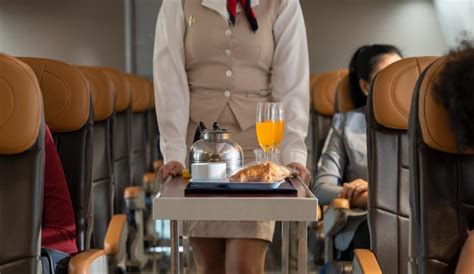
Service flow in the cabin is severely affected by the narrow layout and poorly positioned facilities. Flight attendants often struggle to navigate the aisles, particularly during peak service periods. Pre-departure routines, such as offering welcome drinks in premium cabins, are disrupted because boarding occurs at door 1L, blocking access and creating congestion. Meal trays in economy and premium economy are smaller and require stacking, further slowing service. The cumulative effect is a workflow that is both physically taxing and mentally draining, impacting both crew performance and passenger satisfaction.
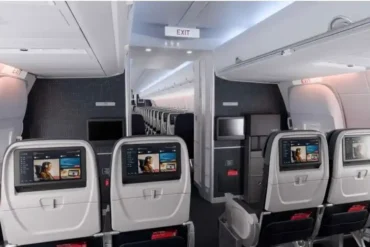
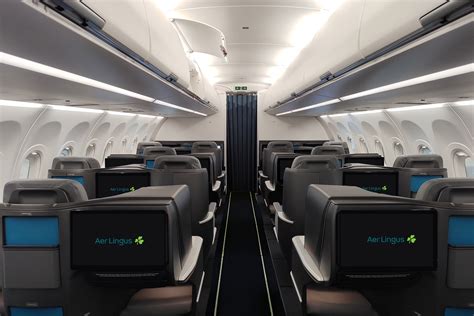
Passengers themselves have reported discomfort due to the herringbone business class configuration, where seatbacks face the window rather than the aisle. This space-saving arrangement limits outside views and has been colloquially referred to as “coffin class” by some travelers. While overhead bins have been enlarged, their low positioning contributes to a cramped cabin feeling. Every movement, from turbulence to passenger passage, is more pronounced, emphasizing the trade-off between seat density and comfort. Flight attendants note that these conditions make delivering premium-level service challenging, often leaving them with little opportunity to maintain the polished service standards expected by passengers paying for higher-tier experiences.
The disconnect between airline executives and frontline staff often originates from the decision-making hierarchy. Aircraft interiors are primarily configured by airlines, based on cost, operational efficiency, and projected revenue per seat. While manufacturers provide technical input, flight attendants’ operational concerns rarely drive design choices. Historically, consulting cabin crew during layout planning has been minimal, with some exceptions in business jets or regional aircraft projects. Financial imperatives overshadow human factors, creating a systemic disregard for crew feedback. Airlines rarely conduct comprehensive tests of service flow in live operational conditions, instead relying on theoretical layouts and seating charts.
Operational stress also influences staffing decisions. Veteran flight attendants sometimes opt out of flying the A321XLR due to its challenging working conditions, leaving junior crew to navigate complex service routines. This trend exacerbates morale issues and can affect retention rates, creating a feedback loop where the very professionals best equipped to provide actionable insights are absent from the conversation. Airlines that fail to heed these warnings risk operational inefficiencies, increased service complaints, and ultimately reputational damage.
Several airlines have begun to acknowledge these challenges through retrofitting and reconfiguration. Qantas, for instance, removed one row of economy seats on its fourth A321XLR to accommodate an additional lavatory, addressing the congestion in the rear cabin. American Airlines reduced its A321XLR order, shifting focus to A321neo and widebody aircraft, and re-evaluated cabin processes to improve workflow. United Airlines adopted a less-dense configuration of 150 seats to mitigate service bottlenecks. While these adjustments are positive, they underscore the reactive nature of responses to flight attendants’ concerns rather than proactive collaboration during design.
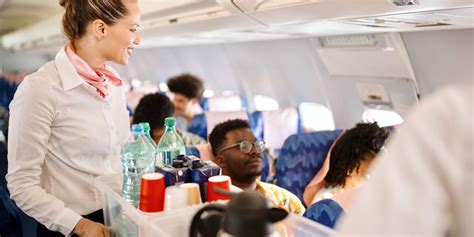
One reason warnings are often ignored is the perceived lack of direct economic impact. Airlines prioritize revenue per seat, operational efficiency, and fuel economy—metrics that are easier to quantify than service flow or crew comfort. Flight attendants’ observations, though precise and data-driven in their own way, are often dismissed as anecdotal or subjective. This short-sighted approach overlooks the indirect costs associated with low morale, slower service, and customer dissatisfaction, all of which can erode brand loyalty and passenger retention over time.
Another contributing factor is the novelty of long-haul narrowbody operations. Airlines are experimenting with using aircraft like the A321XLR on routes traditionally reserved for widebody jets. This experimentation brings unforeseen challenges in layout optimization and workflow. Flight attendants’ feedback becomes critical in these scenarios, yet the novelty can also be used as justification to delay incorporating changes, with airlines waiting for a larger dataset of operational experience before committing to retrofits or process redesigns.
The A321XLR also highlights a broader industry trend: the tension between maximizing aircraft range and optimizing cabin ergonomics. Long-range narrowbody jets are inherently constrained by fuselage width, limiting space for galleys, lavatories, and crew rest areas. While engineers can improve seat and storage efficiency, some challenges are structural, leaving flight attendants to cope with limitations that directly affect service delivery. The result is an operational paradox: aircraft designed for efficiency simultaneously generate inefficiencies for those tasked with keeping service smooth and passengers comfortable.
Passenger perception further complicates the equation. Business and premium economy travelers expect a level of service commensurate with their fare, and any disruption or discomfort is immediately noticeable. Flight attendants bear the brunt of passenger complaints, even when the root cause is structural or layout-related. Their warnings, if heeded earlier, could prevent dissatisfaction, but the delayed response cycle means that airlines often implement changes only after passenger complaints reach critical levels or negative press emerges.
Despite these challenges, some manufacturers are beginning to recognize the value of consulting flight attendants during design. Bombardier, for instance, integrates service testing into aircraft development for select models, allowing cabin crew to identify workflow bottlenecks before aircraft enter operational service. Such practices, however, are still the exception rather than the norm, and most narrowbody designs remain heavily influenced by commercial and engineering priorities rather than operational ergonomics.
In the case of the A321XLR, industry responses suggest a slow shift toward acknowledging flight attendants’ expertise. Retrofitting aircraft with additional lavatories, less-dense seating configurations, and revised service processes demonstrates the tangible impact of operational feedback. Yet, these solutions are often applied reactively, after initial service challenges and passenger complaints have highlighted deficiencies. Proactive integration of flight attendant input could have prevented these issues, saving airlines time, resources, and negative publicity.
The challenges extend beyond physical infrastructure. Service training, crew scheduling, and procedural workflows must adapt to the realities of a narrowbody aircraft on long-haul routes. Boarding procedures, meal service timing, and aisle management all require adjustment, demanding that crew expend additional energy and focus compared to widebody operations. Without acknowledging these factors in aircraft design, airlines risk chronic inefficiencies and decreased employee satisfaction.
Ultimately, ignoring flight attendants’ warnings is both a practical and strategic misstep. Frontline crew provide actionable intelligence that reflects the intersection of human behavior, operational workflow, and passenger expectations. Their insights into galley ergonomics, lavatory distribution, aisle congestion, and service flow are rooted in extensive experience, yet they are undervalued in corporate decision-making. Incorporating these perspectives early in design and layout planning could not only enhance operational efficiency but also elevate the passenger experience, increase employee satisfaction, and reduce the need for costly retrofits or process corrections later.
The case of the Airbus A321XLR exemplifies the consequences of sidelining flight attendant expertise. While the aircraft offers an innovative solution for long-range narrowbody operations, initial deployment revealed significant gaps in interior ergonomics and service feasibility. Airlines have responded with retrofits and procedural adjustments, but the process underscores a reactive approach that could have been mitigated with proactive collaboration. Flight attendants’ observations are not merely suggestions; they represent critical operational data that, if ignored, can compromise both service quality and overall airline performance.
In conclusion, flight attendants’ warnings about aircraft interior features are often ignored due to a combination of corporate priorities, structural constraints, and underestimation of human factors. The A321XLR demonstrates that neglecting crew input can lead to workflow inefficiencies, lower morale, and passenger dissatisfaction. Airlines that listen to and integrate frontline expertise can create more functional, comfortable, and efficient cabin environments. By elevating flight attendants’ insights to a strategic design consideration, the aviation industry can reconcile the tension between operational efficiency and human-centered design, ensuring that innovation in aircraft technology does not come at the expense of those who deliver the experience at 35,000 feet.
This evolving awareness signals a promising shift: when airlines finally heed the operational realities voiced by those who work within the cabin daily, the resulting improvements benefit everyone—from passengers enjoying smoother service to flight attendants working in safer, more ergonomic conditions. The A321XLR, though initially a cautionary tale, may ultimately catalyze broader industry change, proving that listening to the voices in the aisle is as critical as measuring fuel efficiency or range.