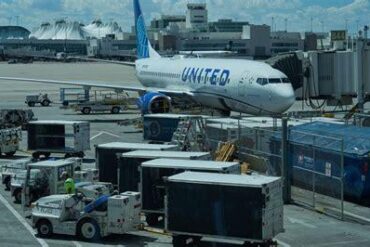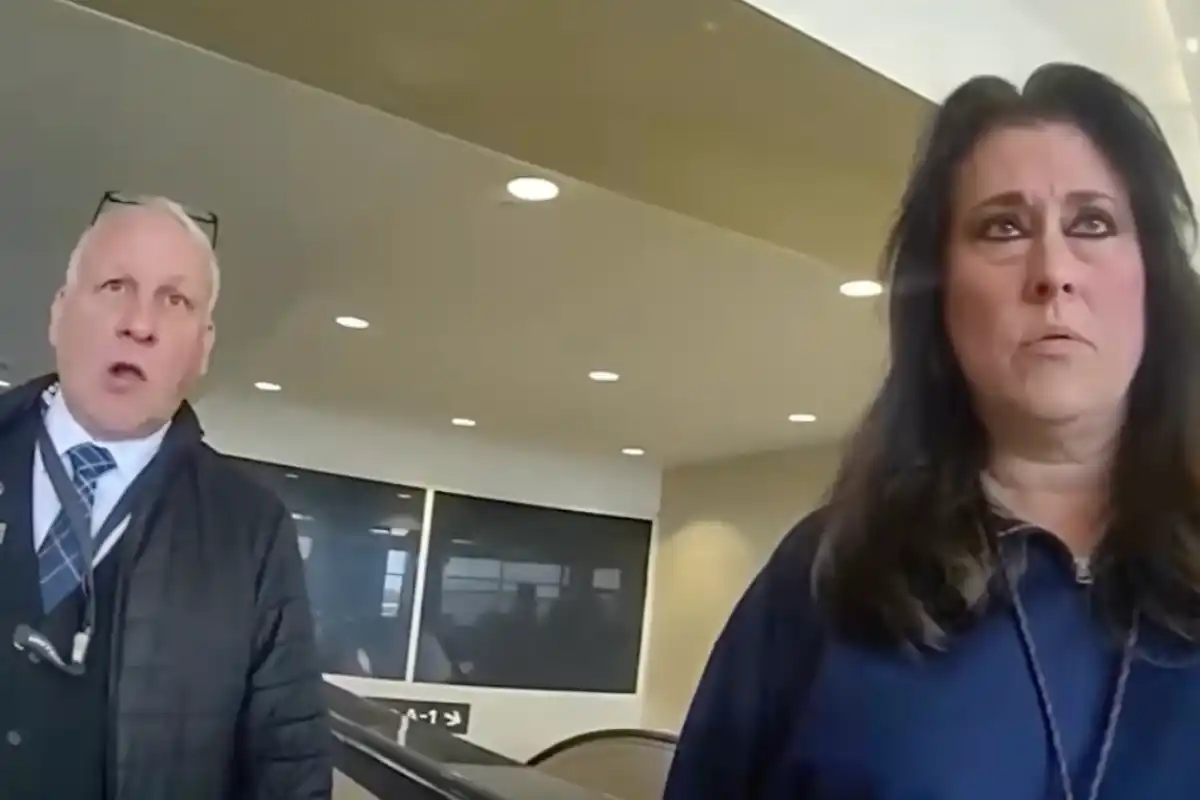
On a seemingly ordinary March morning at Tampa International Airport (TPA), a routine shuttle ride for airline crew members escalated into a legal confrontation that now stirs national discussion. A United Airlines flight attendant was arrested after a brief, physical interaction with a Cayman Airways crew member, an encounter that has raised questions about interpretations of personal boundaries, legal thresholds for physical contact, and the real-world impact of such minor altercations in the aviation industry.
The event remained under the radar for several months until recently, when bodycam footage capturing the dramatic arrest surfaced, reigniting public interest and scrutiny.
A Minor Dispute Spirals Out of Control
The incident occurred on March 8, 2025, as employees from various airlines awaited transportation from the parking lot to the terminal building at Tampa International Airport. The initial tension reportedly began at the shuttle stop, where a Cayman Airways employee was engaged in what has been described as a loud phone conversation. The noise apparently irritated a United Airlines crew member, prompting him to address the issue.
He allegedly told the Cayman Airways staffer that her voice was “annoying” and that she should “close [her] mouth“—words that were swiftly met with resistance. The Cayman employee not only confronted him about the rude tone but reportedly accused him of racial undertones in his complaint. The argument intensified as they boarded the shuttle bus.
In an attempt to de-escalate or perhaps assert some control over the situation, the United attendant tapped the Cayman Airways employee on the shoulder, allegedly requesting to see her employee ID badge.
From Tap to Charge: Florida’s Strict Battery Laws
Under Florida law, any intentional touch or strike, no matter how slight, may be classified as battery if done without the recipient’s consent. While to many, a shoulder tap might seem trivial, the legal framework doesn’t offer much room for interpretation in such matters.
The Cayman Airways employee claimed that the United attendant not only tapped her but also reached for and manipulated her badge, which made her feel physically violated. The flight attendant reportedly stopped when told not to touch her again. However, by this time, the situation had escalated beyond words.
The United employee, frustrated with the exchange, allegedly followed the Cayman crew member into the terminal, attempting to obtain her identification details to file a formal complaint with her employer. His actions, though perhaps intended to pursue accountability, crossed an additional line in the eyes of authorities.
As both individuals entered the terminal, airport police intervened. The footage shows the United Airlines crew member being approached, questioned, and ultimately placed in handcuffs. Officers cited battery as the reason for the arrest, and the footage reveals a mixture of confusion and disbelief on the part of the arrested individual.
Operational Fallout for United Airlines
Beyond the personal ramifications for the flight attendant, the incident had immediate operational consequences. Being detained meant he could not report for duty, forcing United Airlines to make last-minute crew adjustments. Such disruptions highlight how even minor interpersonal disputes can trigger ripple effects across commercial flight operations, particularly in tightly scheduled environments like major airports.
According to Cayman Marl Road, this unanticipated arrest likely required United to deploy a standby crew member, a solution that’s neither simple nor cheap. Crew scheduling is a carefully balanced operation, and any unexpected removal—especially due to legal entanglements—can compromise safety, compliance, and timeliness.
The Law vs. Social Norms: Where Is the Line?
This case has brought into focus the growing legal sensitivity around personal space, consent, and physical contact. While the act of tapping someone on the shoulder might still be considered socially acceptable in many contexts, the Florida legal system places zero tolerance on any unsolicited physical contact.
This raises questions:
- Can mere physical gestures be criminalized, even in high-stress, public settings?
- Should contextual intention carry more weight in these legal interpretations?
- Is there room for discretion and de-escalation in such enforcement actions?
Critics argue that charging someone with battery for a shoulder tap borders on overcriminalization, especially in environments like airports where tight coordination and direct communication are vital. Others maintain that personal autonomy and space must be respected unequivocally, and enforcement of such boundaries is necessary to protect dignity and deter escalation.
United Airlines and Cayman Airways Remain Silent
As of this writing, United Airlines has not issued a formal statement regarding the incident. Requests for comment from multiple media outlets have gone unanswered. Similarly, Cayman Airways has refrained from making any public remarks. It is unclear whether the two airlines engaged in any diplomatic or HR-level discussions in the aftermath of the altercation.
The lack of official responses has further fueled speculation online, with viewers of the bodycam footage sharing polarized opinions. While some express sympathy for the flight attendant and criticize the rigid enforcement of battery laws, others side with the principle of bodily autonomy and argue that the arrest was justified.
Differing Footprints at Tampa International Airport
It’s worth noting the vastly different scales of operation the two airlines maintain at TPA. According to data from Cirium, a respected aviation analytics firm, United Airlines had scheduled 1,659 flights to and from Tampa in December 2025 alone. In stark contrast, Cayman Airways was scheduled to operate just 42 flights in the same period.
This difference underscores the disproportionate reputational risk United faces in such public incidents, where any lapse—regardless of severity—can reflect on a much larger operation with global visibility.
Legal Outcomes and Broader Implications
While specific details about the legal proceedings following the arrest remain sparse, the case is expected to set precedent or at least raise flags within airline training programs. Crew members may now receive updated guidance on how to engage in inter-airline interactions, particularly when tempers flare or misunderstandings arise.
In a post-pandemic era marked by increased tensions and heightened awareness around social conduct, airlines are investing more in conflict resolution training, aiming to prevent minor disagreements from exploding into legal liabilities.
Furthermore, this case is likely to be studied in aviation legal workshops, given its nuanced intersection of workplace behavior, legal definitions of contact, and customer safety. It also underscores the need for airport law enforcement to operate with a balance of strict adherence to law and measured discretion.
Conclusion: A Cautionary Tale for the Skies
The arrest of a United Airlines flight attendant over a shoulder tap serves as a sobering reminder of how small gestures, when misunderstood or misapplied, can spiral into full-blown legal crises. In the unique ecosystem of airport operations—where thousands of employees interact daily under tight timelines—this case reminds everyone of the weight of actions, however slight, and the imperative to navigate conflict with diplomacy over instinct.
As bodycam footage continues to reshape public perception and redefine accountability, both airlines and employees are now on notice: every word, gesture, and action matters—especially when the law is watching.