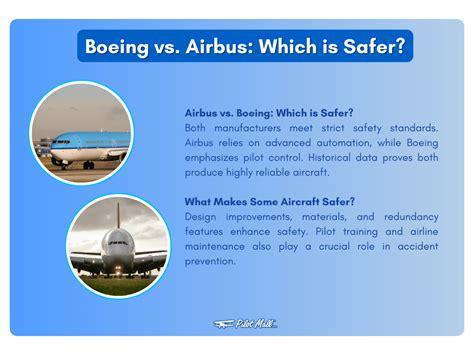
The modern aviation landscape is a battlefield of perception, numbers, engineering philosophy, and public confidence. In recent years, Boeing has sat under the harsh spotlight of scrutiny, particularly following the 737 MAX grounding and multiple manufacturing oversight concerns. Meanwhile, Airbus has benefited from a cleaner public image, often portrayed as the safer alternative in headlines and traveler chatter. Yet when we step past emotion and marketing narratives and look purely at what U.S. aviation accident data shows, the picture becomes infinitely more nuanced. Hard statistics from federal records tell a story not of rivalry in safety margins but of near convergence — where both manufacturers operate aircraft that are historically more reliable than at any previous point in aviation history.
Between 2014 and 2024, National Transportation Safety Board (NTSB) reports show just two to six mechanical incidents per year involving commercial jets from the two manufacturers in the United States, despite more than six million annual departures. This figure alone signals something profound: commercial aviation has reached a reliability threshold that borders on the statistical extreme. Incidents tied directly to structural or system failure are not just rare — they are almost anomalies in a sea of safe, uneventful landings.
However, raw numbers alone can deceive when not interpreted against exposure. Boeing aircraft account for roughly three times more commercial flights in U.S. skies than Airbus, meaning that a larger absolute number of reported incidents does not automatically equate to a weaker safety record.
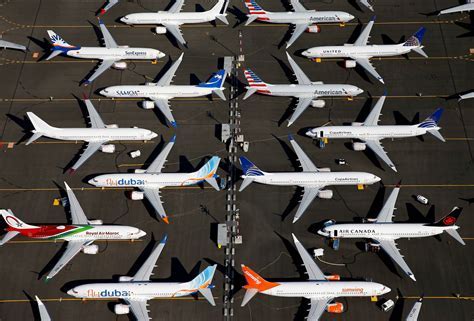
Public perception is not shaped by mathematics; it is shaped by memory, emotion, repetition, and spectacle. The 737 MAX tragedy created a deep cognitive imprint — reinforced by constant news cycles, congressional hearings, and viral media. The result is a psychological effect known as availability bias, where people judge risk based on what they have heard most recently and most loudly.
Online data worsened this divide. When social media users circulated statistics showing Boeing far ahead of Airbus in U.S. incident counts, many failed to notice the dataset included aircraft dating back to the 1940s — including military bombers and trainers no longer used for civilian transport. These figures distorted reality by magnifying Boeing’s record with machines that haven’t carried passengers in decades.
Once obsolete aircraft, cargo variants, and military platforms are stripped away, the recorded commercial events fall dramatically: roughly 165 Boeing vs. 80 Airbus within comparable operational decades. Weighted per flight hour and per departure, analysts found no measurable difference in safety outcomes.
What U.S. Accident Data Actually Shows
Looking beyond surface statistics reveals the true nature of aviation safety today. From 2005 through 2024, fatal hull-losses — catastrophic events resulting in aircraft destruction and passenger deaths — averaged just one to two cases per manufacturer globally per year. This figure is not just low; it is unprecedented in the century-long history of powered flight.
Around 80% of all reported events across both fleets stem from operational conditions rather than aircraft design: turbulence-related injuries, pilot error, runway excursions, or unpredictable weather patterns. Mechanical or manufacturing issues make up less than a fifth of recorded cases, and those rarely result in loss of life.
Even more striking is the granular risk measured per departure. When maintenance-caused and ground-handling incidents are filtered out, the United States data places Boeing at 0.39 true aircraft-related events per million flights, with Airbus at 0.38 — a fraction so narrow that it is effectively statistical parity.
Aircraft today do not simply fly — they self-monitor, self-diagnose, and report faults long before critical failure becomes a possibility. Engineering has evolved to a predictive maintenance model supported by redundant avionics and automated safety protocols that activate even when human attention falters.
The Safest Era in Aviation History
Zooming out beyond brand names or accidents of memory, the broader truth emerges: commercial aviation has never been safer. Data from the International Air Transport Association (IATA) shows only one major accident per 1.26 million flights in 2023, the safest performance recorded to date.
Risk studies from MIT illustrate this further. The chance of fatality while flying sits at one in 13.7 million, meaning one is statistically more likely to experience a lightning strike, win a national lottery, or encounter astronomical genetic rarity than to die aboard a commercial jet.
Industry researchers and safety experts frequently repeat the same sentiment — not as reassurance, but as mathematical certainty. Aviation remains singular among transport systems because it learns with ferocious precision. Every event, even a minor hard landing or maintenance anomaly, becomes globally shared knowledge that guides redesign, training curriculum, and regulatory frameworks.
Boeing And Airbus — Competitors, Yet Partners In Safety Evolution
Commercial aerospace may market itself as a war of brands, but the technical ecosystem is symbiotic. When Airbus introduces cockpit automation improvements, regulatory boards often influence Boeing to adopt similar redundancy models for flight control. When Boeing enhances lighter composite fuselage stress tolerance, those breakthroughs eventually cascade through the industry supply chain, affecting Airbus production as well.
In safety engineering, competition becomes cooperation. Aviation evolves through feedback loops of shared failure analysis, cross-manufacturer research, and international certification standards that apply equally across fleets.
The enduring conclusion, then, is not which name is safer — but that both exist at the threshold of engineering excellence where risk approaches zero.
Final Verdict — Fear Is Loud, But Numbers Are Quiet
Whether boarding a Boeing 737 or an Airbus A320, passengers today step onto some of the most advanced, rigorously tested machines ever produced by human hands. Perception may shift with news cycles and viral posts, but U.S. accident statistics remain unwaveringly consistent. Mechanical failure events are microscopic relative to total flight volume, fatal outcomes are rarer still, and the technological safeguards protecting the aircraft continue to evolve.
The debate between Boeing and Airbus makes for lively conversation, but for the traveler standing at a boarding gate, only one fact truly matters: flying is among the safest experiences in modern life.
Even at 38,000 feet, resting above a world of uncertainty and cloud, the data proves something simple — safety is not only engineered, it is earned across millions of quiet, uneventful flights.