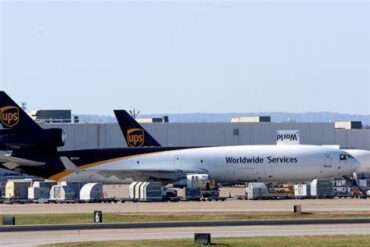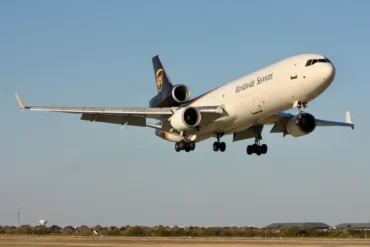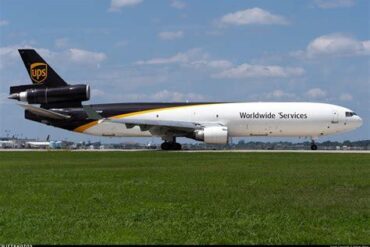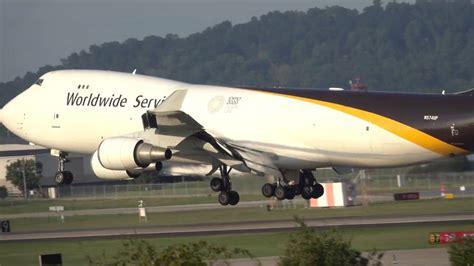
A UPS Boeing 747-8, operating under flight number 5X-752, experienced a mid-air emergency shortly after takeoff from Louisville Muhammad Ali International Airport on a routine cargo route to Dallas Fort Worth International Airport. The event unfolded with a high degree of urgency and professionalism, as the flight crew declared a Mayday and requested an immediate return to base following an aft cargo fire indication.
This incident, while ultimately resolved without injuries, underscores the inherent risks in cargo aviation and the decisive actions required when faced with a potential onboard fire.
Immediate Mayday: Smoke, Fire, and a Swift Turnaround
Only minutes after takeoff from Runway 35L, the crew of the N612UP detected a fire warning coming from the aft cargo hold, one of the most sensitive and potentially catastrophic areas on a cargo-configured aircraft. Climbing through approximately 3,000 feet, the crew radioed Air Traffic Control (ATC) with a Mayday call. They reported both the fire indication and an unmistakable smell of smoke in the cockpit, triggering a well-rehearsed emergency protocol.
The aircraft leveled off at 4,000 feet, avoiding further altitude gain to minimize fire risk and facilitate a quick return. The flight crew requested and received clearance for a left-hand pattern back to Runway 35L, opting to land on the same runway they had departed from. The total flight time from takeoff to touchdown was approximately 15 minutes, a swift and calculated response time reflective of the crew’s professionalism and training.
Tactical Landing and Emergency Response Coordination
Upon approach, Louisville emergency services were placed on full alert. Fire rescue units were strategically deployed around the airfield in anticipation of a possible fire suppression operation. The aircraft performed a smooth and stable landing, maintaining optimal speed and alignment despite the gravity of the situation.
Once the aircraft vacated the runway, it came to a halt on the parallel taxiway, a standard procedure for emergency evaluation without obstructing other traffic. The crew kept in communication with both ground control and emergency services, confirming the presence of a burning odor aboard but no visible flames or smoke at the time of landing.
The fire crew proceeded with a detailed external inspection of the aircraft’s aft cargo area. No active flames were found, but the warning systems had triggered due to sensor detection of elevated temperatures or particulates, which could indicate a contained or smoldering event. Once it was confirmed that the aircraft posed no immediate danger, it was cleared to taxi back to the UPS ramp area.
Post-Incident Assessment: False Alarm or Near-Miss?
The aircraft, a Boeing 747-8F, is equipped with sophisticated fire detection and suppression systems, particularly in the cargo compartments. These include smoke detectors, temperature sensors, and Halon-based fire suppression bottles. While the post-landing inspection did not yield visible signs of fire or smoke damage, the possibility of a false alarm remains under investigation.
Fire indications in cargo aircraft are taken with the highest seriousness due to the potential for uncontrollable spread if undetected. The presence of a smoke odor aboard, combined with the sensor alert, suggests a possible localized overheating or electrical fault, either in cargo or avionics systems. Technical teams from UPS Airlines and Boeing initiated a thorough examination of the cargo bay’s structural and electronic systems.
The aircraft was grounded for approximately 37 hours for detailed diagnostics, component testing, and data retrieval from the Flight Data Recorder (FDR) and Quick Access Recorder (QAR). These efforts are crucial in determining whether the incident was triggered by a system fault, cargo-related issue, or a combination of both.
Boeing 747-8F Safety and Emergency Protocols
The Boeing 747-8F represents the pinnacle of large-scale freighter design. It is fitted with redundant safety systems to prevent, detect, and suppress fires. The aft cargo bay, where the warning originated, is lined with fire-resistant materials and monitored continuously during flight.
In a scenario where a fire is detected, the crew has access to:
- Fire suppression controls from the flight deck
- Sealed ventilation zones to contain fire or smoke
- Automated fire extinguishing systems with multiple canisters
These systems allow the crew to respond immediately, even before a descent begins. However, in any situation involving fire warnings, return-to-base protocols are typically prioritized unless no suitable airports are within immediate reach.
Industry Reactions and Public Curiosity
The incident drew attention from both the aviation safety community and the general public. On platforms like aviation forums and social media, users praised the crew’s calm demeanor and quick actions. Phrases like “calm and collected” and “followed procedures like one should” were echoed throughout comment sections.
However, questions also surfaced regarding the nature of the alert—was it a genuine fire, or a false alarm caused by system malfunction or environmental factors? Such inquiries reflect broader concerns within the cargo airline industry regarding the reliability of fire detection technology, particularly when carrying sensitive or flammable goods.
Comparing Emergency Response Standards in Cargo vs Passenger Flights
Cargo operations differ significantly from passenger flights in emergency scenarios. With no passengers aboard, decisions are streamlined, and crews can act with fewer constraints regarding cabin safety protocols. However, cargo aircraft carry special category goods, which might include hazardous materials that pose their own set of risks.
The UPS crew’s rapid descent and landing contrasts notably with incidents like the Cathay Pacific flight in Boston, where smoke warnings extended the flight time to over 50 minutes before landing. Factors such as airspace congestion, weather, and aircraft location all influence the timing and effectiveness of emergency responses.
Implications for Cargo Flight Safety and Maintenance Protocols
This incident reaffirms the importance of ongoing system testing and component lifecycle management. Fire detection units are prone to false positives, especially in environments with dust, lithium battery shipments, or fluctuating temperatures. UPS’s decision to delay the aircraft’s return to service for nearly two days demonstrates a commitment to procedural integrity over operational urgency.
Going forward, we anticipate:
- Enhanced diagnostics and predictive maintenance protocols
- Updated software calibration for detection systems
- Increased regulatory pressure on cargo hold design and testing
These measures are expected to prevent repeat occurrences and reinforce trust in automated fire safety technologies.
Final Thoughts: A Textbook Emergency Landing
The UPS 747-8F incident over Louisville is a textbook case of a successful emergency return under potential fire threat conditions. The combination of well-executed emergency protocols, robust aircraft design, and rapid ground response enabled a safe outcome.
While investigations continue, early indicators suggest a possible sensor malfunction or localized overheating event. Regardless of the root cause, the professionalism displayed throughout the incident serves as a strong benchmark for how cargo airlines can and should respond to mid-air emergencies.
The industry will undoubtedly examine this case closely, using its lessons to further improve safety margins, particularly as global demand for air cargo transportation continues to grow. As we await final reports from the FAA and UPS’s internal safety board, the consensus remains clear: in the face of potential disaster, this was an expertly managed aviation emergency.