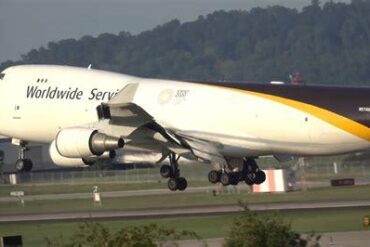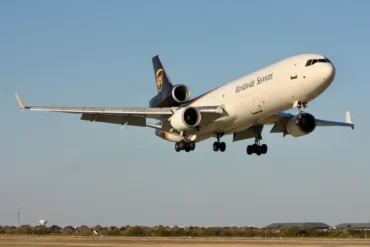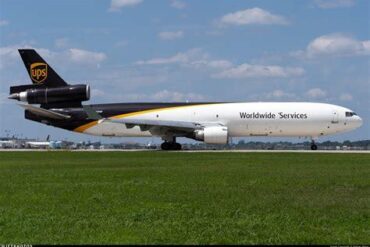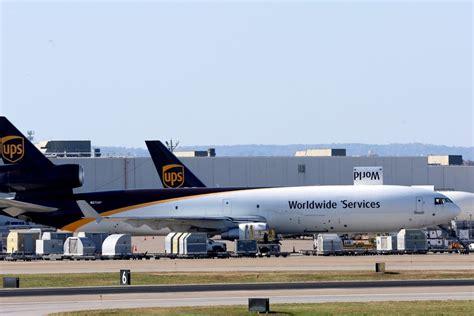
A routine late-night cargo operation turned into a high-stakes moment of precision and discipline when a UPS Airlines Boeing 767-300F was forced to abort its landing at Louisville Muhammad Ali International Airport. The incident, unfolding in the early hours of April 14, underscores how even a brief lapse in runway control can escalate into a potentially catastrophic scenario—one that was ultimately averted through swift decision-making and strict adherence to aviation safety protocols.
The aircraft, operating as flight 5X-1303 from Atlanta, had completed a short hop typical of UPS’s tightly coordinated logistics network. Approaching Louisville just after midnight, the freighter descended toward runway 17L under stable conditions. What appeared to be a standard arrival quickly shifted when air traffic control detected an unauthorized movement on the runway ahead.
Controllers identified a Pilatus PC-12, a smaller private aircraft, that had entered the active runway without clearance. The unexpected incursion prompted an immediate directive: the UPS crew was instructed to execute a go-around. The pilots responded without hesitation, initiating a climb at a critical phase of flight where timing, altitude, and situational awareness are everything.
Inside the Split-Second Go-Around Decision
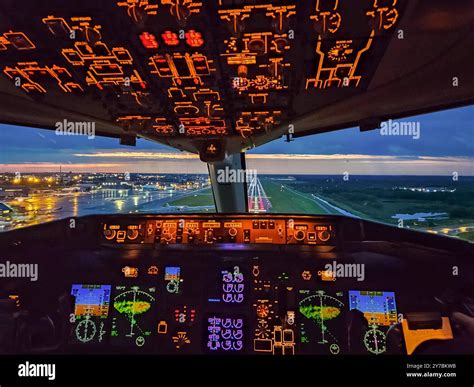
At just 550 feet above ground level, the UPS jet was moments away from touchdown when the instruction came. This altitude leaves little margin for indecision. The crew applied thrust, reconfigured the aircraft, and transitioned into a climb, eventually reaching approximately 4,000 feet as they repositioned for a second attempt.
Such maneuvers are not uncommon in aviation training, but their real-world execution—especially under time pressure—demands exceptional coordination. The cockpit workload increases dramatically during a go-around, requiring precise communication between pilots, rapid system adjustments, and continuous monitoring of surrounding traffic.
The aircraft then entered a holding pattern east of the airport, allowing controllers to restore safe separation. Roughly 20 minutes later, flight 5X-1303 returned for a second approach and landed without incident on the same runway.
Runway Incursions: A Persistent Aviation Risk
Runway incursions remain one of the most serious hazards in modern aviation. Defined as any unauthorized presence on a runway, these events can involve aircraft, vehicles, or personnel. While most do not result in accidents, the margin for error is razor-thin.
In this case, the Pilatus PC-12’s unintended entry created a scenario where two aircraft could have occupied the same runway space simultaneously. Air traffic controllers reportedly questioned the smaller aircraft’s actions in real time, highlighting the unexpected nature of the incursion.
The Federal Aviation Administration later confirmed that required separation standards were maintained throughout the event. Still, the incident serves as a stark reminder: aviation safety relies not only on systems and procedures, but on flawless human execution at every level.
The Aircraft and Route: A Backbone of Cargo Operations
The Boeing 767-300F involved in the incident, registered as N338UP, is a seasoned workhorse in UPS’s fleet. At just over 16 years old, it represents a core component of the airline’s domestic and international cargo network. With 92 such aircraft in operation and more on order, UPS continues to rely heavily on the type’s balance of range, payload capacity, and operational efficiency.
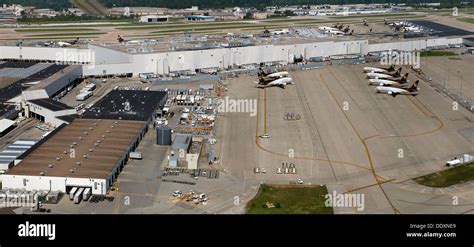
Flight 5X-1303 itself is a high-frequency service, operating five times weekly between Atlanta and Louisville. This route connects two major logistics hubs, feeding into UPS’s vast distribution system centered around its Louisville “Worldport” facility. The consistency and timing of these flights are critical, making any disruption—even a brief go-around—operationally significant.
A Broader Context: Recent Safety Concerns in Louisville
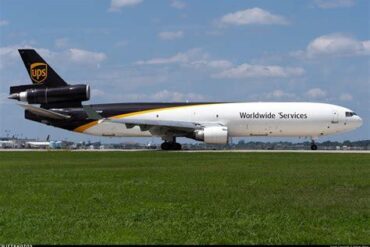
The near-miss comes against the backdrop of a more somber chapter in UPS’s recent history. Louisville was also the site of a fatal accident involving a McDonnell Douglas MD-11 last November. That crash, triggered by an engine separation shortly after takeoff, resulted in multiple fatalities both onboard and on the ground.
The aftermath of that incident reshaped operational decisions across the cargo sector. UPS has since accelerated the retirement of its MD-11 fleet, while investigations continue into the underlying causes. The National Transportation Safety Board has scheduled further hearings to examine the incident in detail.
While the go-around involving flight 5X-1303 ended safely, its proximity in time and location to the earlier accident adds weight to ongoing discussions about risk management, fleet modernization, and procedural rigor.
Precision Under Pressure: Why This Incident Matters
What makes this event particularly compelling is not just the danger that was avoided, but how it was avoided. Aviation is built on layers of redundancy—technology, training, and regulation working in concert. Yet, in critical moments, outcomes often hinge on human performance.
The UPS crew’s response exemplified textbook execution. There was no hesitation, no deviation from established procedure. The decision to abort the landing was immediate, the climb was controlled, and the re-approach was methodical. It is precisely this level of discipline that transforms potential disasters into routine safety recoveries.
Equally important is the role of air traffic control. Detecting the incursion, issuing clear instructions, and maintaining separation required constant vigilance and rapid coordination. The system worked as designed—but only because each participant executed their role flawlessly.
The Thin Line Between Routine and Crisis
Incidents like this rarely make headlines unless something goes wrong. Yet they reveal the fragile balance that defines aviation safety. A single wrong turn onto a runway, a momentary lapse in communication, or a delayed reaction can set off a chain of events with irreversible consequences.
In Louisville, that chain was broken before it could begin. The runway was cleared, the aircraft climbed away, and normal operations resumed. But the lesson remains clear: safety is not a static achievement—it is an active, continuous process.
As global air traffic continues to grow and airports operate at increasing capacity, the importance of vigilance, training, and procedural integrity becomes even more pronounced. The skies may appear calm, but beneath that calm lies a system constantly working to keep it that way.