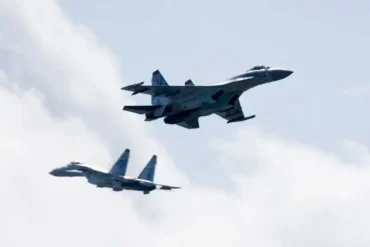
A routine international passenger flight bound for Tel Aviv turned into a major security incident after a false hijack alarm triggered an emergency military response over the eastern Mediterranean. The aircraft, operating LOT Polish Airlines flight LO155 from Warsaw to Tel Aviv, was forced to divert to Burgas, Bulgaria, after transmitting the internationally recognized hijacking transponder code. Although the alert was later confirmed to have been activated unintentionally, the incident prompted fighter jet interception, extensive security checks, and a delay exceeding ten hours before passengers could continue their journey.
The event demonstrates how aviation security protocols leave virtually no room for uncertainty. Even when a hijack alert later proves to be false, authorities are required to respond immediately because every minute matters when passenger safety may be at risk. The swift coordination between civilian air traffic controllers, military forces, airline personnel, and law enforcement ultimately ensured that the aircraft landed safely without any injuries or security threats being discovered.
LOT flight LO155 departed Warsaw Chopin Airport later than scheduled, leaving approximately 65 minutes behind timetable. The flight was operated on behalf of LOT Polish Airlines by Electra Airways using an Airbus A320-200, a common arrangement through wet-lease agreements that allow airlines to supplement fleet capacity on scheduled routes. The aircraft proceeded normally toward Israel and had nearly completed its journey before the emergency unfolded.
False Hijack Signal Prompted Immediate Military Response
As the aircraft approached Israeli airspace, communications with air traffic control were temporarily interrupted while the aircraft simultaneously transmitted Squawk 7500, the internationally designated transponder code indicating a possible aircraft hijacking. Within the aviation industry, transmitting this code automatically triggers one of the highest levels of emergency response because controllers cannot immediately determine whether the signal was entered deliberately or under duress.
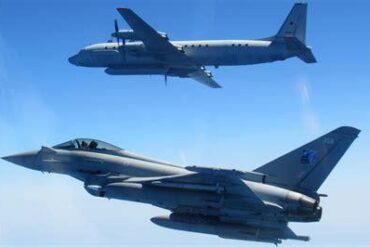
Given the seriousness of the alert, Israeli fighter jets were scrambled to intercept the airliner. Bulgarian military aircraft also became involved as authorities coordinated a safe diversion away from Israel. Although radio communication with the crew was later restored, aviation security procedures required officials to continue treating the situation as a genuine threat until every aspect of the incident could be verified.
LOT Polish Airlines later confirmed that the emergency had been caused by the unintentional activation of an onboard security alert rather than an actual hijacking attempt. Even after that explanation, standard international aviation procedures required the aircraft to land at an alternate airport so investigators and security agencies could fully assess the circumstances.
Diversion to Burgas Allowed Authorities to Verify Passenger Safety
Instead of continuing toward Ben Gurion Airport, the Airbus A320 reversed course after circling southwest of Cyprus before heading north toward Burgas Airport on Bulgaria’s Black Sea coast. The aircraft landed safely shortly before 5:15 PM, ending the airborne portion of what had become a complex security operation.
After arrival, passengers remained subject to comprehensive security procedures. Bulgarian police escorted travelers from the aircraft into a designated holding area while officials inspected the aircraft, verified passenger identities, and confirmed that no criminal activity or security threat existed. Such measures are standard whenever a hijack code has been transmitted, regardless of whether the original alert appears accidental.
The airline emphasized that incidents involving accidental security alert activation are extremely rare, but stressed that following every established protocol remains essential. Aviation authorities worldwide rely on these procedures because they provide a consistent framework for responding rapidly to potentially life-threatening situations.
More Than Ten Hours of Delay Before Continuing to Israel
Once investigators completed their inspections and concluded there was no ongoing security concern, the aircraft received clearance to resume its journey. The Airbus departed Burgas around midnight, finally reaching Tel Aviv at approximately 1:54 AM, more than 10 hours later than originally scheduled.
The operational disruption extended beyond a single flight. The aircraft’s scheduled return service from Tel Aviv to Warsaw also departed many hours behind schedule before eventually arriving in Poland early the following morning. Delays of this magnitude create significant logistical challenges, affecting flight crews, airport operations, aircraft scheduling, passenger connections, and maintenance planning throughout an airline’s network.
Despite the lengthy interruption, passengers ultimately completed their journey safely, highlighting that aviation authorities consistently prioritize security over operational convenience whenever uncertainty exists.
Aircraft Quickly Returned to Scheduled Operations
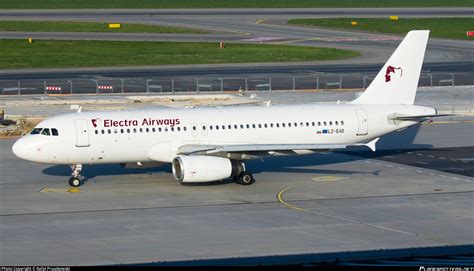
The aircraft involved was Airbus A320-200 registration LZ-EAB, operated by Electra Airways for LOT Polish Airlines. Configured with 180 economy-class seats, the aircraft has remained an active part of commercial service despite its age. Following the extensive inspections and security clearance, the same aircraft returned to scheduled operations the following day, once again flying the Warsaw-to-Tel Aviv route with only a modest delay.
Its rapid return to service illustrates that investigators found no mechanical issues or security risks requiring additional grounding. Instead, the disruption resulted solely from the mistaken activation of the emergency transponder code, which nevertheless required a full-scale international response.
The incident serves as another reminder that modern aviation security systems are intentionally designed to react immediately whenever a hijack signal is detected. Although the alert proved false, the coordinated actions of military forces, aviation authorities, airport security personnel, and the airline ensured that every possibility was thoroughly investigated before the flight was allowed to continue, reinforcing the industry’s uncompromising commitment to passenger safety.