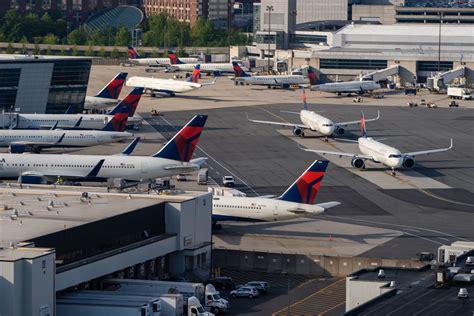
A fourth Delta Air Lines flight has now been linked to an aborted landing at Boston Logan International Airport (BOS) in less than a week, extending an unusual series of runway-related incidents that has intensified scrutiny of airport operations, air traffic control procedures, and aviation safety across the United States.
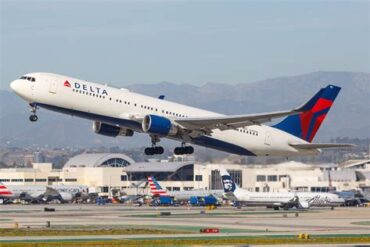
The latest event involved Delta Air Lines Flight DL2558, operating from Minneapolis–Saint Paul International Airport (MSP) to Boston on June 25. Although the aircraft ultimately landed safely after a brief delay, the incident has added to growing concerns following three previous Delta go-arounds at Logan Airport over the same week, including one serious close call that remains under investigation by federal authorities.
While every flight concluded safely, the frequency of similar events within such a short period has raised questions about whether the cluster represents coincidence or highlights mounting operational pressures at one of the nation’s busiest airports.
After descending normally toward Runway 4R, flight-tracking data indicated that DL2558 suddenly initiated a go-around at an altitude below 400 feet, only moments before crossing the runway threshold. Rather than continuing the landing, the aircraft climbed away, circled west of the airport, and approximately ten minutes later completed an uneventful landing on the parallel Runway 4L.
Passengers onboard later described the maneuver as abrupt but controlled. According to several eyewitness accounts, the flight crew informed passengers that the landing had been discontinued because other aircraft presented a potential conflict near the runway.
One passenger later spoke with a pilot after arrival and recalled being told that there had been “more than one” aircraft creating concern. Although officials have not publicly released detailed operational information regarding the event, those remarks have fueled speculation that multiple aircraft movements may have contributed to the decision to abandon the landing.
Fourth Go-Around Adds to an Extraordinary Week for Delta at Boston Logan
By itself, a go-around is not an unusual occurrence. Commercial airline crews perform thousands of missed approaches worldwide every year whenever landing conditions no longer meet strict safety requirements. Pilots regularly train for these situations because initiating another approach is considered the safest option whenever uncertainty exists.
What makes the Boston sequence noteworthy is not a single missed approach but the concentration of multiple Delta-operated flights encountering similar circumstances over just a few days.
The series began on June 20, when Delta Flight DL2351, an Airbus A319 arriving from Dallas/Fort Worth International Airport (DFW), discontinued its landing after an American Airlines Boeing 737-800 departed from an intersecting runway.
The event quickly attracted national attention because of the reported proximity between the two aircraft. Flight-tracking analysis suggested the airplanes may have been separated by only a few hundred feet as they converged near the runway intersection. Although both aircraft remained under air traffic control guidance and landed or departed safely, the incident prompted investigations by both the Federal Aviation Administration (FAA) and the National Transportation Safety Board (NTSB).
Delta later emphasized that its pilots followed established procedures in coordination with air traffic control before safely landing the aircraft.
Three Earlier Incidents Created a Pattern Difficult to Ignore
The following day produced two additional Delta go-arounds.
One involved Delta Flight DL1075, another Airbus A319 arriving from Raleigh–Durham International Airport (RDU). Air traffic controllers instructed the crew to discontinue the landing because another aircraft was still clearing or crossing the assigned runway. The crew immediately complied, executed a standard missed approach, and later landed safely.
The second event concerned Delta Connection Flight DL5644, operated by an Embraer E175 arriving from Baltimore/Washington International Airport (BWI).
Unlike the other incidents, reports surrounding DL5644 have been less consistent. Some accounts suggested the go-around resulted from traffic near the runway, while others indicated the crew may simply have rejected an unstable approach—a routine safety procedure that occurs throughout commercial aviation.
Even if DL5644 ultimately proves unrelated to runway conflicts, the addition of DL2558 means four Delta arrivals experienced interrupted landings at Boston Logan within less than one week.
Why Go-Arounds Are Considered a Safety Success Rather Than a Failure
Although passengers often find a go-around unsettling, aviation professionals generally view the maneuver differently.
Modern airline operations deliberately encourage pilots to abandon landings whenever conditions become uncertain. Rather than attempting to salvage an approach, crews are trained to prioritize safety over schedule by climbing away and setting up for another landing attempt.
Several situations commonly trigger go-arounds, including:
- Another aircraft occupying or crossing the runway.
- Unexpected runway incursions.
- Unstable aircraft speed or descent profile.
- Poor visibility or rapidly changing weather.
- Air traffic control instructions.
- Wildlife or unexpected hazards on the runway.
In other words, a go-around demonstrates that multiple layers of aviation safety are functioning exactly as intended.
The Boston incidents illustrate that philosophy. In each publicly known case, the crews recognized—or were alerted to—a potential conflict before touchdown and executed established procedures without injuries or aircraft damage.
Congressional Hearing Places Near Misses Under the National Spotlight
The timing of Boston’s unusual sequence has drawn additional attention because it coincided with renewed debate in Washington over aviation safety.
Only days before the latest Delta incident, the Senate Commerce Committee’s aviation subcommittee held hearings focused specifically on close calls throughout the National Airspace System.
During testimony, airline industry representatives argued that far more operational conflicts occur than the public typically realizes. While the overwhelming majority are safely resolved through established procedures, experts acknowledged that the aviation system regularly depends upon multiple overlapping safety defenses to prevent accidents.
That layered approach includes experienced pilots, vigilant controllers, sophisticated collision-avoidance technology, runway monitoring systems, standardized communications, and strict operational procedures.
When every safeguard performs as designed, potential conflicts become non-events rather than tragedies.
Boston Logan’s Complex Runway Layout Creates Unique Operational Challenges
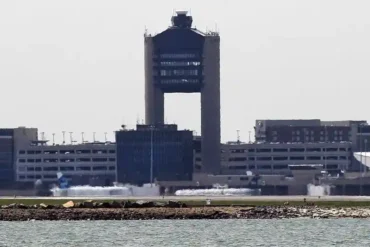
Boston Logan International Airport has long presented distinctive challenges for pilots and air traffic controllers alike.
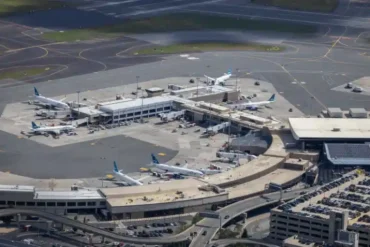
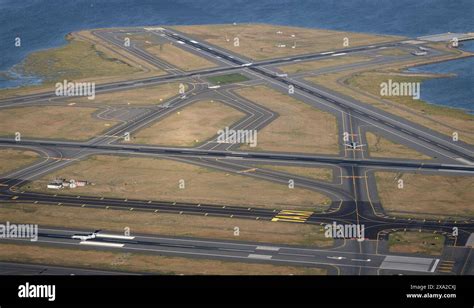
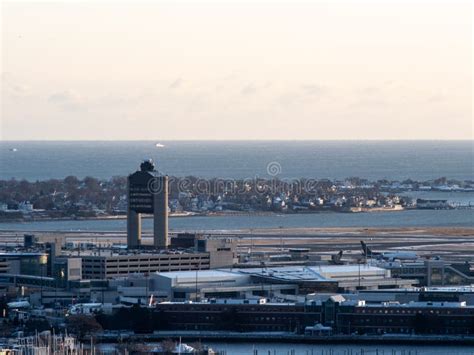
Unlike airports built on expansive inland property, Logan occupies a relatively compact area surrounded by Boston Harbor. Its intersecting runway system allows efficient traffic flow but requires exceptionally precise coordination during periods of heavy airline activity.
Aircraft frequently arrive and depart simultaneously using intersecting or closely spaced runways. Controllers must sequence dozens of aircraft while accounting for varying aircraft performance, changing wind conditions, taxi movements, and runway crossings.
During busy operational periods, maintaining safe separation demands continuous coordination between pilots, controllers, and airport surface management systems.
That does not mean Logan is inherently unsafe. Instead, it reflects the complexity involved in managing one of the busiest airports in the northeastern United States.
FAA Expands Efforts to Reduce Serious Runway Incidents
The recent Boston events arrive amid broader federal initiatives aimed at improving runway safety nationwide.
The FAA has introduced multiple programs designed to reduce serious runway incursions, including expanded deployment of surface surveillance technologies, additional runway safety initiatives, controller fatigue mitigation efforts, enhanced training, and accelerated recruitment of air traffic controllers.
Federal workforce plans also call for hiring thousands of additional controllers over the coming fiscal years while modernizing staffing models and scheduling systems intended to reduce overtime and improve operational efficiency.
These investments reflect growing recognition that increasing traffic volumes require both technological improvements and sufficient staffing to maintain today’s exceptionally high safety standards.
Safe Outcomes Do Not Eliminate the Need for Continued Vigilance
None of the four Delta-related Boston events resulted in injuries, aircraft damage, or passenger harm.
Instead, they demonstrated aviation’s multilayered safety philosophy in action. Pilots executed trained procedures, controllers intervened when necessary, and every aircraft completed its journey safely.
Nevertheless, the unusual concentration of similar incidents has naturally attracted attention from regulators, airlines, investigators, and lawmakers.
Whether the sequence ultimately proves to be an extraordinary coincidence or evidence of broader operational pressures will depend upon ongoing investigations and detailed reviews of controller communications, aircraft movements, and airport operations.
For now, the Boston incidents reinforce an important reality within commercial aviation: safety is maintained not because risks never emerge, but because crews, controllers, and technology are designed to identify those risks early enough to prevent them from becoming accidents. That system functioned successfully on each occasion, but the repeated need to rely upon those safeguards has ensured Boston Logan’s recent runway operations will remain under close examination in the weeks ahead.