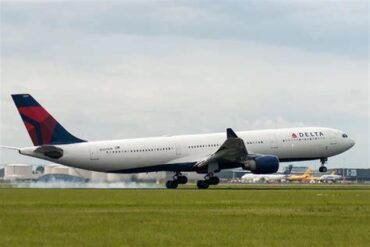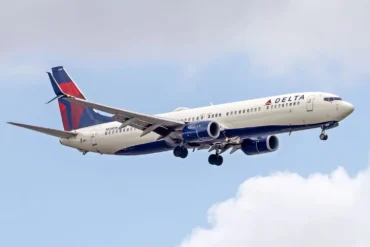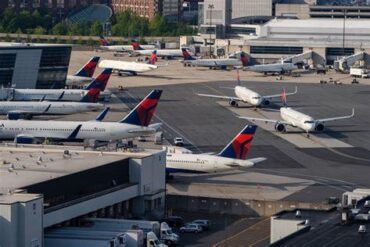
In a world where airline protocols are governed by tight schedules, fuel economics, and rigid security measures, it is rare to witness a moment where humanity overrides procedure. Yet, this is precisely what unfolded on a late Thursday night in Atlanta when a Delta Air Lines pilot made the extraordinary decision to turn the aircraft around on the runway to retrieve a group of stranded passengers—among them, an unaccompanied minor.
This event, initially shared through a firsthand account online, quickly captured the attention of frequent flyers, aviation experts, and travelers around the globe. What started as a missed connection due to a delayed inbound flight evolved into what many are calling the “Delta Miracle.”
An Unprecedented Decision on the Tarmac
After enduring a three-hour delay from Charlotte Douglas International Airport (CLT), one Delta passenger arrived in Atlanta just past midnight. The connecting flight to Rio de Janeiro had already departed. With no available seats on subsequent flights until the following Tuesday, the passenger joined others in the customer service line. Frustration and fatigue hung thick in the air.
But fate took a surprising turn at the International E concourse, where over 20 stranded passengers, including a visibly alone unaccompanied minor, waited in limbo. The gate agent, in what might seem like a last-ditch effort, reached out to the flight crew—already taxiing on the runway.
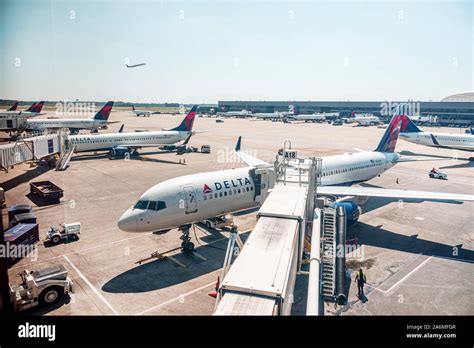
To the disbelief of everyone present, the pilot agreed to return to the gate. Within minutes, boarding resumed. The child was ushered onto the plane first, followed by other grateful passengers, many of whom had braced for an airport overnight stay.
The Human Element: Unaccompanied Minor Protocols and Corporate Liability
While some speculated the pilot acted purely out of compassion, others familiar with aviation protocols were quick to point out a more pressing factor: the presence of the unaccompanied minor. Airlines have strict procedures for handling minors traveling alone, and the liability risks of leaving such a passenger behind are significant.
Numerous passengers online shared personal anecdotes, reinforcing the industry’s sensitivity around this issue. One individual recounted how their son, also an unaccompanied minor, was removed from an overbooked flight—prompting Delta to offer compensation to other passengers so the child could be seated. Another described a night spent in the Atlanta airport as a minor, watched over by an airline employee who even went so far as to purchase a stuffed animal and coloring book to comfort the child.
Such gestures, while heartwarming, underscore the immense responsibility airlines bear when minors are in transit. Allowing a minor to remain stranded overnight could not only result in emotional trauma but expose the airline to legal consequences and negative publicity.
More Than One Passenger Saved: A Collective Turnaround
While the unaccompanied minor was the likely catalyst, the pilot’s decision ultimately benefited a broader group. As the aircraft re-docked at the gate, dozens of passengers were able to re-board. Some had not yet reached the terminal when the flight initially departed, but managed to catch the window of opportunity created by the pilot’s reversal.
This rare show of flexibility sparked a torrent of online praise. Seasoned travelers noted how uncommon such actions were in today’s tightly regulated aviation environment. After all, turning a commercial aircraft around on a runway is no small feat—it requires rapid coordination between pilots, ground control, dispatchers, and gate agents. Every minute adds fuel costs, disrupts scheduling, and potentially risks losing takeoff slots.
Airline Operations and the Captain’s Discretion
The decision to turn back hinges on a complex interplay of company policy and captain authority. While airline dispatchers and operations managers often provide operational oversight, the final call rests with the flight’s captain.
Delta’s internal guidelines, like those of many major carriers, allow gate returns under specific conditions: medical emergencies, late-arriving crew members, or essential personnel like government officials. However, retrieving passengers—especially after pushback—remains extremely rare and typically discouraged due to logistical complications.
As one former dispatcher noted, “If the cost of turning back is less than the cumulative burden of rebooking, hoteling, and feeding stranded passengers, a return may be authorized.” But that calculus rarely favors reversal. Fuel costs, delays to inbound gates, domino effects on crew timing, and congestion at busy hubs like Atlanta Hartsfield-Jackson usually make turning back prohibitive.
In this case, it appears that compassion, cost-efficiency, and operational feasibility converged, granting the pilot both the authority and the justification to proceed.
Public Reaction: From Gratitude to Humor
The online response to this act was swift and emotional. Frequent flyers and industry insiders celebrated the decision as a throwback to a more customer-focused era in air travel. For many, it restored some faith in an industry often criticized for treating passengers like numbers rather than people.
Naturally, the internet also seized the moment for levity. Some commenters imagined dramatic backstories: “It was the pilot’s son,” one speculated. Others joked about family secrets, clandestine affairs, or the influence of VIPs like Bill Gates being on board.
But at its core, the event remained a profoundly human story—a reminder that even within the strict parameters of modern aviation, there is room for empathy.
Aviation Ethics: Rules Versus Empathy
This incident opens a broader discussion about aviation ethics. Airlines operate under high-stress, high-regulation environments where decisions are often stripped of emotional context. But moments like this challenge that norm, raising questions:
- Should airlines build more flexibility into their policies to allow pilots discretion in unique passenger situations?
- Are current procedures around missed connections and unaccompanied minors sufficient to prioritize passenger welfare?
- Can moments of moral clarity justify temporary disruptions to flight schedules and cost structures?
For Delta, this decision, albeit rare, may serve as a benchmark of goodwill—a small act of flexibility that yields disproportionate positive brand impact. It humanizes an industry frequently criticized for rigidity, and in doing so, boosts customer loyalty in the long run.
Conclusion: A New Standard or a Lucky Exception?
The Delta pilot’s decision to return the plane to the gate stands as a powerful example of compassion in commercial aviation. Whether it was motivated by the unaccompanied minor, the group of 20+ stranded passengers, or simply the pilot’s personal values, the impact was profound.
It served as a rare case where logistics bowed to empathy—where a company known for efficiency allowed its crew the autonomy to act humanely, and where stranded passengers were given a second chance at their journey.
The moment will likely remain an outlier in aviation history—but perhaps, with enough visibility and support, it can inspire a new paradigm where procedures are upheld without sacrificing humanity.
This was more than just a gate return. It was a story of grace on the tarmac, a rare and stirring reminder that sometimes, even in aviation, hearts fly higher than protocols.