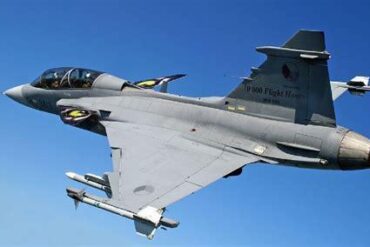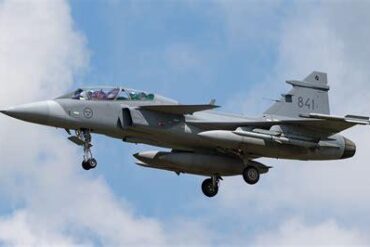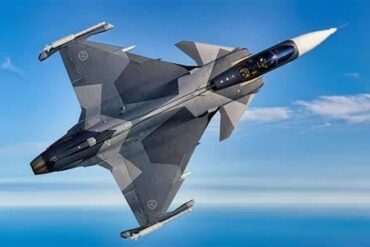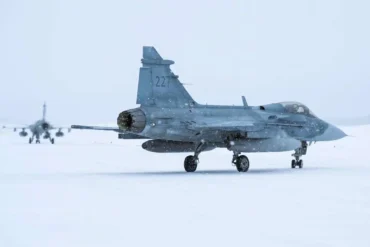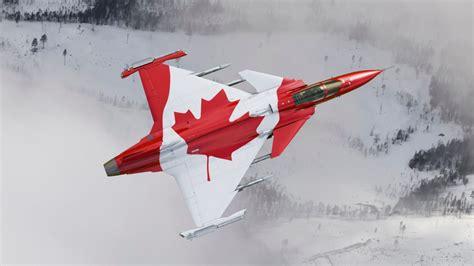
Canada stands at a critical crossroads in its defense strategy, weighing the Saab JAS 39 Gripen against the Lockheed Martin F-35 Lightning II for its next-generation fighter fleet. While the F-35’s stealth capabilities and multirole functionality have long been its signature advantages, growing advocacy for the Gripen signals a possible realignment of Canadian defense priorities, emphasizing adaptability, cost-efficiency, and proven battlefield performance.
The question of whether Ottawa should pursue the Gripen instead of the F-35 is not purely theoretical. The Gripen, a combat-proven aircraft with a formidable reputation in beyond-visual-range (BVR) warfare, has demonstrated exceptional results against adversary platforms that are central to Canada’s strategic concerns, notably the Russian and Chinese air forces.
Evaluating the JAS 39 Gripen’s Proven Combat Record
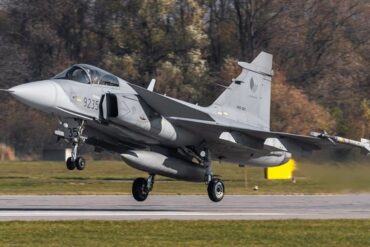
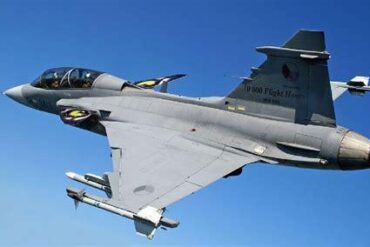
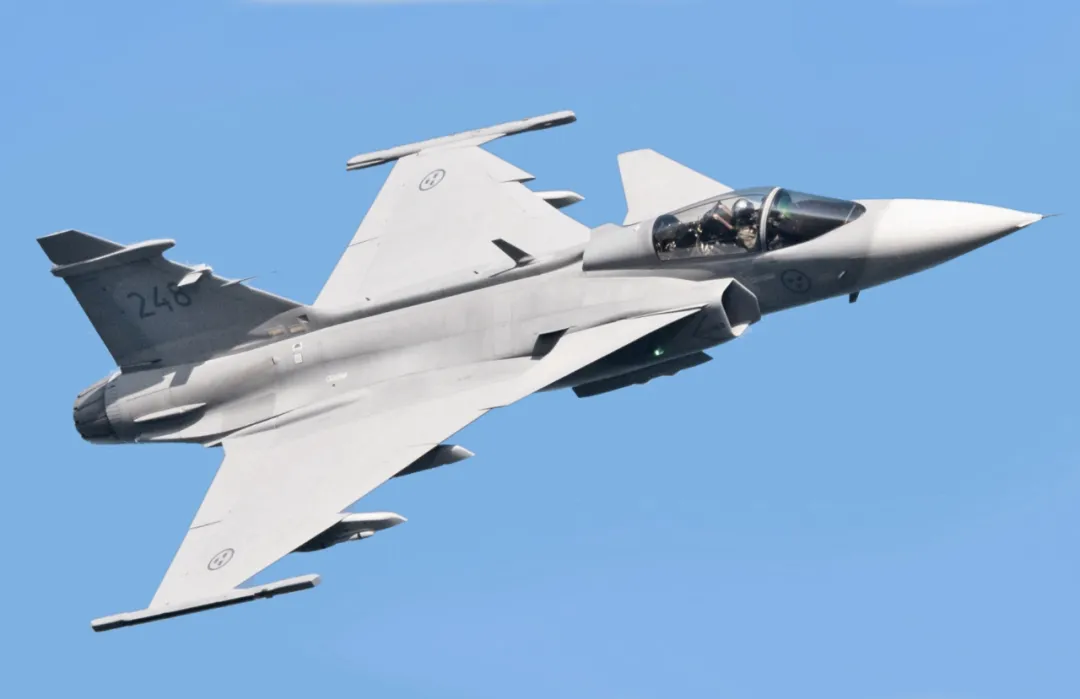
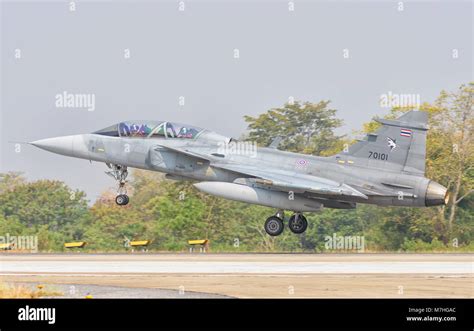
The Gripen’s battlefield credentials were spotlighted during the Falcon Strike 2015 exercises. In these engagements, the Royal Thai Air Force (RTAF), equipped with eight JAS-39C and four JAS-39D Gripens, faced off against the People’s Liberation Army Air Force (PLAAF) and its Russian-made Sukhoi Su-27SK/J-11A fighters. The detailed results of these drills, revealed by Senior Colonel Li Chunghua Hua—a decorated PLAAF aviator with over 3,200 hours of flight time—presented an illuminating picture of the Gripen’s combat effectiveness.
The Tactical Landscape: Visual vs. Beyond-Visual Range Combat
In close-quarters dogfighting, the Gripens struggled initially, suffering 25 losses to a single Su-27 kill. However, this imbalance was attributed to tactical constraints imposed on the RTAF pilots, who were ordered to avoid showcasing their full maneuverability to the PLAAF. Moreover, the Gripens were equipped with older-generation AIM-9L Sidewinder missiles, a disadvantage that has since been mitigated with the integration of modern Diehl IRIS-T missiles.
The dynamic shifted dramatically during BVR scenarios. The Gripen’s Ericsson PS-05/A radar outperformed the Su-27’s NIIP N001 radar by a substantial margin. Over four days, Gripens successfully downed 41 Su-27s at long range, with only nine Gripen losses recorded. The radar’s superior detection range—160 km compared to the Su-27’s 120 km—combined with the Raytheon AIM-120 active-homing air-to-air missiles, ensured that the Gripen maintained a significant edge in BVR combat. The AIM-120’s 80 km intercept range dwarfed the 50 km capacity of Russia’s Vympel RVV-AE missile.
Technological Advantages of the JAS 39 Gripen
The Gripen’s effectiveness in BVR combat can also be credited to its low radar cross-section (RCS), measuring between 1.5 and 2.0 square meters. In contrast, the Su-27’s larger 12-square-meter RCS made it considerably easier to detect and target. The Gripen’s ability to ripple-fire up to four AIM-120 missiles simultaneously further cemented its dominance, while the Su-27 was limited to firing one RVV-AE missile at a time.
These technical advantages culminated in the Gripen achieving 88% of its kills at distances exceeding 19 miles, with 10 confirmed kills at more than 31 miles. The Su-27, by contrast, managed just 14% of its kills beyond 19 miles and failed to secure any kills past the 31-mile threshold.
The F-35’s Stealth: A Double-Edged Sword?
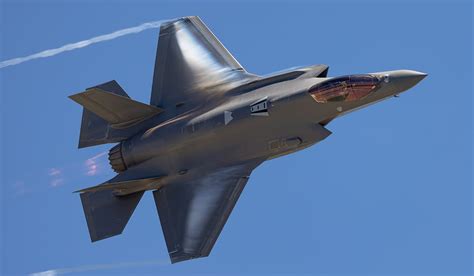
The F-35 Lightning II, often lauded as the pinnacle of stealth fighter design, brings a different set of capabilities to the table. Its low observability, advanced avionics, and network-centric warfare capabilities offer unparalleled situational awareness and deep-strike potential. However, these advantages come with significant drawbacks, particularly for a nation like Canada with vast airspace to patrol and limited defense budgets.
Operational and maintenance costs for the F-35 remain a contentious issue. The aircraft’s intricate stealth coating and complex systems require specialized infrastructure and sustained investment, straining long-term budgets. Critics argue that Canada may find itself tethered to a high-cost platform that, while formidable, may not offer the best value in the context of Canada’s unique defense needs.
Strategic Implications for Canadian Defense
Opting for the Gripen could signal a strategic pivot towards multi-role adaptability and interoperability with NATO allies. The Gripen’s design emphasizes ease of maintenance and operational flexibility. It can take off and land on short, austere runways—a crucial advantage for Canadian forces operating in remote and rugged terrains.
Moreover, the Gripen’s combat record, especially its ability to engage and neutralize Russian and Chinese aircraft effectively, aligns with Canada’s broader security concerns in an era of rising global tensions. The Gripen’s proven success in exercises against platforms like the Su-27 and the potential to hold its own against newer adversaries bolster its candidacy as a cost-effective, reliable, and deadly fighter jet.
International Lessons: Training and Pilot Autonomy
One notable lesson from the Falcon Strike exercises was the role of pilot training and autonomy. Despite the PLAAF’s technological upgrades, Western-trained pilots showcased superior tactical execution. The PLAAF’s reliance on rigid control structures limited the effectiveness of even advanced aircraft.
This highlights an essential factor: a fighter jet’s true capability is only realized when paired with well-trained pilots empowered to make split-second decisions. The Gripen, designed with pilot-centric controls and real-time tactical flexibility, offers an advantage that extends beyond hardware. Canada’s integration of such a platform would harmonize well with its highly professional air force, maximizing both human and technological potential.
Conclusion: A Pragmatic Choice for Canada’s Future Air Power
As Canada deliberates between the Gripen and the F-35, the decision transcends mere technological comparison. The Gripen’s demonstrated prowess in BVR combat, coupled with its cost-efficiency, ease of maintenance, and proven ability to counter Russian and Chinese aircraft, presents a compelling case.
While the F-35’s stealth and advanced avionics remain unmatched in certain scenarios, the Gripen’s track record of reliability and adaptability positions it as a formidable contender for Canada’s next-generation fighter fleet. A choice favoring the Gripen would reflect a commitment to pragmatic defense policy—balancing capability, sustainability, and geopolitical realities.
In an increasingly uncertain global security environment, Canada’s decision will reverberate across its defense strategy for decades to come.