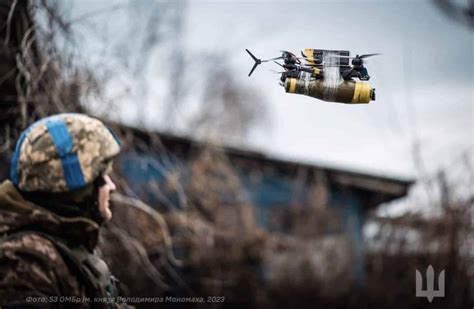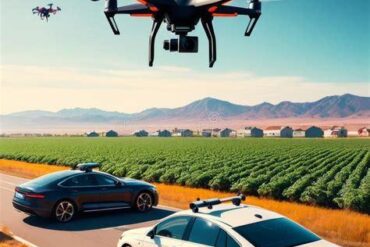
Ukraine’s war-driven innovation in drone technology has transformed it from a defense-dependent nation into a global epicenter for unmanned warfare innovation. As the conflict with Russia intensified, the country’s response wasn’t just in strategy or soldier count—it was in the sky and beyond, through a fleet of diverse and increasingly indigenous drones that now define its modern military operations.
The Drone Renaissance Forged by War
What began as a desperate improvisation in 2022 evolved into a technological revolution by 2025. Ukraine, constrained by limited artillery and economic disparity, strategically leaned into unmanned systems to close the gap with a more powerful aggressor. Today, the nation fields over 4 million drones—a staggering number dwarfing even the United States’ annual output of 100,000.
Fueling this growth is a highly decentralized and dynamic ecosystem of over 500 Ukrainian companies. Far from being mere assemblers, these firms are designing, testing, deploying, and refining drones in real-time war conditions. Their ability to out-innovate more established Western firms lies not just in numbers but in adaptability, cost-efficiency, and sheer ingenuity.
The Makers Behind the Machines
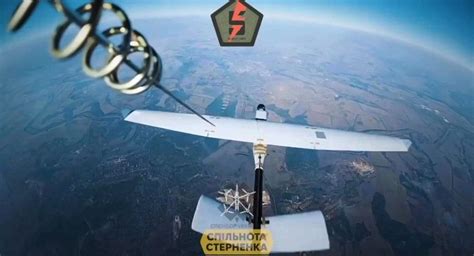
Among the standout contributors to Ukraine’s drone arsenal is Ukrspecsystems, the country’s largest drone manufacturer. Their PD-2 and Shark UAVs are instrumental in high-altitude surveillance, real-time targeting, and intelligence gathering. These systems are prized for their reliability, long-range capabilities, and resistance to signal disruption.
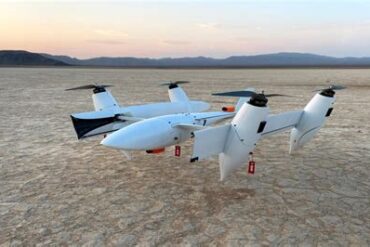
Skyeton offers the Raybird series, fixed-wing UAVs capable of staying airborne for more than 28 hours. Such endurance allows Ukrainian forces to maintain persistent surveillance over contested zones, especially critical in areas with rapidly shifting front lines.
Another vital player, Fire Point, specializes in long-range strike drones. Their FP-1 and FP-2 models are fixed-wing kamikaze drones that deliver payloads deep into enemy territory. Unlike larger, more expensive cruise missiles, these drones are cheap, expendable, and harder to detect.
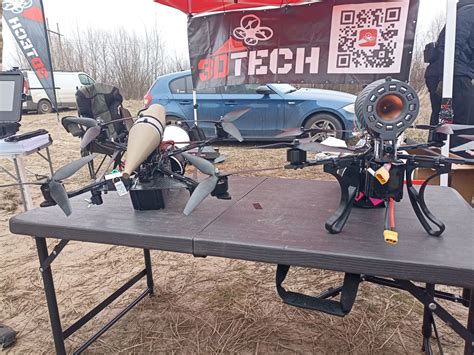
Yet, innovation is not limited to aerial combat. 3DTech‘s fiber-optic-guided drones represent a new paradigm in electronic warfare. Controlled via spooled cables instead of radio transmissions, these drones are immune to jamming and spoofing, making them ideal for high-risk operations in electronic warfare-heavy zones.
Wild Hornets: Nonprofit, Not Non-Impactful
Nonprofits too have carved their niche. Wild Hornets, a volunteer-run outfit, has stunned military analysts with their interceptor drone, The Sting. Designed not to scout or bomb, but to hunt and destroy enemy drones mid-air, the Sting is an agile UAV that fills a previously non-existent role in most armed forces. In a battlefield teeming with UAVs, counter-drone capability is fast becoming a necessity, not a luxury.
Despite being a grassroots initiative, Wild Hornets has delivered operational success by being hyper-focused, low-budget, and rapid in execution. Their contributions reflect a broader trend: Ukraine’s drone war is not just about engineering—it’s about a national mobilization of creativity and purpose.
Dependency and the Path to Self-Reliance
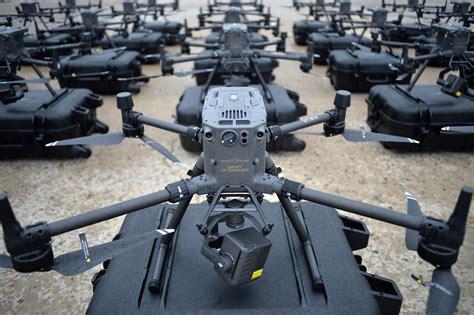
Still, the Achilles’ heel of Ukraine’s drone boom lies in foreign dependence, especially on Chinese components. Around 95% of drone parts are imported, with Chinese firm DJI dominating the global quadcopter supply chain. This reliance is a strategic vulnerability, particularly when global supply chains face geopolitical strain.
To address this, Motor-G, a domestic manufacturer, is ramping up local capacity. The company now produces over 100,000 electric motors monthly, pushing toward a vision of complete internal self-sufficiency. This shift is not merely industrial; it represents a pivot in Ukraine’s strategic doctrine—one that ensures resilience against embargoes, shortages, or manipulation.

A Broader Definition of Drones on the Battlefield
While aerial vehicles dominate public imagination, Ukraine’s drone doctrine is multi-domain. The battlefield now includes:
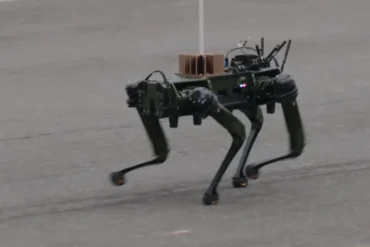
- Unmanned Ground Vehicles (UGVs) for mine clearance and supply runs
- Unmanned Surface Vehicles (USVs) patrolling rivers and coastal zones
- Unmanned Underwater Vehicles (UUVs) conducting sabotage and reconnaissance missions
Still, UAVs remain the cornerstone, with applications from reconnaissance to deep-strike missions. Off-the-shelf quadcopters—modded with explosives—serve as low-cost kamikaze solutions, while high-speed fixed-wing units cover strategic operations up to hundreds of kilometers away.
Each model—regardless of price—punches above its weight. Even low-end drones costing a few hundred dollars have reportedly destroyed millions in enemy armor and electronics, thanks to intelligent use, creative design, and relentless iteration.
The Global Implication: The Future Is Unmanned
What Ukraine has achieved is not just a wartime stopgap—it is a blueprint for the future of military doctrine. In this new age, wars are no longer decided by who has the biggest bombs or the most tanks, but by who commands the most adaptable, decentralized, and autonomous drone network.
With the West watching closely, and global militaries revisiting their procurement models, it is clear that Ukraine’s model of agile, startup-led, war-proven innovation is setting the standard for 21st-century warfare.