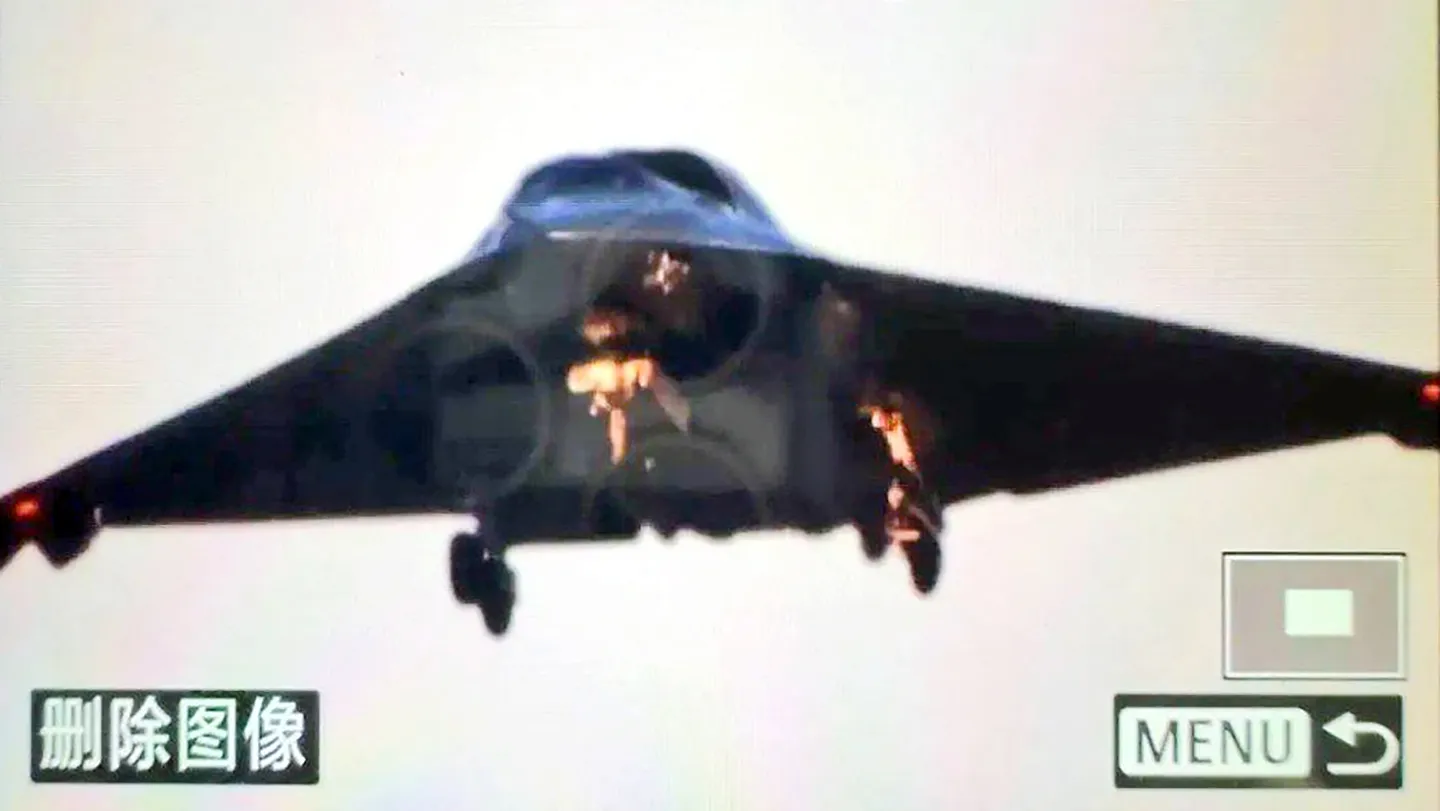
Newly leaked imagery from China has delivered an unprecedented front-facing view of the enigmatic J-36 very heavy stealth tactical jet, offering striking confirmation of its scale, configuration, and potentially groundbreaking technologies. This latest snapshot adds a crucial puzzle piece to the growing body of visual evidence surrounding China’s most ambitious next-generation aircraft, which many analysts believe is a direct response to the United States’ classified Next Generation Air Dominance (NGAD) program.
In this first-ever head-on view, the massive bubble canopy stands out, sweeping over a wide and deep fuselage that houses a tandem two-seat cockpit. This side-by-side crew configuration mirrors legacy aircraft like the Sukhoi Su-34 Fullback and the General Dynamics F-111 Aardvark, suggesting a tactical platform optimized for multi-role or electronic warfare (EW) missions that demand dual-pilot coordination.
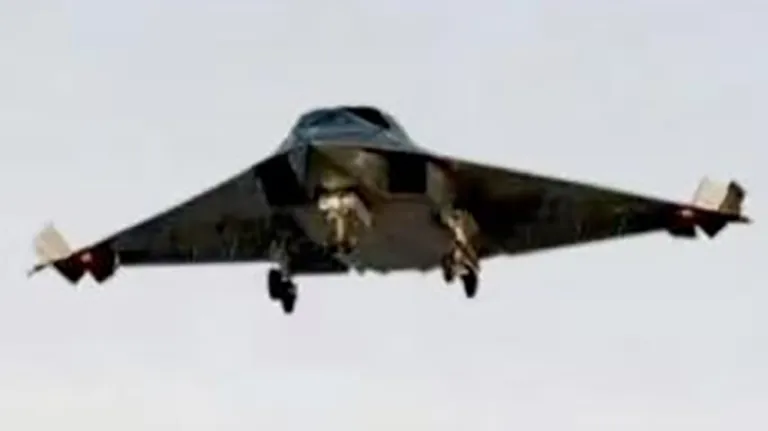
The photo, snapped from what appears to be a DSLR screen and rephotographed via smartphone, is part of a growing trend of semi-official leaks that seem orchestrated to build public awareness — or potentially to send strategic signals abroad. Despite the unofficial source, visual and structural consistency with previous images adds weight to the image’s authenticity.
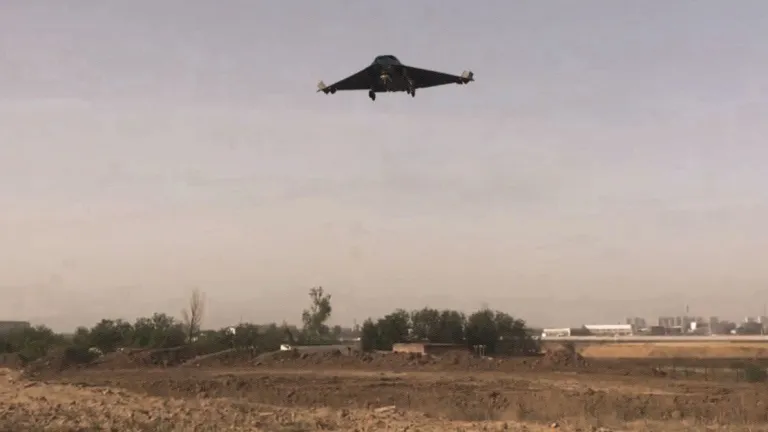
Massive Scale Confirmed in Front-Facing Imagery
Unlike the limited side profiles previously seen, this new front angle dramatically emphasizes the aircraft’s broad planform and imposing volume. While tailless delta-wing designs can appear deceptively sleek from lateral views, the J-36’s nose-to-canopy ratio and thick fuselage now reveal its true scale. The aircraft looks less like a traditional fighter and more like a flying weapons node — a stealth bomber in fighter clothing.
Key design cues that stand out include:
- Diverterless Supersonic Inlets (DSIs) with prominent ‘hump’ contours, intended to reduce radar cross-section and improve high-speed airflow.
- A dorsal engine intake, indicating a complex multi-engine configuration that could include three engines — a highly unconventional setup in fighter-class aircraft.
- Lower trapezoidal air inlets, reminiscent of those on the F-22 Raptor, contributing to stealth while aiding airflow to the engines.
- A large electro-optical aperture located on the nose’s side, glinting gold under low sunlight — likely part of a long-range IRST (infrared search and track) or target acquisition system.
These features suggest an aircraft designed to achieve dominance across multiple domains: long-range strike, air superiority, reconnaissance, and even electronic warfare. The wide fuselage hints at substantial internal weapons bay capacity, which would allow the J-36 to carry a large payload while remaining radar silent.
Tactical Implications: Beyond a Standard Fighter
The inclusion of a dual-seat layout sets the J-36 apart from many sixth-generation concepts focused on unmanned teaming or single-pilot control. This indicates that the aircraft might be tailored for missions demanding intensive crew resource management, such as commanding autonomous wingmen or coordinating electronic attack operations.
Analysts have speculated that the J-36 may operate in tandem with swarms of loyal wingman drones, potentially developed under China’s equivalent of the NGAD program. A two-crew layout would allow one pilot to focus on flying and combat navigation, while the second could manage mission systems, drone coordination, and networked sensor fusion.
Technological Design Evolution: Chengdu’s Signature
The aircraft’s configuration, particularly its delta-wing and tailless layout, points strongly toward the Chengdu Aircraft Industry Group as the likely developer — the same organization responsible for the J-20 Mighty Dragon. However, while the J-20 reflects fifth-generation design ideals, the J-36 is clearly operating in a new design space that blends bomber-class endurance with fighter agility.
The image also offers new insight into the jet’s landing gear bay placements, wing root thickness, and edge alignments, all of which are key stealth design considerations. Unlike prior Chinese stealth aircraft that often replicated U.S. designs, the J-36 appears more original in form, signaling maturation in indigenous stealth engineering.
Shenyang’s J-50 Revealed Simultaneously
Coinciding with the J-36’s frontal photo, another aircraft has recently been observed in remarkable clarity: the J-50, an unofficial designation for what may be Shenyang Aircraft Corporation’s contribution to China’s sixth-generation efforts. Though smaller than the J-36, it retains a heavy-weight frame and incorporates several unique design elements.
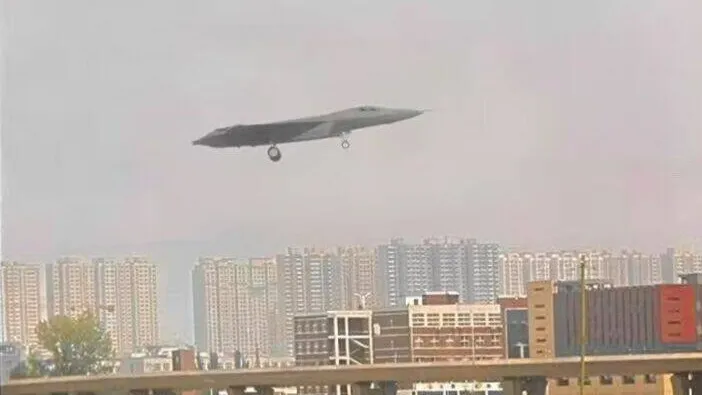
The J-50 is believed to be a single-seat, twin-engine fighter, featuring:
- Swiveling wingtip control surfaces for extreme maneuverability or fine in-flight adjustments.
- A blended canopy design, seamlessly integrated into the upper fuselage, minimizing radar returns.
- Internal weapons bays with F-22-style door placement.
- An EO/IR sensor pod underneath the nose, possibly part of a distributed aperture system.
While the J-36 seems optimized for range, payload, and multi-role versatility, the J-50 appears more agile, possibly focused on air-to-air superiority in contested zones or defending carrier groups.
Head-On Perspective: Strategic Messaging or Controlled Leak?
China’s pattern of phased leaks—first flight glimpses, followed by partial angles, and now revealing frontal images—suggests either an informational pressure campaign or a semi-controlled soft reveal strategy. The aim may be to position the J-36 as a counterbalance to Western sixth-generation programs, particularly in the Indo-Pacific region where U.S. and allied presence is growing.
The image’s casual nature — captured from a DSLR screen, reflecting a smartphone camera — adds a layer of plausible deniability. It may be just official enough to seed intrigue without constituting a formal reveal. This tactic mirrors previous disclosures of the J-20 and H-20 bomber, which followed similar leak-driven introduction arcs.
Engineering for Dominance: What Lies Beneath the Surface
If the J-36 does indeed house three engines, that configuration would offer exceptional thrust and redundancy — possibly to compensate for the aircraft’s immense size and weight. It could also point to supercruise capabilities or high-altitude operation with large payloads. There is also the possibility of vector-thrust nozzles, which would grant superior pitch and yaw authority in combat.
Additionally, the J-36’s robust nose structure hints at a massive AESA radar array, enabling multi-target tracking, jamming resistance, and high-fidelity terrain mapping. Combined with its likely satellite datalink and AI-assisted mission systems, the J-36 might represent a fusion of stealth, endurance, and battlefield connectivity.
Next Steps: What the Imagery Tells Us About Future Developments
This frontal photo marks a pivotal point in the unfolding story of China’s sixth-generation air power. With head-on confirmation of several previously speculated design features, and side-by-side evolution of the J-36 and J-50 platforms, observers are better positioned than ever to assess China’s aerospace ambitions.
By summer, if previous trends hold, higher-resolution images will likely surface, offering clearer looks at:
- Thrust vectoring or nozzle types
- Weapon bay arrangements
- Surface material composition
- Canopy transparency and instrumentation
- Exhaust signature treatments
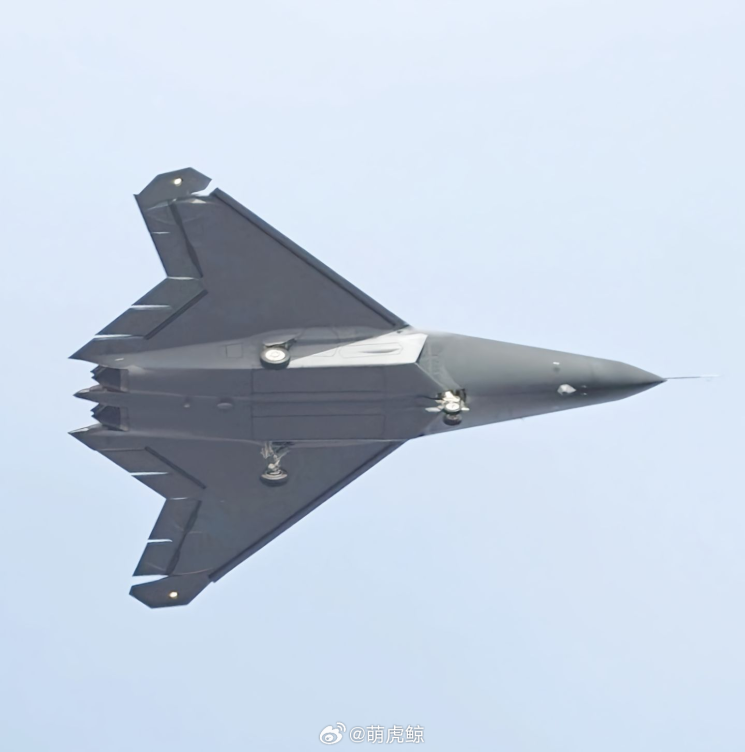
These details could further confirm whether these jets are strictly prototypes, or the vanguard of serial production models aimed at reconfiguring China’s air doctrine.
Conclusion: A New Era of Tactical Chinese Airpower
The J-36’s reveal is not merely a new chapter in aviation photography — it signals a strategic and tactical evolution within China’s military aviation strategy. A two-seat, potentially tri-engine, heavy stealth platform hints at a new class of battlefield asset, blending roles that were once divided between fighters, bombers, and command aircraft. Paired with the Shenyang J-50, China is clearly diversifying its sixth-generation capabilities, sending a clear message to global defense watchers.
What was once dismissed as imitation has now taken a sharp turn toward innovation. The skies over Asia are set to become more contested than ever — and the J-36 is proof that China intends to own a significant slice of that airspace.