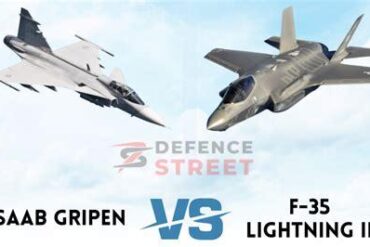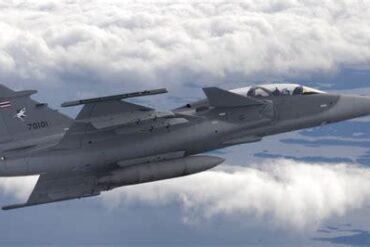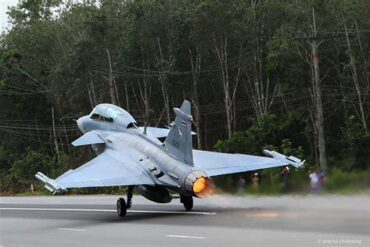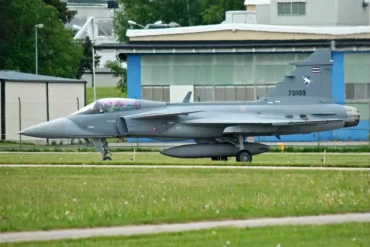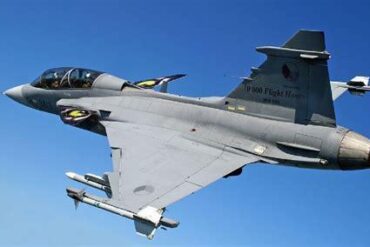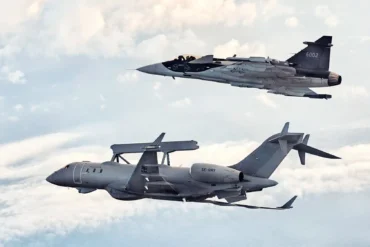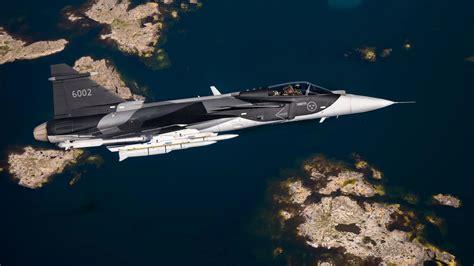
Canada’s leaked fighter evaluation has thrown a harsh spotlight on the realities of modern airpower, and the consequences are rippling far beyond Ottawa. The newly revealed data showing the F-35A Lightning II scoring 95%—against the Gripen-E’s 33%—isn’t just a procurement footnote. It is a decisive moment that reshapes a decade of political messaging, industrial promises, and strategic positioning across the Arctic and North America.
The numbers themselves are stark, but their implications are sharper still. When senior defense leaders describe one aircraft as the winner “by a mile,” the conversation shifts from marketing claims to measurable operational truth. For years, Saab’s team argued that the Gripen offered affordability, sovereignty, and Arctic suitability. Yet the leaked report shows that when subjected to real-world mission simulations and upgrade-path analysis, the F-35’s fifth-generation ecosystem left little oxygen for the Swedish challenger.
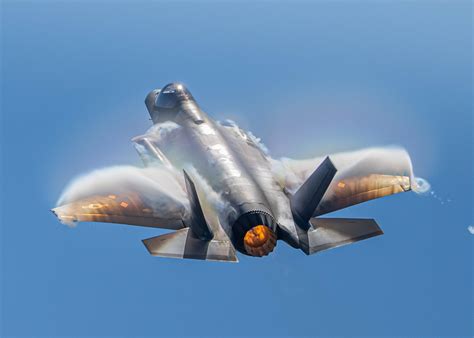
The 2021 evaluation by Canada’s Department of National Defence—kept largely confidential until now—focused on mission performance, survivability, NORAD integration, and long-term modernization potential. These weren’t marketing metrics; they were practical battlefield requirements shaped by rapidly advancing threats from China and Russia.
The F-35’s 95% score reflected strengths in networked warfare, sensor fusion, and stealth survivability across North American and expeditionary missions. The aircraft’s backbone software and continuous modernization pipeline significantly boosted its upgrade potential. By contrast, the Gripen-E’s 33% exposed limitations in next-generation threat environments, especially against advanced integrated air defense systems and fifth-generation adversaries.
Analysts close to the evaluation argue that the most decisive gap emerged in deep integration with the United States for NORAD missions. Canada’s air defense commitments demand intelligence sharing, data-link compatibility, and coordinated threat detection—areas where the F-35 is both peerless and already operational.
The Real Fear: Canada Risks a Mixed Fleet and Operational Fragmentation
Canada has already paid for sixteen F-35As and prepared its training and infrastructure for the platform. Any move to split the fleet between F-35s and new Gripen-Es would create substantial inefficiencies—parallel supply chains, redundant simulators, mismatched maintenance pipelines, and incompatible mission systems.
Veteran RCAF officers caution that the service is already stretched thin on personnel and logistical resources. A mixed fleet would add friction to an organization struggling to rebuild fighter readiness after years of aircraft shortages and pilot attrition.
Lt.-Gen. Jamie Speiser-Blanchet has been explicit: Canada faces a world where China and Russia deploy fifth-generation fighters and hypersonic strike systems. Intercept missions in the Arctic increasingly resemble peer-level contests, not Cold War patrols. In that context, an aircraft’s future growth path matters as much as its immediate performance—and the F-35’s digital backbone gives it enduring relevance.
Saab’s Long Road: From ‘Gripen for Canada’ to Political Reawakening
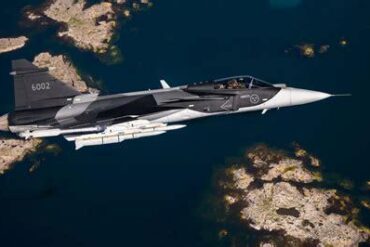
Before the leaked evaluation became public, Saab’s campaign was already a case study in persistence. Its original ‘Gripen for Canada’ effort blended social media outreach, industrial partnership promises, and a message of affordability and sovereignty. The firm pitched a fighter Canada could modify independently without U.S. export controls, built with local industry, and optimized for cold-weather operations.
Saab assembled a high-visibility coalition of Canadian companies—IMP Aerospace, CAE, Peraton, GE Aviation—to reinforce the political and economic appeal. The campaign was polished, confident, and relentless.
Yet the Canadian procurement process ultimately selected the F-35 in 2022, prompting Saab leaders to claim the competition was unfairly tilted by U.S. political influence. Whatever the merits of that argument, the new leaked data creates a difficult reality: the Gripen wasn’t edged out in a close contest. It was overwhelmingly defeated in mission-critical performance.
Gripen for Canada 2.0: A Reinvented Push With Global Ambition
The political landscape shifted in 2025 when Prime Minister Mark Carney placed the F-35 purchase under review amid tensions with Washington. Sensing opportunity, Saab resurrected its campaign with fresh momentum and a more aggressive industrial pitch.
Saab now proposes Canada as its third major Gripen production site, alongside Sweden and Brazil. The offer includes transferring manufacturing lines, creating long-term aerospace jobs, and enabling Canada to co-produce jets destined for Ukraine—a potential order reaching 150 aircraft.
Bombardier’s willingness to participate adds credibility. The company’s Global 6000/6500 business jet already serves as the airframe for Saab’s GlobalEye AEW&C, which Ottawa is quietly enthusiastic about. Saab’s decision to push GlobalEye into Canada’s early warning competition is a strategic play: win the surveillance contract, strengthen industrial ties, and build political capital for Gripen.
The renewed effort is not limited to boardrooms. A coordinated surge of social media activity—hashtags, influencers, defense enthusiasts—has created an energetic narrative framing Gripen as the independent alternative to U.S.-dominated defense procurement. Much of this traction originates from Sweden, where commentators argue that resisting F-35 dependency is a test of national sovereignty.
Ottawa’s Strategic Crossroads: Industry Dreams vs. Hard Military Reality
Carney’s government faces a complex choice. Saab’s offer is politically attractive: jobs, manufacturing autonomy, and diversification away from the United States—all themes that resonate in a climate of volatile U.S. politics. High-level visits by the Swedish king, queen, and senior ministers amplify the diplomatic weight behind the push.
Yet the leaked 2021 evaluation forces Ottawa to confront a difficult fact: the Gripen-E does not meet Canada’s most demanding operational needs for defending North America in the 2030s and beyond. No amount of economic incentive fully compensates for capability gaps against peer adversaries.
Canadian defense planners increasingly view the F-35 not as a procurement preference but as a necessity. Its role within NORAD, NATO, and joint operations ensures interoperability across multiple theaters. Every year that passes widens the technological gulf between the F-35 ecosystem and fourth-generation derivatives like the Gripen-E, even those with advanced avionics.
Saab’s Promises vs. the Leaked Findings: A Collision of Narratives
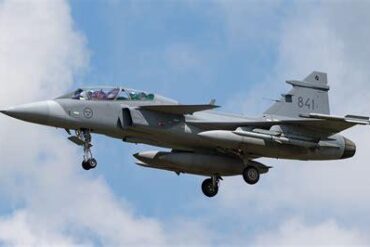
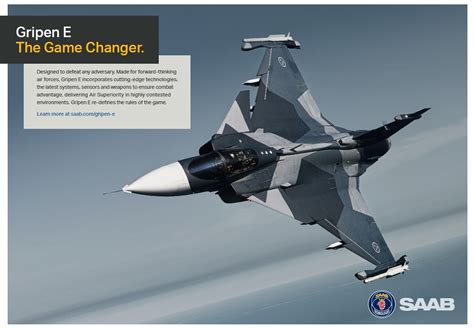
Saab’s marketing emphasized open architecture, rapid software upgrades, long combat radius, low maintenance costs, and sovereign control. Many of these features are genuine strengths—the Gripen-E is respected globally for its efficiency and adaptability.
However, the leaked evaluation highlights areas where these strengths simply could not offset weaknesses in next-generation warfare domains. The most decisive shortfalls involved:
- Limited stealth or low-observable characteristics, essential for modern air defense penetration.
- Reduced survivability in radar-dense environments.
- Lower multi-domain integration potential compared to F-35 sensor fusion and C2 systems.
- Weaker interoperability with U.S. systems central to Arctic operations.
- Less robust long-term modernization, given the F-35’s continuous upgrade model.
These findings don’t diminish Gripen’s capabilities within its design philosophy—but they do explain why Canada’s assessment ranked the F-35 so overwhelmingly superior for North American defense roles.
Political Winds vs. Military Requirements: The Coming Decision
Canada stands at the intersection of domestic politics, economic temptation, and rapidly evolving global threats. Saab’s revived campaign is more sophisticated and politically aware than its first iteration. With Canada seeking deeper partnerships with Sweden and mulling reduced reliance on U.S. defense supply chains, the Gripen-E has more political oxygen than at any time since 2018.
But politics cannot obscure the operational reality revealed in the leaked data. The F-35 remains the only aircraft capable of meeting Canada’s long-term NORAD and NATO obligations at the technical level required by emerging threats.
Even Saab’s most compelling offers—local manufacturing, economic benefits, a packaged deal with GlobalEye—cannot alter the fundamental performance gaps documented in the 2021 trials. Ottawa’s challenge will be reconciling political incentives with military truth at a moment when global security is deteriorating.
A Bitter Lesson for Saab, and a Defining Moment for Canada
Saab’s renewed momentum reflects a company refusing to accept a narrative of inevitability. It leverages diplomacy, industry partnerships, and public opinion with remarkable discipline. Yet the leaked scorecard paints a picture of an aircraft misaligned with the strategic realities of North American defense.
For Canada, the decision could shape its fighter fleet for half a century. Selecting the Gripen-E would signal a dramatic shift away from U.S.-aligned defense integration, with long-term implications for NORAD, NATO, and Arctic operations. Choosing the F-35 reaffirms the necessity of fifth-generation capability in an era of strategic uncertainty.
As the Carney government weighs pressure from allies, industry partners, and domestic stakeholders, the leaked evaluation will loom large. The debate is now bigger than procurement. It is a question of identity: what kind of air force Canada intends to operate, and what strategic partnerships it chooses to uphold in a world growing sharper and more dangerous by the year.