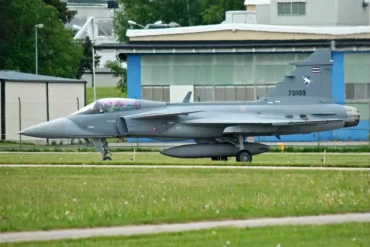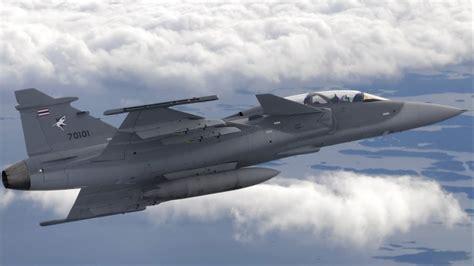
The Royal Thai Air Force (RTAF) has officially confirmed its selection of the Saab Gripen E/F as its future multi-role combat aircraft, signaling a significant modernization of Thailand’s aerial defense capabilities. This strategic move will reshape the operational landscape of the RTAF, strengthen bilateral defense ties with Sweden, and reinforce Thailand’s ambitions for strategic autonomy in the Indo-Pacific region.
The announcement was made after a comprehensive evaluation of multiple platforms, culminating in the decision to pursue the Gripen E/F, developed by Swedish aerospace and defense company Saab, in partnership with the Swedish Defence Materiel Administration (FMV). Although no formal contract has been signed as of this writing, the commitment to the Gripen E/F marks the beginning of the procurement phase that will determine delivery timelines, quantity, industrial participation, and offset arrangements.
Why Gripen E/F? The Strategic and Operational Edge
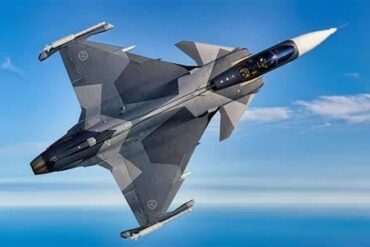
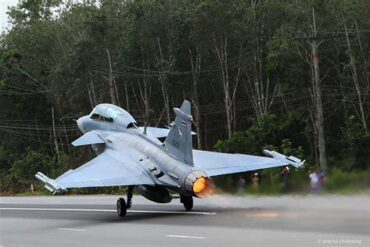
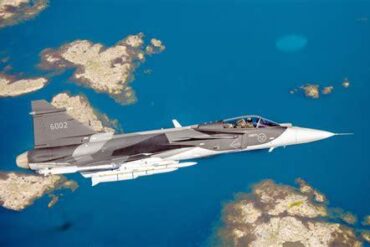
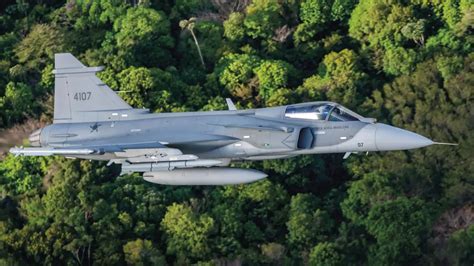
Thailand’s choice to move forward with the Gripen E/F is rooted in the fighter’s advanced capabilities, interoperability, and modularity, making it a formidable asset for 21st-century aerial warfare. Unlike its predecessor — the Gripen C/D, which Thailand has operated since 2011 — the E/F variant brings substantial upgrades across all mission parameters, including sensor fusion, electronic warfare, weapons systems, and range.
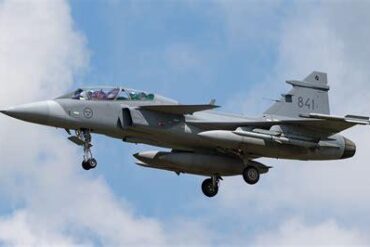
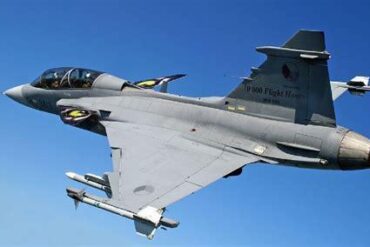
The Gripen E is a single-seat version optimized for air superiority and deep strike missions, while the Gripen F offers a two-seat configuration primarily aimed at advanced training and mission command. Together, these platforms offer the flexibility and scalability the RTAF needs to maintain regional air dominance.
Enhanced Capabilities of Gripen E/F
Built with open architecture systems, the Gripen E/F allows easy integration of third-party weapons and systems — a key advantage for countries seeking operational sovereignty. Some of its standout technical features include:
- AESA Radar (Raven ES-05): Offering longer range and simultaneous target tracking.
- IRST (Infra-Red Search and Track): Passive detection system ideal for stealthy threats.
- Meteor Beyond-Visual-Range Missiles: Giving it superior first-shot capability.
- Electronic Warfare Suite (Arexis): For jamming, deception, and threat avoidance.
- Net-Centric Warfare Capability: Enabling secure data sharing with airborne and ground units.
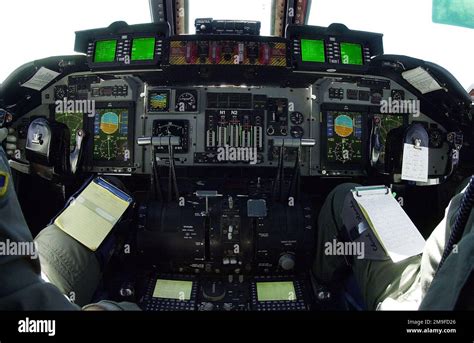
This tech suite gives Thailand an edge over most regional threats and complements its efforts to develop a digitally networked defense infrastructure. Moreover, its low operational cost and high sortie generation rate make it ideal for Southeast Asia’s demanding operational environment.
The Long-Term Offset Package: Strategic Independence in Action
Beyond the aircraft, Saab has proposed a long-term offset package that is expected to bring robust economic and strategic benefits to Thailand. While specific details remain undisclosed, such packages typically include:
- Technology transfers and local industry involvement in maintenance and parts manufacturing.
- Training programs for Thai engineers and pilots.
- Co-development opportunities with Thai defense agencies and academia.
- Direct foreign investment into Thailand’s defense, aerospace, and high-tech sectors.
These provisions align with Thailand’s long-standing goal to build strategic independence and reduce its reliance on external suppliers for critical defense systems.
A History with Saab: Evolution from Gripen C/D
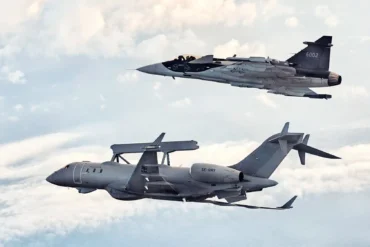
The RTAF’s trust in the Gripen platform dates back to 2011, when it acquired a fleet of Gripen C/D fighters, along with associated command-and-control systems. The Gripen C/D has since proven to be a highly reliable platform, performing well in a variety of missions ranging from air defense to maritime surveillance.
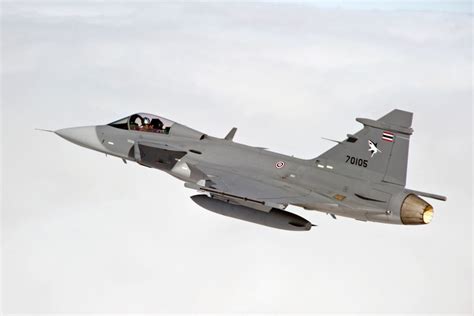
The operational success of the C/D variant undoubtedly laid the groundwork for this latest decision, reinforcing Saab’s reputation as a reliable partner. The transition to the E/F not only preserves existing logistics and training pipelines but also enhances the force’s operational tempo and technological edge.
Regional Power Dynamics and Strategic Messaging
Thailand’s decision to acquire the Gripen E/F has strategic implications that go well beyond hardware. In a region marked by rising tensions and complex alliances, particularly in the South China Sea and across the Taiwan Strait, this move sends a strong message about Thailand’s intent to remain a sovereign, well-armed, and independent regional power.
Unlike deals with larger defense conglomerates that sometimes entail political strings or rigid procurement frameworks, the Swedish model of defense diplomacy — marked by neutrality, technology sharing, and cooperative development — aligns well with Thailand’s non-aligned military strategy.
This procurement also signals continuity and confidence in the Thai-Swedish defense relationship, a partnership characterized by mutual respect and technological collaboration, free from the heavy political undertones that accompany many other international arms deals.
Industry Reactions and Geopolitical Interpretation
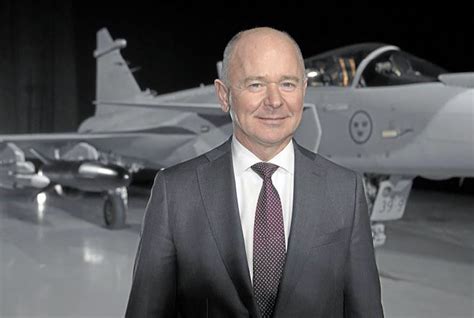
The announcement was greeted with enthusiasm by defense analysts, regional security experts, and industry insiders. Micael Johansson, President and CEO of Saab, remarked: “We welcome the Royal Thai Air Force’s selection of Gripen E/F as its future fighter and look forward to the next steps in this procurement process. Gripen E/F is the best solution to provide Thailand with independent airpower for the future, which will contribute significantly to the nation’s safety and security.”
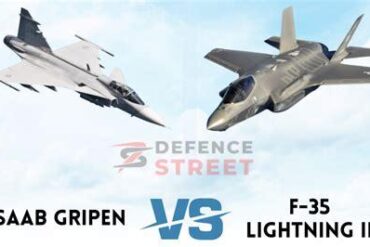
Analysts interpret Thailand’s decision as a rebuff to competing platforms from countries such as the United States, China, and Russia, whose fighter offers may have been politically or logistically misaligned with Thai requirements. In contrast, Sweden’s Gripen platform provides a balanced blend of affordability, autonomy, and capability.
Next Steps in the Procurement Timeline
Although the RTAF has made its selection, the procurement process is still in motion. Saab and FMV will now begin formal negotiations with the Thai Ministry of Defense to finalize the number of units, delivery timelines, offset implementation plans, and associated systems such as simulators and mission support infrastructure.
The deal is expected to span over a decade, including delivery, training, integration, and sustainment phases. If implemented effectively, the Gripen E/F acquisition could become a case study in agile defense procurement within the ASEAN region.
Conclusion: A Calculated Leap into the Future
Thailand’s confirmation of the Gripen E/F as its next-generation fighter marks a decisive leap into advanced airpower. More than a platform upgrade, it represents a comprehensive modernization effort built on strategic foresight, operational pragmatism, and international cooperation.
With the Gripen E/F’s capabilities, the Royal Thai Air Force is poised to meet the multidimensional challenges of 21st-century warfare while fostering a stronger, more autonomous national defense ecosystem. As negotiations unfold and implementation begins, all eyes will be on how this landmark decision reshapes Thailand’s role in regional and global security architectures.