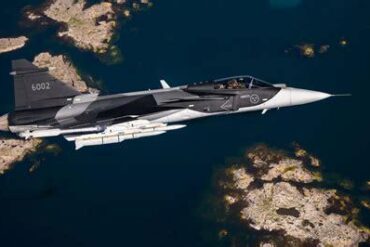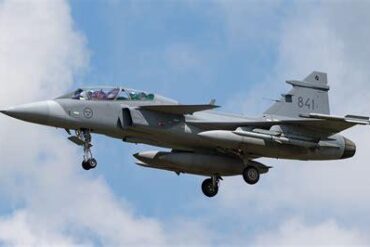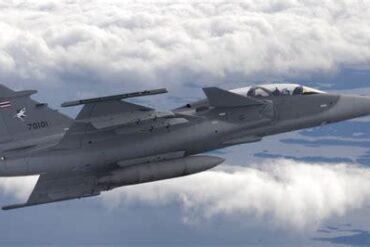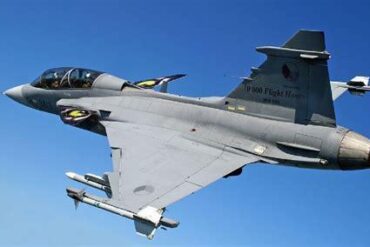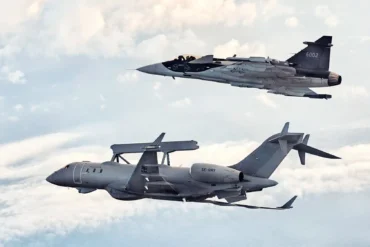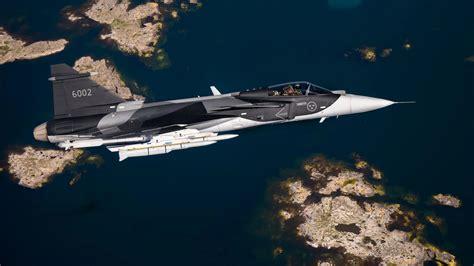
Colombia’s historic 3.1 billion euro defense agreement with Sweden marks a decisive shift in the country’s military aviation strategy. By selecting 17 Saab Gripen E/F fighter jets, Bogotá embarks on a multiyear modernization campaign that promises to recalibrate its national defense posture, reduce foreign dependency, and ignite industrial and technological transformation within its borders.
The decision formally announced in Stockholm and Bogotá, goes far beyond a simple aircraft acquisition. It embodies a strategic pivot that integrates advanced aerospace capability, long-term geopolitical positioning, and the emergence of Colombia as an increasingly sophisticated defense actor on the global stage.
Replacing the Kfirs: A Timely Decision
Colombia’s venerable fleet of Israeli-built Kfirs, introduced in the 1980s, has long outlived its operational prime. Their maintenance became not only technically demanding but increasingly politicized following the deterioration of diplomatic relations with Israel in 2024. The inability to source critical components and upgrades meant Colombia’s air defense readiness was gradually eroding, despite escalating security concerns along its borders and maritime zones.
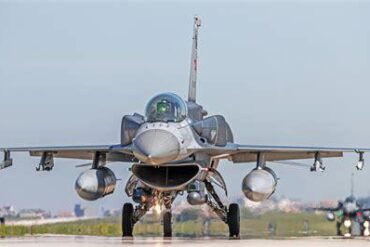
Faced with this reality, the Fuerza Aeroespacial Colombiana (FAC) undertook a comprehensive, multi-year evaluation of potential successors. Dassault’s Rafale and Lockheed Martin’s F-16 were strong contenders, but the Saab Gripen E/F emerged as the clear winner by early 2025. The Swedish offer combined a powerful tactical platform with long-term industrial, educational, and social benefits.
Strategic Contract Details and Industrial Vision
Signed on November 15, the contract encompasses:
- 17 Gripen E/F fighters, tailored for Colombia’s operational terrain
- Weapons systems, including beyond-visual-range air-to-air missiles
- Pilot and maintenance training programs
- Long-term maintenance and lifecycle support
However, what sets this deal apart is the dual offset agreements. These frameworks ensure that the Gripen acquisition feeds directly into Colombia’s industrial development, education systems, and technological sovereignty.
The offsets support initiatives in:
- Aeronautics and systems engineering
- Cybersecurity and software development
- Sustainable energy and water purification
- Healthcare modernization and solar infrastructure
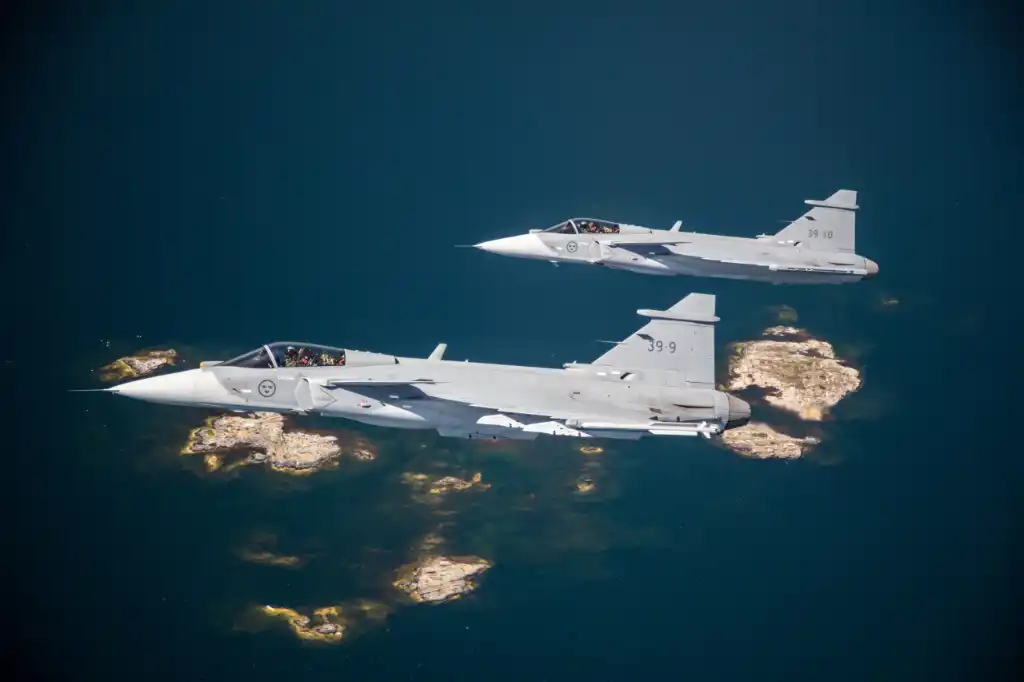
By participating in long-term co-development and maintenance programs, Colombia moves from being a mere consumer of advanced military systems to a regional partner in aerospace innovation.
Gripen E/F: Technical Powerhouse for Modern Threats
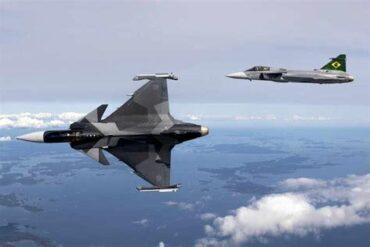
The Gripen E/F platform selected by Colombia belongs to Saab’s latest “E-series” generation, shared with Sweden and Brazil. Designed to offer superior multi-role capability, it performs with remarkable efficiency across diverse geographical and mission profiles.
Propulsion and Airframe:
- Powered by the General Electric F414-GE-39E turbofan generating 98 kN thrust, adapted for high-altitude, high-temperature operations like those across the Andes Mountains
- Extended fuselage with increased internal fuel capacity
- 10 external hardpoints carrying up to 7,200 kg of mixed payload
- Internal 27 mm Mauser BK-27 cannon, highly effective in dogfights and strafing runs
Avionics and Sensors:
- Raven ES-05 AESA radar, mounted on a swiveling antenna, offering a ±100° detection arc during aerial maneuvering
- Skyward-G infrared search and track (IRST) for passive detection of threats without radar emissions
- Integrated Electronic Warfare (EW) suite supporting emissions-controlled (EMCON) operations
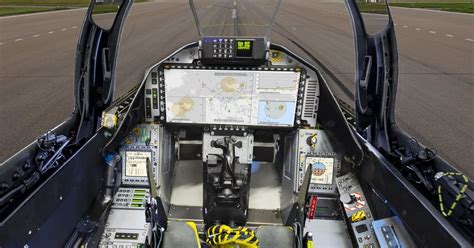
These systems converge within a network-centric cockpit display, allowing real-time coordination with ground forces, naval units, and airborne assets. The Gripen E doesn’t just fly — it connects, senses, and dominates the battlespace.
Versatility Across Missions and Terrains
The Gripen E/F offers Colombia not just superior airpower but also mission adaptability. The aircraft is capable of switching roles rapidly across regional theaters:
- Air Policing: Over the vast Amazon basin and mountainous Andean corridors
- Precision Strike: Utilizing laser and GPS-guided bombs, as well as AGM-65 Maverick missiles
- Maritime Control: With RBS-15 anti-ship missiles for Caribbean and Pacific coastlines
- Air Superiority: Employing Meteor missiles with a near-200 km range for beyond-visual-range engagements
These mission sets can be re-tasked within days using the same squadron, without needing to alter airframes. This grants the FAC unprecedented strategic agility.
Tactical Resilience and Forward Basing Capability
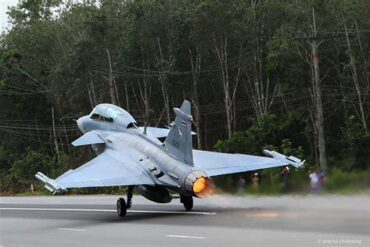
Saab’s design ethos for the Gripen emphasizes flexibility and survivability, key to Colombia’s unique geography and security posture. The aircraft can operate from short or improvised runways, ideal for dispersed basing across remote airfields, reducing vulnerability to first-strike attacks on centralized infrastructure.
A lean support team can refuel, rearm, and relaunch a Gripen in under 10 minutes, enabling sustained operations in contested environments. Its 360-degree EW suite, combined with IRST and EMCON doctrines, provides both protection and the ability to act as a mobile sensor node.
When integrated with ground-based radars and medium-altitude drones, the Gripen becomes part of a layered surveillance and defense network — a game-changer for Colombia’s maritime domain awareness and border integrity.
Industrial and Educational Uplift Through Strategic Offsets
Drawing from the success of the Gripen program in Brazil, Colombia now has a blueprint for building its own aerospace and defense ecosystem. In Brazil, the F-39E variant led to the creation of a domestic assembly line and a robust engineering pipeline. Colombia may not replicate the exact scale, but Saab’s offset framework ensures a sustainable industrial presence.
Key workforce and knowledge transfer plans include:
- Training Colombian engineers and pilots in NATO-compatible systems
- Involving local technicians in mission data management and systems integration
- Seeding programs for STEM education and industrial internships
Colombia’s BITD (Base Industrial y Tecnológica de Defensa) is poised to expand its scope from mere systems operation to software customization, mission planning, and potentially local parts manufacturing.
Strategic Autonomy and Diplomatic Rebalancing
By choosing a European supplier, Colombia reduces its long-term dependency on the U.S. defense supply chain, where acquisitions often come with geopolitical strings attached. This enhances Bogotá’s strategic autonomy, especially crucial in regional diplomacy and when navigating tensions across the Andean region, Amazon basin, and maritime zones.
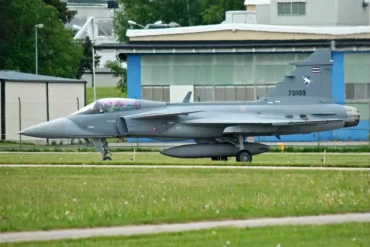
Moreover, the deal inserts Colombia into an exclusive and growing community of Gripen operators alongside Sweden, Brazil, and Thailand. It symbolizes a North-South technology partnership, bridging Europe and Latin America in an era of shifting global alliances.
Outlook: Building an Interconnected Future Force
The delivery window, spanning 2026 to 2032, allows Colombia to gradually retire its Kfir fleet without operational vacuum. During this time, the FAC will evolve into a network-enabled force capable of integrating manned and unmanned systems. As surveillance drones and satellite intelligence grow in prominence, Gripen’s ability to fuse and disseminate data makes it more than a fighter—it becomes an airborne command-and-control node.
In the next decade, we can expect:
- Regional joint exercises with NATO-aligned partners
- Gripen integration into multi-domain operations with drones, naval units, and cyber assets
- Expansion of Colombia’s aerospace exports, maintenance capabilities, and technical service industries
Conclusion: A New Era of Sovereign Airpower
Colombia’s choice to acquire the Saab Gripen E/F signifies more than a generational leap in technology. It’s a strategic assertion of sovereignty, industrial maturity, and long-term vision. Through this acquisition, Colombia positions itself not just as a user of advanced defense systems, but as a future co-developer of regional security architecture.
The skies over Colombia will soon be guarded by a smart, adaptable, and autonomous fleet, ensuring national defense, supporting global cooperation, and elevating Latin America’s role in 21st-century airpower evolution.