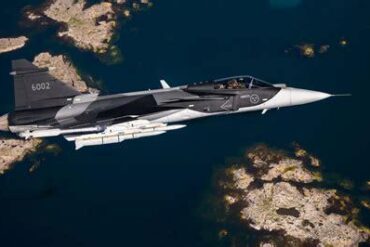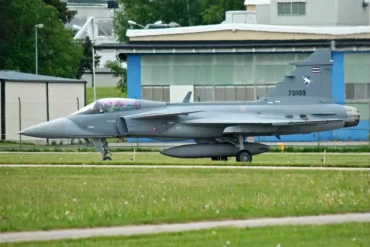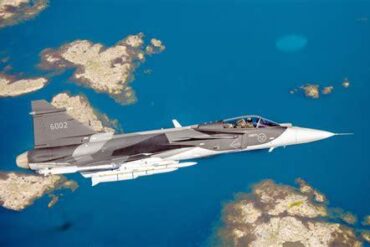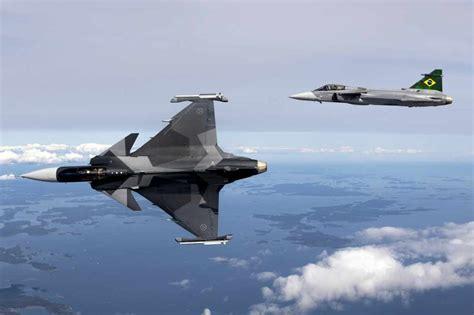
The Peruvian government has officially confirmed the purchase of 24 Swedish Gripen E/F multirole fighter jets, concluding a landmark defense procurement process that has spanned several years and drawn global attention. The decision, announced by President Dina Boluarte, marks Peru’s most significant air power investment in decades, valued at approximately $3.5 billion.
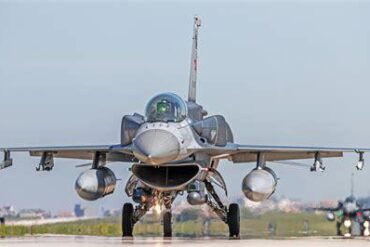
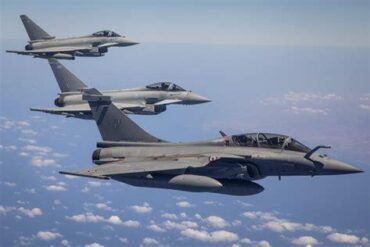
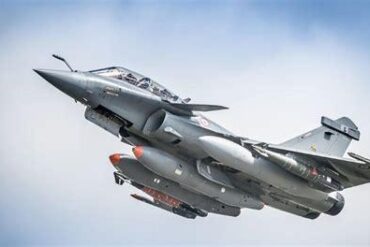
This acquisition follows the extensive evaluation of competing bids from France’s Dassault Rafale F4 and the United States’ Lockheed Martin F-16 Block 70, with the Swedish Saab Gripen E/F ultimately prevailing due to its competitive pricing, expedited delivery schedule, and attractive offset agreements.
Strategic Renewal of Peru’s Aging Air Fleet
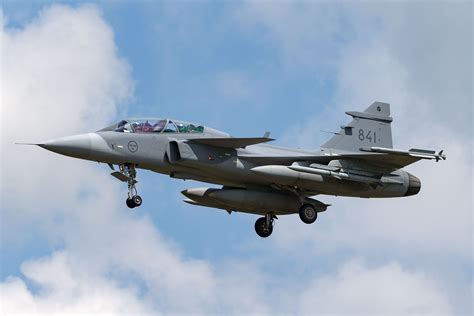
Peru’s air force, the Fuerza Aérea del Perú (FAP), has long relied on aging fleets of Mirage 2000P and MiG-29 aircraft, many of which are nearing the end of their operational life. The Mirage 2000P fleet, initially acquired in the mid-1980s, currently operates only six airworthy aircraft, with one lost to a training incident in 2024. The MiG-29, procured from Belarus in 1998, has faced persistent maintenance and modernization challenges, with only eight upgraded variants reportedly active.
Recognizing the urgent need to revitalize its air combat capability, the Peruvian Ministry of Defense initiated a two-phase procurement program to replace these aging platforms. The first phase, funded by a $2 billion domestic loan from Banco de la Nación, has been incorporated into the 2025 national budget. The second, worth $1.5 billion, is scheduled for 2026.
Why the Gripen E/F Triumphed Over the Rafale and F-16
Despite strong competition from France and the US, Saab’s Gripen E/F emerged as the preferred option for several key reasons. Cost was a major factor, with the unit price of the Gripen E estimated between $110 million and $120 million, significantly undercutting the Rafale F4 and F-16 Block 70, which reportedly ranged between $170 million and $240 million per aircraft.
Delivery timelines also played a decisive role. Saab has committed to delivering the first two Gripen E fighters by July 23, 2026, aligning with the FAP’s anniversary celebrations, while full delivery is expected within 24 months of contract signing. By comparison, the Rafale and F-16 proposals required at least 60 months for initial deliveries.
Equally critical were the offset and technology transfer packages offered by Saab. The Swedish manufacturer pledged substantial direct and indirect investments in Peru, potentially extending beyond defense into industrial and technological sectors. Saab’s track record of local co-production, exemplified by its collaboration with SIMA shipyards to build patrol vessels in Peru, strengthened the credibility of these commitments.
Technology and Capabilities of the Gripen E
The Gripen E represents a state-of-the-art, 4.5-generation multirole fighter tailored for modern combat requirements. Its key features include:
- Raven ES-05 AESA radar for advanced target detection and tracking.
- General Electric F414G engine, providing superior thrust and efficiency.
- Comprehensive electronic warfare suite, enhancing survivability.
- Compatibility with a broad array of air-to-air and air-to-ground munitions, including Meteor, IRIS-T, AIM-9X, AGM-65 Maverick, GBU-series precision bombs, and Taurus KEPD 350 cruise missiles.
- Maximum takeoff weight of 16,500 kg, a combat radius of 1,303 km, and a ferry range extending to 4,000 km.
- Short takeoff and landing requirements: 500 meters for takeoff and 600 meters for landing.
- Standard armament includes a 27 mm Mauser BK27 cannon, supporting both air combat and ground attack missions.
Saab also emphasizes the aircraft’s modular avionics architecture, which simplifies maintenance, enhances sortie generation rates, and facilitates upgrades over its service life.
Political and Industrial Dimensions of the Agreement
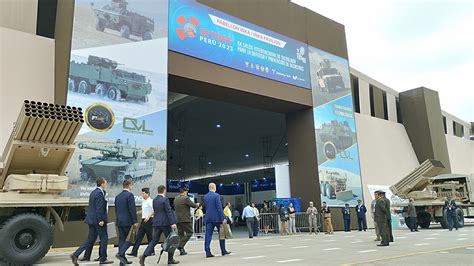
The Gripen acquisition is deeply intertwined with Peru’s broader defense industrial policy. The deal promises to incorporate significant technology transfer and local industry participation, critical objectives for the Boluarte administration. Saab’s prior co-production of patrol boats at SIMA Callao with Swedish firm Docksta Shipyard serves as a precedent for potential joint manufacturing arrangements.
However, questions remain about the role of Brazil in the production chain. Saab operates a Gripen E/F assembly line with Embraer in Brazil, where the aircraft is known as the F-39E. While Saab has not confirmed whether Peruvian jets will be produced in Brazil, Peruvian defense officials have voiced concerns about potential logistical dependency on a neighboring country with its own political dynamics, especially under President Luiz Inácio Lula da Silva.
These concerns echo debates seen in Colombia, which finalized its own Gripen E procurement in April 2025. Colombia, like Peru, prioritized offset terms, financing flexibility, and regional cooperation when selecting the Swedish fighter over competitors.
Regional Defense Trends and Peru’s Strategic Imperatives
Peru’s decision aligns with a broader trend in Latin America, where countries are upgrading air capabilities amidst evolving security challenges. Brazil, Argentina, and Colombia have all made recent investments in advanced fighter platforms, signaling a regional emphasis on maintaining credible deterrence.
Domestically, some Peruvian defense analysts question the strategic rationale behind investing heavily in manned fighters. Retired Colonel Jorge Gal’Lino, in a widely circulated op-ed, argued that modern warfare increasingly prioritizes unmanned systems, drone swarms, and network-centric operations, lessons underscored by the ongoing Russia-Ukraine conflict.
Nevertheless, supporters of the Gripen deal assert that Peru’s geopolitical environment demands both traditional air superiority and modern, interoperable platforms. The Gripen E, with its flexible design and lower operating costs compared to legacy aircraft, offers a balanced solution in an era of fiscal constraints and evolving threats.
Oversight, Procurement Safeguards, and Historical Context
The procurement process is subject to stringent oversight, reflecting Peru’s historical sensitivity to defense acquisitions. The Contraloría General de la República, along with the Ministries of Defense, Economy, and Finance, retains final approval authority.
The backdrop of past procurement scandals—such as the controversial Mirage 2000P deal of the 1980s, which involved alleged corruption and unauthorized sales to the Middle East—has fueled demands for transparency. The current administration has emphasized institutional oversight and state-to-state agreements to mitigate corruption risks.
The upcoming visit of Swedish Defense Minister Pål Jonson on July 10, 2025, is expected to finalize the intergovernmental agreement. Notably, two operational Gripen E fighters, provided with assistance from the Brazilian Air Force, will be showcased during this diplomatic event, symbolizing the tangible progress of the procurement.
Broader Military Modernization and Industrial Cooperation
The Gripen acquisition forms part of a comprehensive modernization agenda spanning Peru’s armed forces. Recent programs include:
- Procurement of two C-27J Spartan transport aircraft from Leonardo.
- Acquisition of two Boeing 737s for logistics and governmental use.
- Expansion of naval capabilities with Hyundai Heavy Industries submarines and investment in SIMA Callao’s shipbuilding facilities.
- Ground forces upgrades, including K2 tanks from Hyundai Rotem.
Moreover, Peru is diversifying defense partnerships through collaborations with South Korea, particularly the KF-1 and KF-21 fighter programs. Local aerospace firm SEMAN Perú SAC plays an integral role in component manufacturing, leveraging experience from the KT-1P trainer project with Korea Aerospace Industries (KAI).
These initiatives reflect Peru’s intent to maintain sovereign defense capabilities, reduce external dependencies, and promote industrial development across sectors.
Conclusion: A Defining Moment for Peruvian Air Power
Peru’s decision to procure the Saab Gripen E/F represents a transformative step for its military aviation and broader defense strategy. Despite debates over manned versus unmanned platforms, the Gripen’s advanced capabilities, competitive costs, and integrated offset package position it as a cornerstone of Peru’s air power for the coming decades.
As regional security dynamics evolve and defense technology rapidly advances, the success of this acquisition will depend not only on hardware but also on sustainable industrial partnerships, transparent governance, and operational integration. The coming months, particularly the finalization of the contract and the commencement of deliveries, will be pivotal in shaping Peru’s strategic posture and defense readiness in the 21st century.