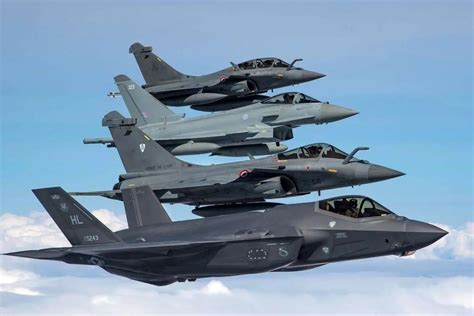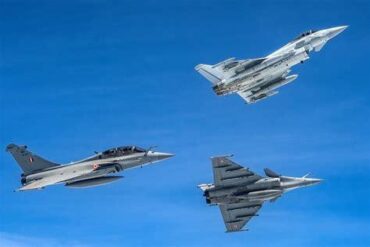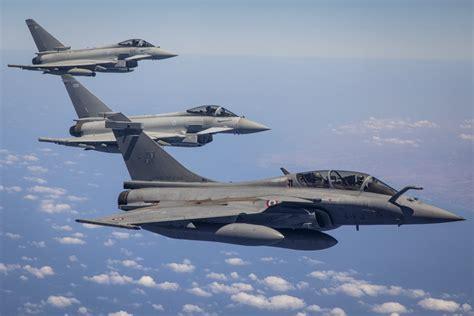
Europe’s three premier canard-configured fighter jets—the Dassault Rafale, Eurofighter Typhoon, and Saab Gripen—are witnessing an unprecedented wave of export momentum, reshaping the global defense aviation market. These platforms, collectively dubbed the “Euro-canards”, have transcended their early struggles and are now positioning themselves as formidable alternatives to U.S.-built aircraft, especially in a geopolitical climate marked by growing demand for strategic autonomy and diversified defense partnerships.
Once perceived as technologically sound but commercially disadvantaged, these fighters are now reversing the narrative. With enhanced variants, aggressive marketing, and new geopolitical dynamics, Europe’s trio of fighters is experiencing a commercial renaissance.
Rafale’s Export Surge: From Late Bloomer to Market Leader
Despite being the last of the trio to achieve export success, the Dassault Rafale has become the most commercially successful Euro-canard fighter. Its breakthrough came in 2015 when Egypt ordered 24 aircraft, including six diverted from French stocks. Egypt later added another 30, showcasing growing confidence in the Rafale’s capabilities. Qatar, in the same year, ordered 24 Rafales with a subsequent 12 added in 2017, consolidating Dassault’s foothold in the Gulf.
India’s order of 36 Rafales in 2016 was pivotal, signaling a geopolitical shift as it sought alternatives to Russian and American hardware. The aircraft’s deployment in operational scenarios against Pakistan elevated its regional credibility. More recently, Greece opted for 18 Rafales in 2020, followed by an additional 6, while Croatia chose 12 ex-French aircraft in 2020 to replace its Soviet-era MiG-21s.
Indonesia’s landmark deal in 2022 for 42 Rafale F4s, along with a 2023 contract with Serbia for 12 aircraft, signaled that Southeast Europe and the Indo-Pacific are emerging markets for the Rafale. The UAE’s massive purchase of 80 Rafales in 2021, following the U.S. cancellation of its F-35 sale to Abu Dhabi, was not only a financial win but a strategic geopolitical shift.
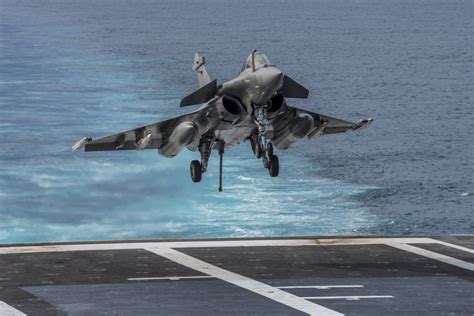
The Rafale’s naval variant also found success when India’s Navy signed on for 22 Rafale M carrier fighters and 4 land-based trainers in April 2025. By the end of 2024, total Rafale orders had surged to 507, with over 300 exports, solidifying its status as Europe’s most widely exported fighter.
Typhoon’s Enduring Appeal Amidst Strategic Realignments
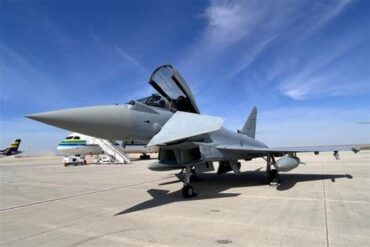
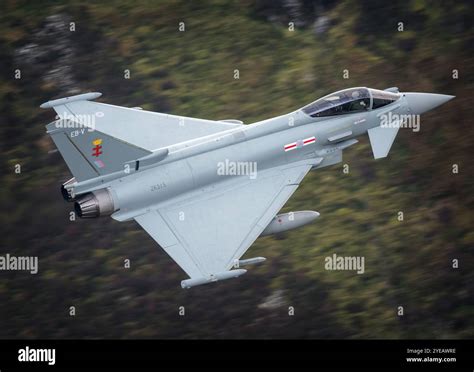
The Eurofighter Typhoon, a joint venture between the UK, Germany, Italy, and Spain, was always expected to perform well domestically. The program delivered over 470 aircraft to its founding members—160 to the UK, 143 to Germany, 96 to Italy, and 73 to Spain. However, Typhoon’s export path has been more sporadic.
Austria became its first international customer with 15 aircraft ordered in 2003. Saudi Arabia remains Typhoon’s largest export buyer with 72 units, although a follow-up order of 48 remains pending due to geopolitical sensitivities. The recent lifting of Germany’s arms embargo on Saudi Arabia in January 2024 has reignited hopes for this critical follow-on deal.
Other export victories included 12 aircraft to Oman in 2012 and 28 to Kuwait in 2016, the latter being the first to receive the advanced Captor E active electronically scanned array radar. Qatar’s surprise acquisition of 24 Typhoons in 2017—and a further 12 confirmed in 2024—demonstrates the aircraft’s adaptability in multirole environments and its acceptance alongside diverse fleets.
Domestically, Typhoon is experiencing a revival through Tranche 4 and 4+ orders. Germany committed to 38 new aircraft under the Quadriga program in 2020 and is evaluating an additional 20. Spain has signed on for 45 new aircraft across two tranches (2023–2024), and Italy is procuring 24 to replenish its fleet. The UK, while retiring its older Tranche 1 jets, is enhancing the rest of its fleet with the ECRS Mk2 radar, emphasizing electronic attack and situational awareness capabilities.
In total, 762 Typhoons have been ordered, with 163 for export. As future sixth-generation platforms like GCAP inch forward, the Typhoon remains integral to NATO’s operational capability.
Gripen Finds New Life in the Global South
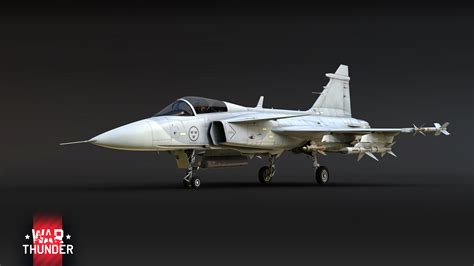
Sweden’s Saab Gripen has carved out a niche as a cost-effective, lightweight multirole fighter that punches well above its weight. The JAS 39A/B and later C/D variants secured modest export wins with countries like Czech Republic, Hungary, South Africa, and Thailand. Leases to Hungary and Czechia were extended, reflecting long-term operational satisfaction.
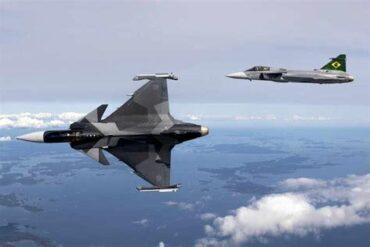
To maintain competitiveness, Saab launched the Gripen E/F with a powerful GE F414 engine, modernized avionics, and greater payload capacity. Despite a Swiss rejection following a 2014 referendum and a later loss to the F-35, the Gripen E found its international breakthrough with Brazil in 2013.
The Brazilian deal covered 36 aircraft (28 E and 8 F variants), featuring local assembly through Embraer. Not only does Brazil serve as a co-developer, but it also hosts the second Gripen production line—a vital factor in Saab’s broader Latin American strategy. Discussions for another 14 aircraft are ongoing, with more in prospect.
In 2024, Colombia selected the Gripen E/F to replace its aging Kfir fighters, signing a letter of intent for up to 24 jets. Saab is also progressing towards a potential sale to Peru, including 12 Gripens and four GlobalEye AEW&C aircraft, contingent on Swedish parliamentary approval. Thailand also declared the Gripen E as its preferred successor to its F-16A/B fleet.
Sustained Relevance in a Sixth-Generation Future
While Future Combat Air System (FCAS) and Global Combat Air Programme (GCAP) garner headlines, these next-gen platforms are not expected before the mid-2030s. In the interim, the Euro-canards have a crucial role to play—not just as stopgaps, but as core components of NATO and allied air forces’ deterrence strategies.
Significant upgrades are on the horizon:
- Dassault’s Rafale F5 will integrate technologies from FCAS, enhancing its combat networking, sensor fusion, and autonomous ops.
- Eurofighter’s Capability Roadmap envisions deeper integration of artificial intelligence, collaborative combat platforms, and hypersonic missile compatibility.
- Saab’s modular avionics allow the Gripen E/F to field rapid enhancements, aligning with evolving threats without major structural changes.
With regional tensions intensifying in Europe’s east, the Middle East, and across the Indo-Pacific, the demand for proven, modern, non-U.S. fighter options is rising. European manufacturers, backed by industrial incentives, sovereign tech control, and flexible engagement terms, are stepping in to fill that void.
Conclusion: Export Momentum Beyond the Canard
What began as three distinct national programs has now evolved into a cohesive story of European defense resurgence. The Rafale has emerged as a commercial juggernaut. The Typhoon retains its edge through industrial scale and multilateral backing. The Gripen, agile and adaptable, has become the fighter of choice for nations seeking high performance at lower cost.
Amid shifting alliances, export controls, and strategic diversification, the Euro-canards have found their second wind. With continued investment and real-world validation, these platforms will not merely bridge the gap to sixth-gen fighters—they may well define the operational landscape for the next two decades.