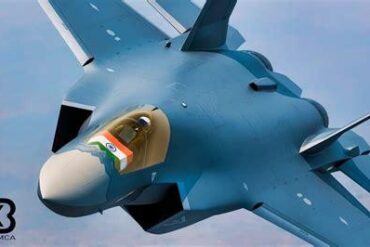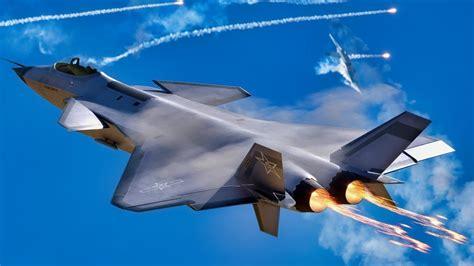
China’s cutting-edge J-20 stealth fighter has undergone a lethal transformation, dramatically extending its radar detection range thanks to a critical breakthrough in silicon carbide (SiC) semiconductors. This major leap, which reportedly triples the J-20’s ability to detect enemy aircraft like the F-22 and F-35, is not just a technical milestone but a strategic game-changer in the intensifying US-China chip war.
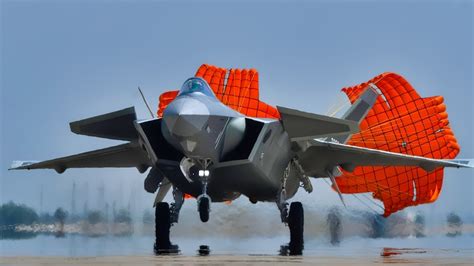
Developed by a research team at Shandong University, led by scientist Xu Xiangang, the Chinese-produced SiC chips now empower phased array radar systems in the J-20 with far greater reach, accuracy, and resistance to interference. The resulting advantage provides first-mover strike capability, a highly prized edge in aerial combat where milliseconds matter.
The Power of Silicon Carbide: Reinventing Radar Warfare
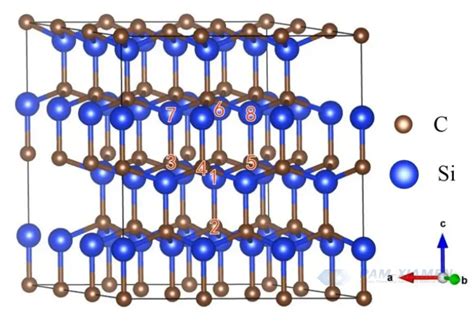
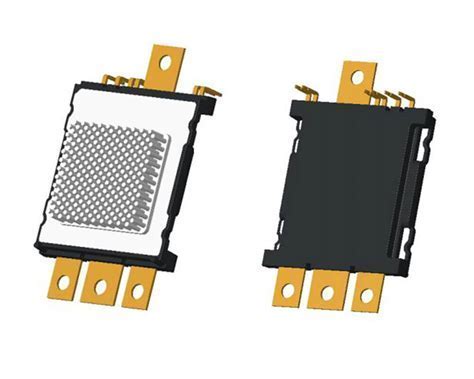
Silicon carbide, a compound of silicon and carbon, is a wide bandgap semiconductor that can operate under extreme voltages, frequencies, and temperatures. Unlike traditional silicon-based chips, SiC allows military systems to function reliably at up to 600°C, withstand high-power loads, and maintain efficiency under battlefield duress.
Xu’s team claims their high-purity, semi-insulating SiC crystals allow radar systems to function at three times the previous detection range. This significantly impacts not only fighter jet avionics but also missile guidance systems, laser-based weapons, and space-borne communication modules. According to the lab’s own statement, these chips form a “hardcore shield” of China’s defense architecture.
As Xu emphasized in a video message, “Without high-range radar, even the best-performing aircraft cannot be effective.” That admission reflects a broader truth in modern warfare — dominance in the electromagnetic spectrum is now as vital as firepower.
Strategic Isolation and National Resolve
The rise of this homegrown SiC capability must be understood in the broader context of the US-China chip war. With Washington’s sweeping sanctions, including the CHIPS and Science Act of 2022, China has been barred from accessing the latest Western semiconductor technology. In retaliation, Beijing intensified investment in domestic alternatives.
Xu’s team spent two decades overcoming challenges, from unstable material growth to subpar processing. Today, they can precisely control the crystalline structure of SiC wafers to meet the demands of frontline military applications. These materials now extend battery life, optimize electric grids, and enable quantum communication — fields crucial to both economic and military domains.
J-20: From Air Dominance to Strategic Platform
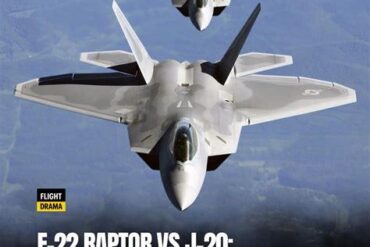
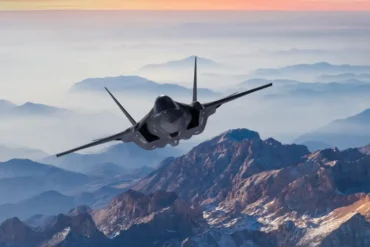
Introduced in 2017, the Chengdu J-20 “Mighty Dragon” has matured into a platform designed to rival the F-22 Raptor, America’s premier air superiority fighter. The J-20 is not a generic stealth aircraft — it’s a high-agility, multi-role machine equipped for both beyond-visual-range (BVR) combat and precision strikes.
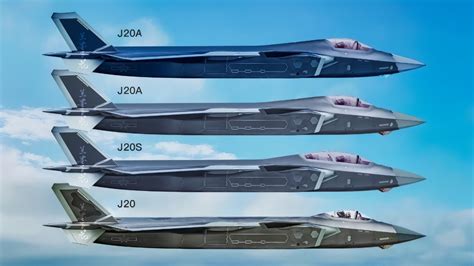
Its evolution includes multiple variants:
- J-20A: Initial production model.
- J-20B: Equipped with thrust vectoring nozzles for supermaneuverability.
- J-20S: The world’s first twin-seat stealth fighter, enabling AI integration and potential “loyal wingman” drone control.
These upgrades are backed by AESA radar, helmet-mounted display (HMD) systems, and a glass cockpit to maximize pilot situational awareness. Weapons like the PL-15, PL-21, and PL-12 long-range air-to-air missiles are stored in its internal bays to maintain radar stealth.
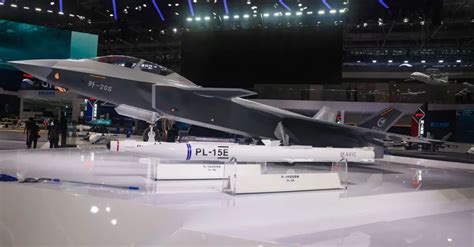
Military analyst Vijainder Thakur confirmed that the J-20’s AESA radar now uses SiC semiconductors. This allows for superior detection of low-observable aircraft at greater distances — potentially unmasking even stealthy foes like the F-35 or F-22 before they get within missile range.
Superiority in the Spectrum: Radar, Lasers, and More
The real weapon isn’t the missile — it’s information. In modern combat, the fighter jet that detects, locks on, and fires first has the overwhelming advantage. With SiC-boosted radar, the J-20 may now enter combat three times earlier than before. This gives PLAAF pilots a potentially decisive edge in the opening seconds of battle.
Moreover, the enhanced power and durability of SiC chips pave the way for integrated laser-based weaponry, such as high-energy counter-drone or missile defense systems. These technologies require huge energy flows and extreme heat thresholds, both of which SiC can handle efficiently.
This radar revolution aligns with China’s recent moves to arm the J-20 with nuclear weapons, confirming that the aircraft has now transcended tactical operations to become a strategic asset. If deployed with standoff nuclear-capable cruise missiles or air-launched ballistic weapons, the J-20 would serve as a central element in China’s airborne deterrence strategy.
Expansion and Deployment Across Five Theater Commands
China’s People’s Liberation Army Air Force (PLAAF) has reportedly deployed J-20 units in all five of its theater commands. By 2026, each command will field at least one J-20 brigade, and the fleet is projected to grow from its current count of over 200 jets to nearly 1,000 aircraft by 2035.
Such scaling — unmatched outside the United States — signals not just confidence in the platform but also its integration into future military doctrines. The aircraft’s rumored ability to coordinate drone swarms, act as a battlefield command hub, and conduct cyber-electronic operations all point to its role as a keystone in next-gen network-centric warfare.
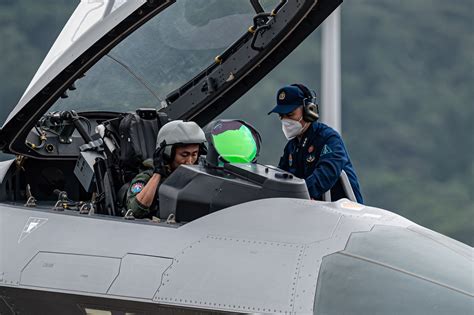
Notably, while China is prepared to export the J-35, a less advanced stealth fighter, it has kept the J-20 off the global market. This echoes the U.S. stance on the F-22 — withheld from allies due to its advanced technology. It underscores how Beijing sees the J-20 not merely as hardware, but as a critical strategic secret.
The Final Phase of Air Dominance
The incorporation of SiC semiconductors marks a turning point not just for the J-20, but for the very fabric of air power. China’s success in producing these chips domestically, despite decades of technological blockade, is not just an engineering feat — it’s a geostrategic declaration.
As the race for military AI, hypersonic glide vehicles, and space-based ISR accelerates, the role of semiconductors becomes increasingly foundational. In this contest, the Mighty Dragon now breathes fire backed by indigenously forged SiC — stealthier, faster, smarter, and 3X deadlier than ever before.