Rewriting the Rules of Air Combat Stability
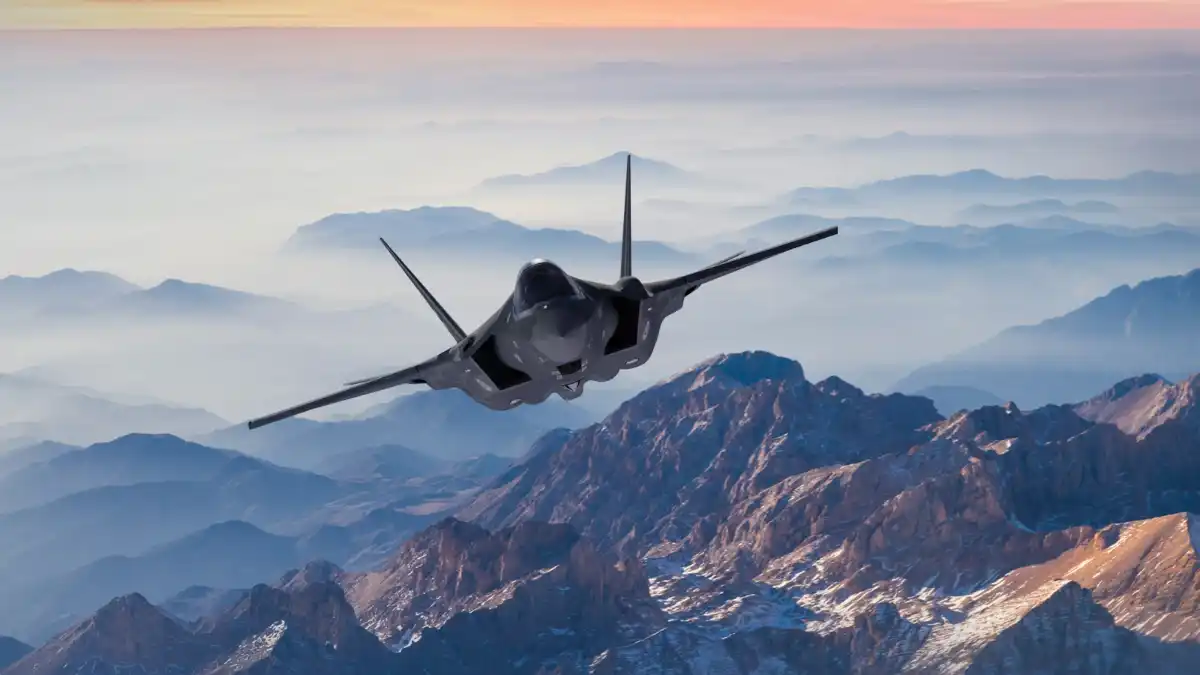
Modern air combat is no longer just a contest of speed, thrust, and pilot reflexes—it is a calculated orchestration of software, aerodynamics, and real-time computation. At the center of this transformation stands the F-35 Lightning II, a fighter designed not merely to fly, but to think ahead of instability itself. Its Automated Departure Resistance System (ADRS) represents a decisive leap forward, fundamentally changing how pilots interact with the limits of flight.
Traditional fighter jets demand that pilots constantly walk a razor-thin line between aggressive maneuvering and aerodynamic disaster. Push too far, too fast, and the aircraft can enter a stall or spin, often with catastrophic consequences. The F-35 disrupts that paradigm. Instead of relying on pilot restraint or static safety buffers, it embeds a dynamic, predictive safety layer directly into the aircraft’s control system.
This innovation transforms high-risk maneuvers into controlled actions, allowing pilots to operate at the edge of the flight envelope without crossing into danger. In effect, the F-35 doesn’t just prevent mistakes—it redefines what is possible without making one.
From Fly-By-Wire to Intelligent Flight Control
The journey toward the F-35’s advanced stability begins with the evolution of fly-by-wire technology, a system that replaced mechanical linkages with electronic signals. Earlier aircraft like the F-16 Fighting Falcon pioneered this approach, using programmed rules to interpret pilot inputs and adjust control surfaces accordingly.
However, those systems relied heavily on gain scheduling—a method that required engineers to predefine how the aircraft should behave under countless combinations of speed, altitude, and configuration. It worked, but it was rigid. Every possible scenario had to be anticipated during testing, leaving little room for adaptability in unforeseen conditions.
The F-35 abandons this rigidity in favor of Nonlinear Dynamic Inversion (NDI), a mathematically sophisticated method that calculates the aircraft’s behavior in real time. Instead of referencing a library of pre-programmed responses, the system continuously models the aircraft’s current state and determines the precise control inputs needed to achieve the pilot’s command—without compromising stability.
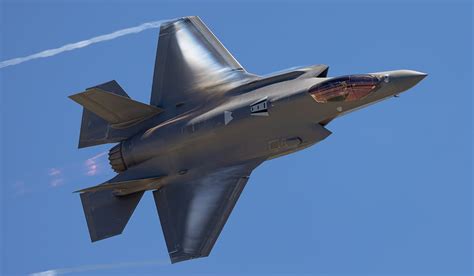
This shift is profound. It means the aircraft is no longer reacting based on past assumptions; it is actively solving the physics of flight as they unfold. The result is a jet that feels less like a machine with limits and more like an extension of the pilot’s intent—filtered through a layer of constant aerodynamic intelligence.
Understanding Automated Departure Resistance: A Digital Safety Net
At its core, the Automated Departure Resistance System acts as a guardian against one of aviation’s most dangerous phenomena: departure from controlled flight. This includes stalls, spins, and other conditions where airflow over the wings becomes unstable and the aircraft loses predictable control.
What makes ADRS remarkable is not just that it prevents these conditions, but how it does so. The system continuously evaluates:
- Angle of attack (AoA)
- Energy state and airspeed
- Yaw, pitch, and roll rates
- Control surface effectiveness
Rather than simply blocking dangerous inputs, it reshapes them. When a pilot commands an aggressive maneuver that would traditionally exceed safe limits, the system recalculates the necessary control deflections to achieve the closest possible outcome without triggering instability.
This is why the F-35 is often described as “spin-resistant” or even “spin-proof” in practical terms. The aircraft doesn’t just avoid danger—it actively steers away from it while preserving the pilot’s tactical intent.
High Angle of Attack: Turning Risk Into Advantage
One of the most dramatic demonstrations of the F-35’s capabilities lies in its performance at extreme angles of attack, where most aircraft would falter. In conventional fighters, pushing the nose too high disrupts airflow, leading to a stall. Recovery requires immediate corrective action, often costing valuable time and position in combat.
The F-35, by contrast, thrives in this regime. Its control system maintains a strict upper limit—around 50 degrees angle of attack—while allowing the pilot to operate confidently near that boundary. The aircraft continuously adjusts control surfaces, including rudders and horizontal stabilizers, to counteract yaw and maintain directional stability.
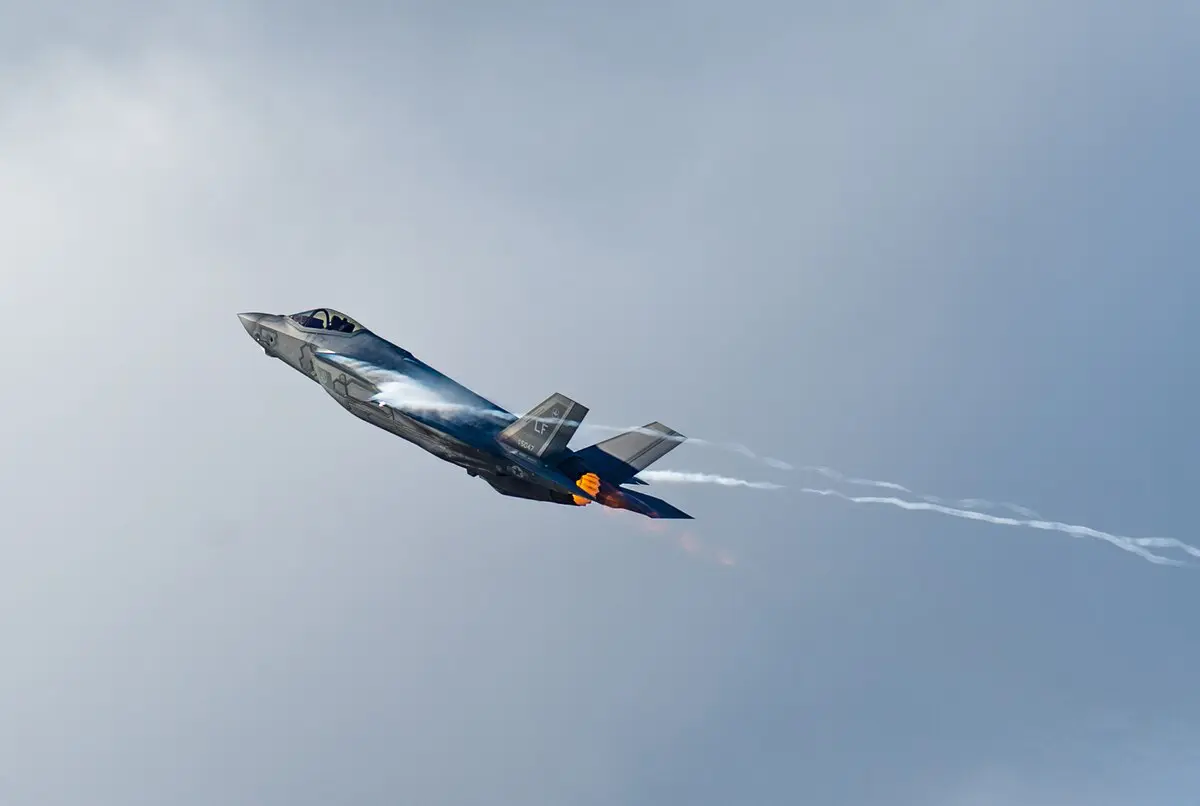
This capability is not just about survivability; it is a tactical advantage. High-AoA maneuvering enables rapid changes in orientation, allowing pilots to point sensors and weapons at targets even when traditional aerodynamic forces would resist such movement.
In testing, the system proved so reliable that safety measures like spin recovery parachutes were deemed unnecessary earlier than expected—a testament to the confidence engineers placed in the aircraft’s automated safeguards.
Control Beyond Limits: How NDI Redefines Pilot Input
When a pilot pulls back on the control stick in a legacy aircraft, they are effectively requesting a specific control surface deflection. In the F-35, that same action represents a desired outcome, not a direct command. The system interprets intent rather than blindly executing input.
Using NDI, the aircraft calculates the maximum achievable pitch rate that will not result in a departure. It then determines the exact combination of control surface movements needed to achieve that rate safely. This process occurs continuously, updating multiple times per second.
At high angles of attack, where traditional ailerons lose effectiveness, the F-35 adapts seamlessly. It repurposes its horizontal stabilizers as differential flaperons, maintaining roll control even in turbulent airflow conditions.
This adaptability ensures that control authority is never lost, even when the aircraft operates in regions that would render other jets unstable or unresponsive.
The Pedal Turn: A Signature Maneuver of Controlled Aggression
Among the most striking examples of the F-35’s capabilities is the pedal turn, a maneuver that would push most aircraft into a spin. Executed at high angle of attack, it involves pulling the nose upward and applying full rudder input to pivot the aircraft around its center of gravity.
In older jets, such a maneuver would almost certainly lead to a loss of control. In the F-35, it becomes a precise tactical tool.
The aircraft’s software coordinates flaps, rudders, and stabilizers to maintain controlled flight while rotating the nose rapidly. This allows the pilot to:
- Quickly reorient toward a target
- Force an enemy aircraft to overshoot
- Achieve missile lock in tight engagements
The trade-off is energy loss—such maneuvers bleed speed rapidly—but in the split-second dynamics of a dogfight, positional advantage often outweighs raw velocity. The F-35 ensures that even these extreme tactics remain within the bounds of controlled flight.
Comparing the F-35 to Legacy and Contemporary Fighters
To fully appreciate the significance of ADRS, it helps to compare the F-35 with other frontline fighters.
The F-22 Raptor, for example, achieves extraordinary maneuverability through thrust vectoring, allowing it to perform dramatic post-stall maneuvers. However, it still relies on pilot awareness and control to manage extreme conditions.
The Eurofighter Typhoon, on the other hand, is designed for high-energy dogfighting, with inherently unstable aerodynamics that maximize agility. Its fly-by-wire system keeps it controllable, but it demands constant pilot input to stay within safe limits.
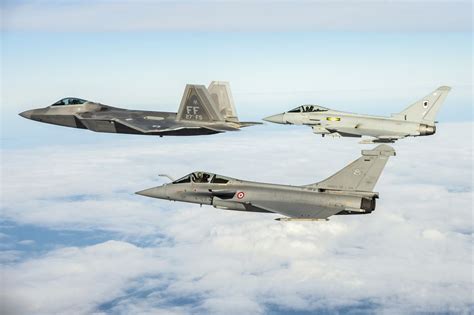
The F-35 takes a different approach. Rather than maximizing raw maneuverability, it focuses on predictability and accessibility. Its automation ensures that pilots can consistently extract maximum performance without risking departure from controlled flight.
This distinction matters. In a real combat scenario, reducing cognitive load can be as valuable as increasing aerodynamic capability. The F-35 allows pilots to dedicate more attention to sensor fusion, targeting, and tactical decision-making, rather than wrestling with the aircraft itself.
Combat Reality: Where Automation Meets Human Limits
In high-G dogfights, pilots endure extreme physical stress while processing rapidly changing information. Maintaining situational awareness while managing aircraft stability is a demanding balancing act.
The F-35 alleviates this burden. By automating stability, it effectively removes one layer of complexity, allowing pilots to focus entirely on the fight. This advantage becomes evident in training exercises, where pilots often report that the aircraft feels intuitively responsive yet inherently safe.
During real-world training engagements, such as those conducted at Ramstein Air Base, the differences between aircraft become clear. While fighters like the Eurofighter may outperform the F-35 in sustained turning engagements, the F-35’s strength lies in its ability to maintain control under extreme conditions without hesitation or risk.
This reliability translates into confidence—a critical factor when decisions must be made in fractions of a second.
Why Spin Prevention Is More Than Safety
It would be easy to frame the Automated Departure Resistance System as merely a safety feature. That interpretation misses the bigger picture. In modern air combat, safety and performance are deeply intertwined.
By eliminating the risk of spins and stalls during aggressive maneuvering, the F-35 effectively expands its usable flight envelope. Pilots can push harder, react faster, and execute maneuvers that would otherwise be too risky to attempt.
This capability changes the psychology of combat. Instead of holding back to preserve control, pilots can operate with maximum aggression and precision, knowing that the aircraft will not betray them at the edge of performance.
The Strategic Edge: Automation as a Force Multiplier
The F-35 was never intended to dominate purely through dogfighting prowess. Its true strength lies in stealth, sensor fusion, and networked warfare. Yet the inclusion of advanced flight control systems like ADRS ensures that, even when forced into close-range combat, the aircraft remains formidable.
Automation becomes a force multiplier, compensating for areas where the aircraft may not match the raw performance of specialized air superiority fighters. It ensures that every ounce of available capability can be used safely and effectively.
In this sense, the F-35 represents a broader shift in military aviation: a move away from purely mechanical excellence toward integrated systems that enhance human capability through intelligent design.
The Future of Flight Control Systems
The success of the F-35’s Automated Departure Resistance System signals a clear direction for future aircraft. As computational power continues to grow, the integration of real-time modeling, adaptive control laws, and predictive algorithms will become standard.
Future fighters may go even further, incorporating machine learning and AI-driven optimization to refine control strategies during flight. The boundary between pilot input and aircraft response will continue to blur, creating systems that are not only safer but also more capable than ever before.
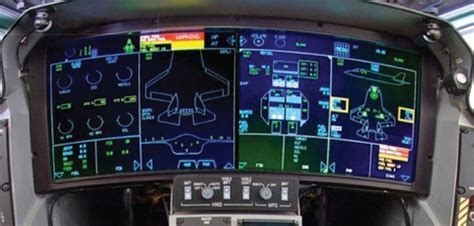
What remains constant is the goal: to allow pilots to operate at the limits of performance without crossing into danger. The F-35 demonstrates that this goal is not only achievable but already operational.
Conclusion: Mastering the Edge Without Falling Off
The F-35’s Automated Departure Resistance System is more than a technical achievement—it is a fundamental rethinking of how aircraft interact with the laws of physics. By combining Nonlinear Dynamic Inversion, real-time computation, and intelligent control logic, it transforms the most dangerous aspects of flight into manageable, even advantageous, conditions.
In the unforgiving environment of aerial combat, where milliseconds determine outcomes, this capability provides a decisive edge. Pilots are no longer constrained by the fear of losing control; instead, they are empowered to exploit every available maneuver with confidence.
The result is an aircraft that doesn’t just survive at the edge of performance—it thrives there, turning potential chaos into controlled, calculated dominance.