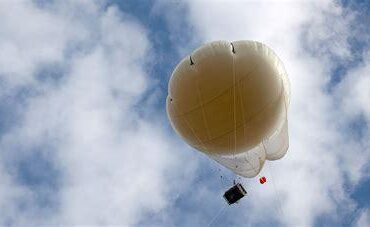
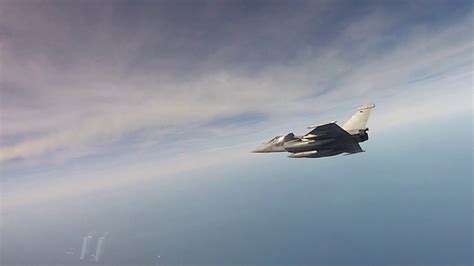
France has reached a strategic milestone in aerospace defense with a high-profile test involving the Rafale and Mirage 2000 fighter jets, which successfully engaged and destroyed stratospheric balloons operating at an altitude exceeding 20 kilometers (65,000 feet). This operation was conducted in collaboration with CNES (Centre National d’Études Spatiales), which provided the high-altitude balloons for the interception trials. The dramatic demonstration has pushed the envelope of French aerial warfare capability, showcasing the growing importance of very high altitude (VHA) interception strategies in modern military doctrine.
French Defense Pushes the Limits of VHA Interception
Announced by Defense Minister Sébastien Lecornu on social media platform X, the operation marks a defining achievement in high-altitude warfare. “These test launches challenged the technological limits of our aircraft, pilots, and weaponry,” Lecornu stated, emphasizing that the test is a cornerstone in France’s new high-altitude defense doctrine.
The target balloons, hovering in the stratosphere—an atmospheric zone traditionally considered outside the engagement envelope of standard fighter aircraft—were neutralized using the Missile d’Interception, de Combat et d’Autodéfense (MICA) air-to-air missile system. These engagements represent the first confirmed kill of a stratospheric platform by European combat aircraft, indicating France’s commitment to preparing for future battles in a contested near-space domain.
MICA Missile System: The Silent Assassin of the Skies
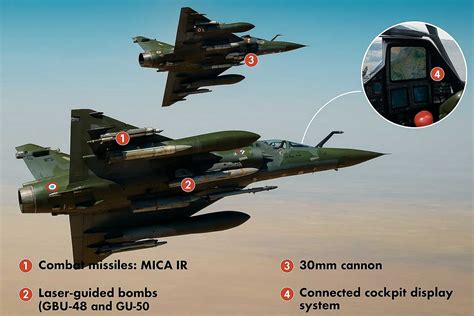
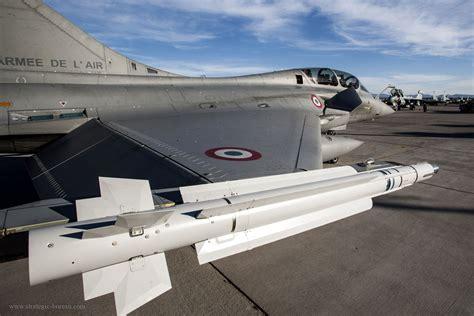
The MICA missile, developed by MBDA, remains at the heart of France’s aerial interception capability. It is compatible with both Rafale and Mirage 2000-5 fighter jets and serves a dual-purpose role in Beyond Visual Range (BVR) and Short Range (SR) engagements. What sets MICA apart is its flexible seeker technology, available in two variants:
- MICA RF (Radio Frequency): Equipped with an advanced radar seeker for all-weather interception.
- MICA IR (Infrared): Outfitted with a dual waveband imaging infrared seeker, enabling silent and stealthy operations.
In high-speed SR engagements, MICA can operate in Lock On After Launch (LOAL) mode, granting a 360-degree engagement envelope. This feature ensures first-shot, first-kill potential, even against rear-sector threats. MICA’s infrared variant excels at evading electronic countermeasures, offering a stealthy kill chain—a capability critical for neutralizing high-altitude surveillance balloons that may use passive or semi-passive electronics to monitor airspace.
Rafale & Mirage 2000: Dual-Platform Execution
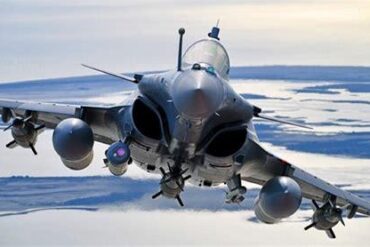
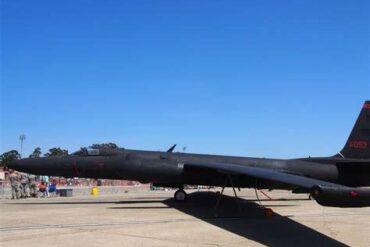
The engagement was carried out using a mix of Dassault Rafale multirole fighters and Mirage 2000 interceptors, emphasizing joint operational flexibility. While the Rafale is widely recognized for its multi-role dominance and advanced sensor suite, the Mirage 2000-5 remains a high-performance interceptor platform, particularly when integrated with updated avionics and missile systems like MICA.
This joint deployment underlines France’s approach to layered air defense, leveraging both old and new generation aircraft in tandem. By validating stratospheric kill capability using both platforms, the French Air and Space Force ensures that current inventories remain lethal and future-ready against non-conventional threats.
The Strategic Importance of Very High Altitude (VHA) Warfare
With stratospheric platforms emerging as viable tools for surveillance, communications, and electronic warfare, militaries are racing to extend their anti-access capabilities beyond traditional airspace. These platforms fly higher than commercial aviation and many conventional air defense systems can reach, creating a gray zone between air and space.
France’s test indicates a paradigm shift in European defense thinking, where near-space interception is no longer theoretical. The deployment of these balloons by CNES also speaks to the inter-agency synergy between civilian space institutions and military planners, a necessary step as hybrid aerial threats—from spy balloons to high-altitude drones—become a regular feature of modern conflict.
Echoes of the U.S. Spy Balloon Incident
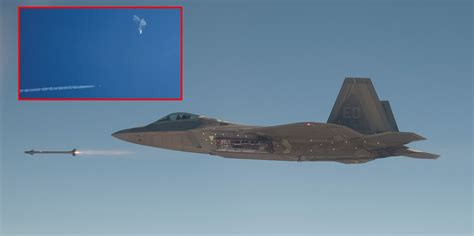
The French test comes just over two years after a headline-grabbing event in February 2023, when a U.S. Air Force F-22 Raptor shot down a Chinese surveillance balloon off the coast of South Carolina. That balloon, suspected of collecting strategic intelligence across the continental United States, was neutralized using an AIM-9X Sidewinder missile at an altitude between 60,000 and 65,000 feet.
Then-Defense Secretary Lloyd J. Austin described the mission as a necessary response to an incursion of U.S. airspace by the People’s Republic of China (PRC). The incident marked the first aerial kill for the F-22, with support provided by F-15 Eagles and air refueling tankers from multiple states. The operation was coordinated with the Canadian government via NORAD.
Though technologically distinct, the French test mirrors the U.S. operation in several ways: the elevation of the threat, the geopolitical implications of aerial sovereignty, and the requirement for precision missile engagement at extreme altitudes. However, France’s use of indigenously developed platforms and weapon systems makes this a significant assertion of European aerospace autonomy.
Military and Geopolitical Implications
The French test sends a clear signal—not just to potential adversaries but also to allies—about its commitment to airspace sovereignty and technological self-reliance. As balloon-based surveillance platforms become more common due to their low cost, long endurance, and stealthy radar profiles, advanced interception capabilities like those demonstrated by the MICA-armed Rafales will become essential components of national air defense.
Additionally, this test may influence NATO doctrine, particularly in the context of balloon-based reconnaissance from state and non-state actors. As more countries experiment with such platforms for signals intelligence (SIGINT) and electronic warfare, there is a pressing need for member states to possess credible response tools.
Contrasts With the F-35 Fiasco in Switzerland
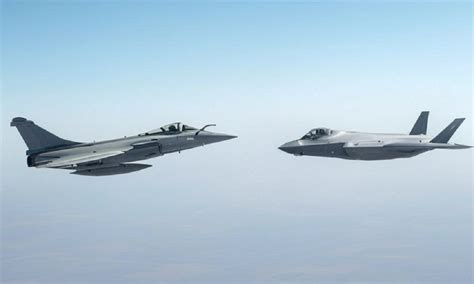
This successful test also arrives at a time when European defense procurement is under renewed scrutiny, especially after the Swiss–American dispute over the Lockheed Martin F-35A deal. Switzerland, which opted for the F-35A over the Dassault Rafale and others, now faces unexpected additional costs stemming from inflation and raw material price increases in the U.S.
While the U.S. Defense Security Cooperation Agency (DSCA) insists these increases are unavoidable, Bern has rejected the argument, maintaining that the fixed contract price was binding. Potential overruns could reach up to $1.3 billion, a significant burden for the Swiss taxpayer and a blow to the credibility of foreign military sales programs.
This ongoing dispute has led to parliamentary inquiries in Switzerland, questioning why the F-35 was selected despite technical issues and cost volatility. In contrast, France’s demonstration of the Rafale’s efficacy in a novel operational environment underscores the value of European-made solutions that offer performance transparency and logistical sovereignty.
The Future of Near-Space Defense
France’s Rafale-MICA test is more than just a milestone—it’s a harbinger of the future battlefield. As near-space becomes a contested zone, nations must invest in adaptable systems that blur the lines between air and space operations. By successfully intercepting stratospheric balloons, France not only proves the tactical relevance of its air fleet, but also contributes to shaping the emerging doctrine of VHA warfare.
What’s next? Likely developments include:
- Integration of hypersonic tracking radars with Rafale systems for faster target acquisition.
- Development of new MICA variants with extended range optimized for thin-atmosphere combat.
- Cross-platform simulations with European allies to ensure interoperability in joint high-altitude defense missions.
France’s resolve to dominate the VHA battlespace is now evident. And as global tensions increase, such strategic foresight may define which nations can effectively defend their sovereignty above 20 kilometers.