The modern battlespace is defined not only by firepower but by information dominance—and nowhere is that more evident than in the rarefied air above 40,000 feet. High-altitude reconnaissance aircraft represent the pinnacle of intelligence, surveillance, and reconnaissance (ISR), where altitude becomes a decisive advantage. The higher an aircraft flies, the farther it sees, the longer it survives, and the more effectively it can collect intelligence across vast, contested regions.
Within the United States’ aerial arsenal, only a select group of platforms can operate in this thin-air domain. These aircraft are engineered not merely to fly high, but to transform altitude into operational superiority—extending sensor reach, minimizing vulnerability, and delivering persistent, actionable intelligence.
From multi-mission maritime hunters to near-stratospheric spy planes, these five aircraft define the upper limits of airborne reconnaissance in current U.S. military operations.
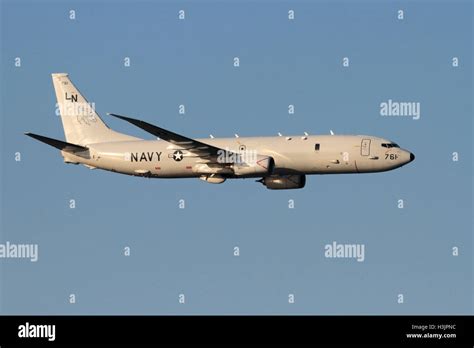
5. Boeing P-8A Poseidon — Multi-Mission Power at 41,000 Feet
The Boeing P-8A Poseidon stands apart from traditional reconnaissance aircraft. While it ranks lowest in altitude among this elite group, its 41,000-foot ceiling still provides a commanding vantage point over the world’s oceans—more than sufficient for wide-area maritime surveillance.
Derived from the commercial Boeing 737 platform, the P-8A has evolved into one of the most versatile ISR and combat aircraft in the U.S. Navy’s inventory. It is not merely a sensor platform—it is a hunter-killer system capable of detecting, tracking, and engaging threats in real time.
Its altitude enables broad-area scanning, but its true strength lies in what happens after detection. The aircraft can deploy sonobuoys, coordinate with naval task forces, and engage submarines or surface vessels directly. This fusion of reconnaissance and strike capability marks a fundamental shift in ISR doctrine—from passive observation to active battlefield participation.
- Maximum Altitude: 41,000 feet
- Range: 1,200 nautical miles
- Maximum Takeoff Weight: 189,200 lbs
The Poseidon exemplifies how modern ISR platforms prioritize flexibility and integration over pure altitude. While it cannot reach the stratosphere, it compensates with unmatched multi-domain effectiveness, making it indispensable in maritime operations.
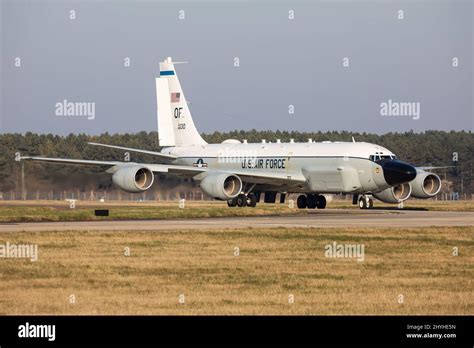
4. Boeing RC-135 Rivet Joint — The Flying Intelligence Center at 50,000 Feet
The RC-135 Rivet Joint is less about altitude extremes and more about what it carries into the sky. Operating at up to 50,000 feet, this aircraft functions as a flying intelligence hub, capable of intercepting, analyzing, and disseminating signals intelligence (SIGINT) in real time.
Unlike high-altitude drones that rely on remote processing, the Rivet Joint brings analysts into the air, allowing for immediate interpretation of electronic emissions—from radar signals to communications networks. This capability transforms raw data into actionable intelligence within minutes, dramatically accelerating decision-making cycles.
Its altitude enhances line-of-sight coverage, enabling it to monitor vast areas without entering heavily defended airspace. However, the real advantage lies in its onboard processing power and human expertise, which no autonomous system can fully replicate.
- Maximum Altitude: 50,000 feet
- Range: 3,900 miles
- Maximum Takeoff Weight: 322,500 lbs
The Rivet Joint remains a cornerstone of U.S. ISR strategy because it merges high-altitude reach with deep analytical capability, effectively turning the aircraft into a real-time command node in the sky.
3. Northrop Grumman MQ-4C Triton — Persistent Maritime Surveillance at 50,000 Feet
The MQ-4C Triton represents the evolution of high-altitude reconnaissance into the maritime domain. Designed specifically for the U.S. Navy, this uncrewed aircraft operates at 50,000 feet, where it can scan enormous oceanic expanses with unmatched persistence.
Derived from the Global Hawk family, the Triton is optimized for maritime domain awareness—tracking ships, monitoring coastlines, and identifying anomalies across vast sea lanes. Its altitude allows it to remain above weather systems, ensuring continuous sensor performance even in harsh conditions.
What truly distinguishes the Triton is its endurance. With mission durations exceeding 24 hours, it provides uninterrupted surveillance that crewed aircraft simply cannot sustain. This makes it a force multiplier, feeding real-time intelligence to assets like the P-8A Poseidon, which can then respond tactically.
- Maximum Altitude: 50,000 feet
- Range: 7,400 nautical miles
- Maximum Takeoff Weight: 32,250 lbs
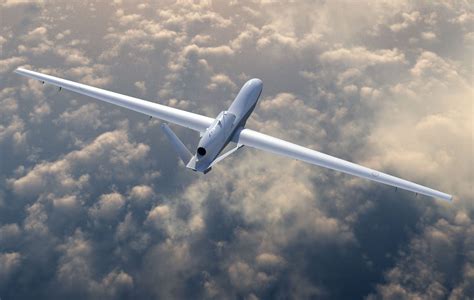
In strategic terms, the Triton transforms altitude into persistent maritime dominance, enabling the U.S. Navy to monitor critical regions like the Indo-Pacific with continuous, wide-area coverage.
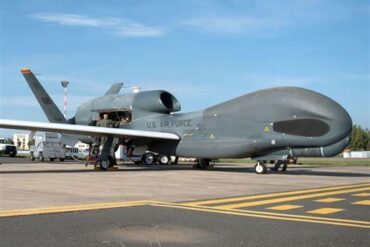
2. Northrop Grumman RQ-4 Global Hawk — Near-Stratospheric Endurance at 60,000 Feet
The RQ-4 Global Hawk redefined reconnaissance by combining high-altitude flight with extreme endurance. Capable of cruising above 60,000 feet, it operates in a realm where few aircraft can follow, gathering intelligence across entire regions in a single mission.
Unlike the Triton, which focuses on maritime operations, the Global Hawk is designed for broad-area land surveillance. It can image vast territories, monitor borders, and provide persistent coverage of conflict zones—all while remaining safely خارج the reach of many air الدفاع systems.
Its endurance is equally impressive. Missions exceeding 30 hours allow the aircraft to maintain a continuous presence over critical مناطق, delivering near-real-time intelligence to commanders. This persistence has fundamentally changed ISR operations, shifting from short-duration reconnaissance flights to continuous situational awareness.
- Maximum Altitude: 60,000 feet
- Range: 12,300 nautical miles
- Maximum Takeoff Weight: 32,250 lbs
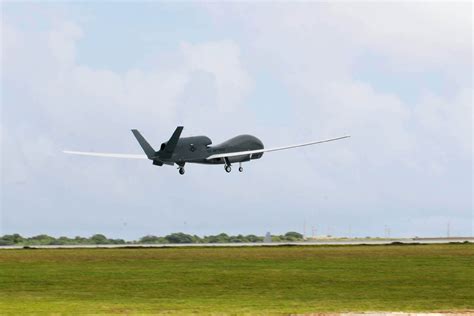
The Global Hawk’s true power lies in its ability to combine altitude, endurance, and autonomy, creating a surveillance platform that can observe entire theaters without interruption.
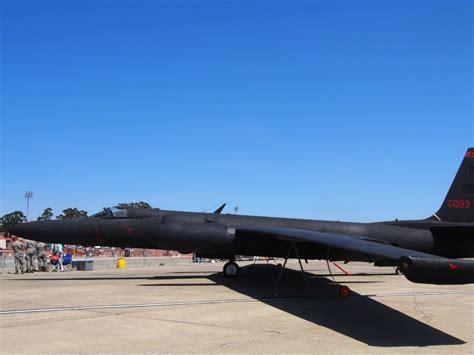
1. Lockheed U-2 Dragon Lady — The Undisputed High-Altitude King at 70,000+ Feet
At the top of the hierarchy stands the легендарный Lockheed U-2 Dragon Lady, a reconnaissance aircraft that continues to dominate the high-altitude domain decades after its introduction. With operational altitudes exceeding 70,000 feet, it remains the highest-flying aircraft in active U.S. service.
Originally developed during the Cold War, the U-2 was designed to operate beyond the reach of enemy defenses—and it still fulfills that role today. Its altitude provides an extraordinary field of view, allowing its sensors to capture detailed imagery and signals intelligence across vast distances.
What keeps the U-2 relevant in an era of satellites and drones is its flexibility. Unlike space-based assets, it can be rapidly deployed, retasked mid-mission, and concentrated over specific areas of interest. Its sensor suite is continuously upgraded, ensuring it remains at the cutting edge of ISR technology.
- Maximum Altitude: 70,000+ feet
- Range: 7,000+ miles
- Maximum Takeoff Weight: 40,000 lbs
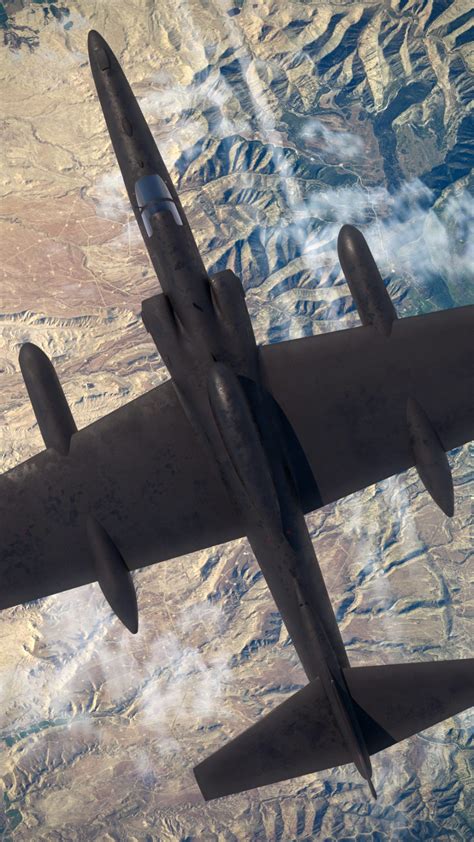
The U-2’s enduring value lies in its unique ability to blend extreme altitude, high-resolution sensors, and operational agility. It is not merely surviving in the modern era—it is thriving as a specialized, high-altitude intelligence platform.
Why Altitude Still Defines Reconnaissance Superiority
Altitude is not just a technical specification—it is a strategic multiplier. The higher an aircraft flies, the greater its sensor horizon, allowing it to monitor larger areas with fewer assets. This translates directly into efficiency, survivability, and intelligence quality.
High altitude also provides a critical buffer against threats. Surface-to-air missiles, anti-aircraft artillery, and even some fighter aircraft struggle to reach these heights, enabling reconnaissance platforms to operate with reduced risk.
At the same time, altitude enhances sensor performance. Optical systems gain wider coverage, radar systems achieve longer detection ranges, and signals intelligence platforms can intercept emissions across broader areas.
Yet, as this ranking demonstrates, altitude alone is not enough. The most effective reconnaissance platforms combine height with endurance, payload, and mission flexibility. The future of ISR lies not in a single capability, but in the integration of all these elements into cohesive, networked systems.
The Future of High-Altitude ISR
As warfare evolves, so too will reconnaissance. Emerging technologies—including hypersonic platforms, advanced stealth drones, and space-based ISR systems—are poised to reshape the landscape. However, high-altitude aircraft will remain indispensable.
They offer something no satellite or low-flying drone can fully replicate: responsive, adaptable, and persistent intelligence collection within the atmosphere. Whether through the enduring presence of the U-2 or the autonomous reach of the Global Hawk and Triton, the United States continues to dominate the skies where information becomes power.
In that thin layer between earth and space, these aircraft do more than observe—they define the modern intelligence battlefield.