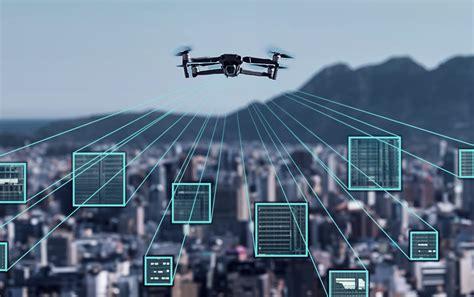
Unmanned surveillance and reconnaissance aerial vehicles (UAVs) have redefined modern battlefield intelligence. Unlike unmanned combat aerial vehicles (UCAVs), these aircraft are unarmed, and their core mission lies in ISTAR—Intelligence, Surveillance, Target Acquisition, and Reconnaissance. Their agility, precision, and ability to penetrate hostile airspace without endangering human pilots have made them indispensable military assets across global theaters.
Purpose and Evolution of Surveillance UAVs
The concept of using machines for aerial surveillance isn’t new. Yet, the evolution from tethered observation balloons to today’s high-altitude, long-endurance (HALE) UAVs marks a technological renaissance. Surveillance UAVs are engineered not for destruction, but to inform and empower battlefield decisions. They gather visual, infrared, radar, and signal intelligence, often in real time.
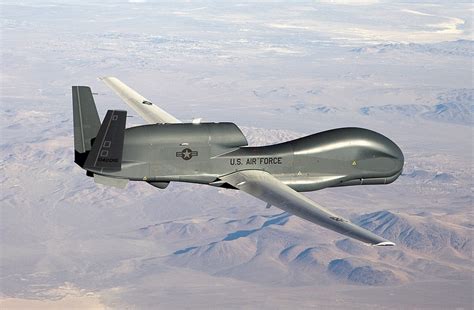
Miniature UAVs, deployed at the platoon or company level, provide close-range battlefield intelligence, while strategic systems like the RQ-4 Global Hawk scan thousands of miles with surgical accuracy. This vertical layering of reconnaissance capabilities across operational tiers has enabled commanders to synchronize combat operations with unmatched situational awareness.
Leading Systems in Global Use
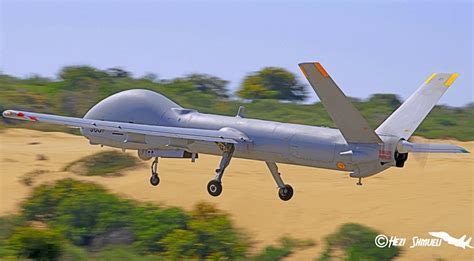
Elbit Hermes Series (Israel)
The Hermes 450 and Hermes 900, developed by Elbit Systems, are cornerstone UAVs used by numerous militaries including Israel, Brazil, and Azerbaijan. The Hermes 900 boasts a wingspan of 15 meters and an endurance exceeding 36 hours. Equipped with EO/IR sensors, radar systems, and SIGINT payloads, it serves in both tactical and strategic ISR roles.
WZ-8 (China)
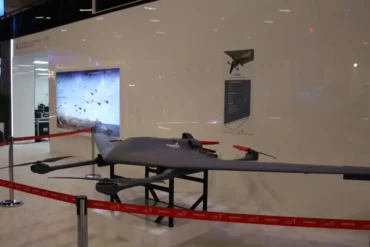
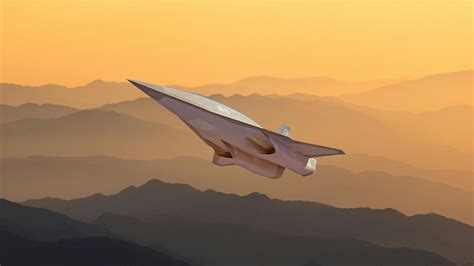
A true outlier in the field, China’s WZ-8 is a supersonic-hypersonic reconnaissance drone designed to be air-launched from strategic bombers. Making its public debut at the 2022 Zhuhai Airshow, the WZ-8 symbolizes a quantum leap in speed and altitude performance, capable of high-speed penetration into enemy airspace while relaying back critical data.
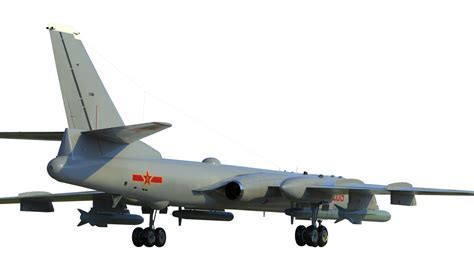
TAI Gözcü (Turkey)
Produced by Turkish Aerospace Industries, the Gözcü is tailored for tactical ISR missions, especially along rugged border regions. It is part of Turkey’s growing autonomous systems ecosystem, supporting ground forces in counterinsurgency and asymmetric warfare scenarios.
EMT Luna X-2000 (Germany)
Used by the German Army, the EMT Luna X-2000 is compact, modular, and operates with electronic support measures (ESM) for signal intelligence. It excels in urban environments and contested zones, where stealth and rapid redeployment are crucial.
Performance Characteristics and Payloads
Unmanned reconnaissance systems are platforms for modular payloads. This payload flexibility allows for configuration based on mission objectives. Modern surveillance UAVs can carry:
- Electro-Optical/Infrared Cameras (EO/IR)
- Synthetic Aperture Radar (SAR) for all-weather imaging
- Signals Intelligence (SIGINT) suites
- Laser Designators for target acquisition
Stealth and Survivability
Advanced designs like the IAI Eitan and Northrop Grumman RQ-4 Global Hawk incorporate reduced radar cross-sections, composite airframes, and satellite-controlled flight paths. These attributes allow them to operate deep within enemy territory while maintaining secure and encrypted communications.
Regional Development and Contributions
Belgium – The Epervier Legacy
Belgium was one of the early pioneers in UAV reconnaissance. The Epervier X.5, equipped with a turbojet engine and launched by RATO boosters, was a trailblazer in the 1970s. Though now retired, it laid the groundwork for Belgian adoption of the IAI Hunter with enhanced ISR capabilities.
Croatia’s Tactical Drones
Following indigenous initiatives like the MAH-1, Croatia transitioned to co-developing tactical UAVs based on Israel’s IAI Malat systems. This collaborative model reflects a broader trend among smaller nations, pairing local expertise with mature platforms to field effective reconnaissance drones.
Pakistan’s AWC Vector and Vision Series
Pakistan’s Air Weapons Complex (AWC) has made strides with UAVs like Bravo, Vision-1, and the high-altitude Vector. Though smaller than US or Israeli counterparts, these drones are optimized for border surveillance and internal security, highlighting the importance of UAVs in law enforcement operations.
A New Generation of Hypersonic ISR
The introduction of the WZ-8 and similar hypersonic drones signals the dawn of next-generation aerial reconnaissance. These platforms aim to overwhelm enemy defenses with speed, reducing detection windows to seconds. Emerging technologies such as quantum navigation, AI-based onboard analysis, and real-time satellite uplinks will soon become standard in advanced systems.
UAV Helicopters for Recon and Surveillance
Rotary-wing UAVs like the EADS Orka and Scorpio series serve maritime and special forces applications. The Orka, derived from the Cabri light helicopter, delivers 8-hour endurance and 150 kg payload capacity, ideal for naval ISR and offshore platform surveillance. Meanwhile, the Scorpio-6 and Scorpio-30 fill smaller niche roles, offering mobility and precision for covert ops and tight urban surveillance.
Miniature UAVs: Tactical Flexibility at the Edge
Miniature UAVs, including hand-launched or backpack-deployable models, have become standard for infantry units. These UAVs typically weigh under 5 kg and can stream real-time video to command tablets or mobile stations. Their applications include:
- Immediate area reconnaissance
- Route clearance validation
- Sniper or IED spotting
These small drones act as the eyes of soldiers on the ground, reducing risk and enhancing tactical response.
Strategic Value and Ethical Considerations
The proliferation of unmanned surveillance technology raises ethical and legal questions. While these drones enhance battlefield transparency and reduce casualties, they also challenge sovereignty norms and privacy standards. Nations must craft robust rules of engagement and data governance policies to ensure responsible deployment.
Simultaneously, the rise of dual-use drones—adapted for both surveillance and combat—blurs the lines between ISR and kinetic operations. This duality underscores the urgency for international agreements that distinguish surveillance operations from offensive strikes.
Conclusion: The Unblinking Eye of Modern Warfare
The modern unmanned surveillance and reconnaissance aerial vehicle has matured from a niche capability into a cornerstone of military intelligence. Whether circling silently above a city, racing past Mach 5 at stratospheric heights, or hovering just beyond enemy lines, these UAVs embody the doctrine of information dominance. As threats evolve and technology advances, the ISR drone will remain the unblinking eye in the sky, securing advantage not through firepower—but through insight.