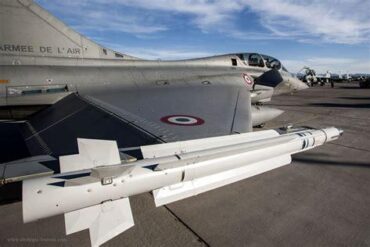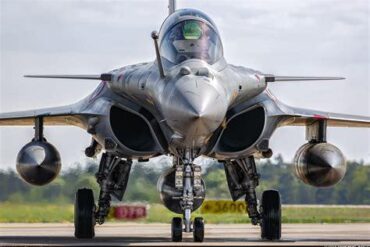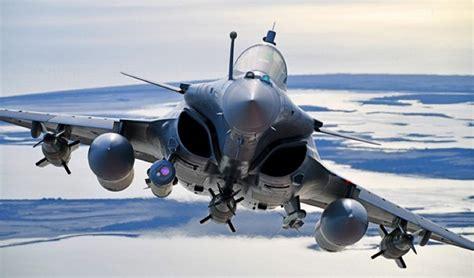
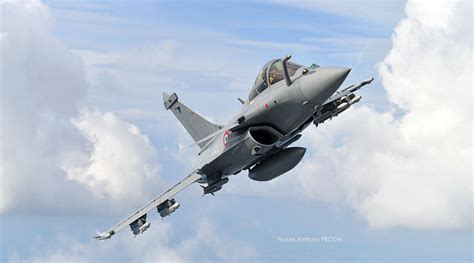
France’s Rafale F4.3 fighter jet has taken a significant step closer to operational readiness following a rigorous multi-domain evaluation campaign led by the French Directorate General of Armaments (DGA). Conducted at the DGA Flight Test Centre in Istres, this testing marks a critical milestone in the journey toward full qualification of the F4.3 standard, the latest and most advanced configuration of the Dassault Rafale, the crown jewel of French aerospace engineering.
A Quantum Leap in Operational Capabilities
The F4.3 review, formally designated as the RAU (Revue d’Aptitude à l’Utilisation) campaign, focused on validating the aircraft’s combat-readiness across a spectrum of realistic operational scenarios. These included missions in the air-to-air, air-to-ground, and air-to-sea domains, simulating the full scope of contemporary combat environments. At the heart of this campaign was an intensive focus on system maturity, sensor fusion, integrated weapon performance, and tactical connectivity—each of which plays a pivotal role in next-generation air dominance.
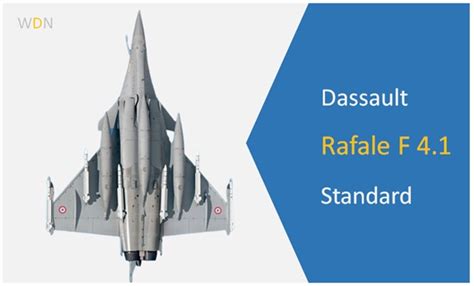
This latest iteration of the Rafale represents not just incremental improvement, but a paradigm shift in multirole fighter capability. The F4.3’s enhancements build upon the F4.1 standard, incorporating a suite of cutting-edge systems that reinforce France’s sovereignty and elevate the aircraft’s role in NATO-aligned joint force operations.
Building on a Legacy of Excellence
The Dassault Rafale, a twin-engine delta-wing multirole combat aircraft, has consistently proven its worth since its introduction in 2000. Developed by Dassault Aviation and powered by two Snecma M88-4E engines, the Rafale delivers formidable performance in both low and high altitude missions. With its supercruise capability and high thrust-to-weight ratio, the aircraft can operate with remarkable agility and survivability.
The Rafale’s design emphasizes stealth, survivability, and multirole flexibility. It features a high-percentage composite airframe (approximately 70%) that reduces radar and infrared signatures, thus enhancing its survivability in contested environments. Its 14 hardpoints can carry an array of advanced weapons systems including MICA and Meteor air-to-air missiles, SCALP-EG cruise missiles, Exocet anti-ship missiles, and ASMP-A nuclear delivery systems.
F4.3 Standard: Transformative Enhancements for Modern Warfare
Where the F4.1 standard, qualified in March 2023, introduced critical upgrades such as enhanced IRST sensors, collaborative engagement modes, and Thales SCORPION helmet-mounted sights, the F4.3 configuration pushes the boundaries even further. Central to the F4.3’s architecture are three major system innovations:
- MICA NG Integration: The Rafale F4.3 will be the first variant equipped to carry the MICA NG (New Generation) air-to-air missile. This advanced missile significantly improves engagement range, resistance to countermeasures, and operational versatility across engagement envelopes.
- Upgraded SPECTRA Suite: The SPECTRA electronic warfare system, already revered for its role in Rafale’s survivability, has received a comprehensive update. The F4.3 standard incorporates newer threat libraries and AI-enhanced signal processing for superior detection and jamming capability.
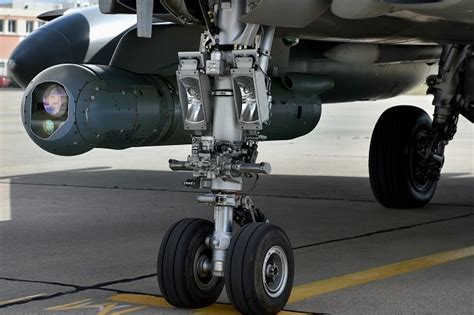
- CONTACT Radio and TALIOS AI Pod: The inclusion of CONTACT, a secure software-defined radio system, marks a strategic pivot toward network-centric warfare. Additionally, the integration of the TALIOS targeting pod, embedded with AI algorithms, enables automated target recognition and designation—a game-changer in dynamic targeting scenarios.
These enhancements not only extend the aircraft’s lethality and survivability but also position it as a key enabler of multi-domain operations in increasingly complex battlespaces.
Rigorous Testing in Realistic Combat Conditions
The RAU campaign was designed to push the F4.3 platform to its limits under conditions mimicking actual operational missions. DGA engineers and Dassault test pilots conducted multi-scenario simulations that tested the aircraft’s ability to detect, track, engage, and neutralize adversaries across domains. Real-time evaluations assessed the performance of sensor fusion capabilities, with a focus on integrating data from radar, infrared tracking, and electronic warfare sources to deliver a cohesive battlespace picture.
Beyond pure combat metrics, the campaign also evaluated the pilot interface and workload in high-stress situations. The upgraded high-resolution cockpit displays and helmet-mounted interfaces are designed to maximize situational awareness and improve tactical decision-making under pressure.
Strategic Relevance and the Path to Full Qualification
The successful completion of this major review marks a crucial step toward the formal qualification of the F4.3 standard, which is expected to be finalized in the near term. Once qualified, these aircraft will enter operational service with both the French Air and Space Force and the French Navy, reinforcing their capacity to operate in coalition frameworks and support France’s strategic deterrent posture.
The timing is not incidental. As global airpower competition intensifies, France’s investment in the F4.3 standard sends a clear message: technological superiority and operational readiness remain core pillars of French defense strategy. By integrating artificial intelligence, advanced sensors, and secure tactical communication systems, the Rafale F4.3 positions itself as a benchmark for fifth-generation interoperability without needing to be a fifth-generation jet.
A Platform Poised for the Future
France’s strategic defense doctrine hinges on autonomy, deterrence, and force projection. The Rafale F4.3’s enhancements support all three pillars. From homeland air defense to expeditionary missions, and from carrier strike group operations to nuclear deterrence roles, the F4.3 is designed to adapt seamlessly to mission demands.
Moreover, the aircraft’s modular architecture and upgrade path ensure its longevity. Even as France moves forward with the SCAF (Future Combat Air System) initiative in collaboration with Germany and Spain, the Rafale F4.3 will serve as the backbone of French airpower through 2040 and beyond.
International Implications and Export Potential
The Rafale’s evolution into the F4.3 standard also enhances its attractiveness to international clients, many of whom are watching these developments closely. Countries like India, Egypt, Qatar, and the United Arab Emirates, all Rafale customers, may consider retrofitting or acquiring F4.3-standard aircraft. Given the platform’s combat-proven track record and now AI-enabled mission systems, the F4.3 is not just a regional asset—it is a global contender in the multirole fighter market.
France’s sustained commitment to evolving the Rafale program demonstrates an industrial and defense policy synergy that yields both strategic and economic dividends. Dassault Aviation, along with partners like Thales and Safran, continue to showcase what is possible when innovation, national interest, and operational needs align.
Conclusion: Defining the Future of Multirole Air Superiority
The successful multi-domain testing of the Rafale F4.3 marks a watershed moment for the French Armed Forces and for global combat aviation. This aircraft stands not merely as an upgraded variant but as a vision of what 21st-century multirole air superiority demands—flexibility, survivability, connectivity, and lethality, fused seamlessly through advanced software, AI, and pilot-centric design.
With full qualification imminent, the Rafale F4.3 is set to enter operational service as one of the most technologically mature and operationally versatile fighter jets in the world. As geopolitical tensions escalate and mission demands grow more complex, the Rafale F4.3 ensures that France remains not just a participant, but a leader in the domain of modern air combat.