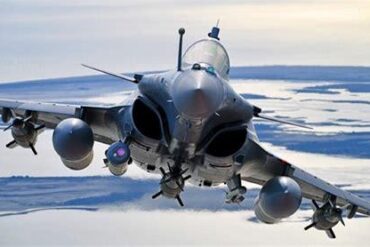
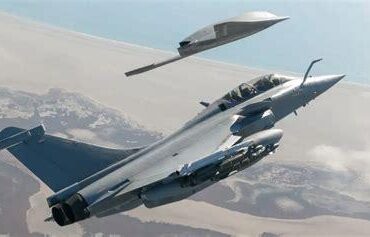
The Dassault Rafale, aptly named after the French word for “gust of wind,” epitomizes the zenith of French aerospace innovation. As a twin-engine, canard delta-wing multirole fighter, the Rafale stands as a testament to France’s commitment to maintaining an independent and formidable air combat capability. Since its induction into service in 2001, the Rafale has evolved into a versatile platform, adept at executing a myriad of missions ranging from air superiority to nuclear deterrence.
Genesis and Development
In the late 1970s, the French military recognized the necessity for a new aircraft to replace its aging fleet. Initially collaborating on the Future European Fighter Aircraft (FEFA) project, France eventually withdrew in 1985 to pursue an indigenous solution, leading to the birth of the Rafale program. The Rafale A demonstrator took to the skies on July 4, 1986, showcasing impressive capabilities that would lay the foundation for subsequent variants.
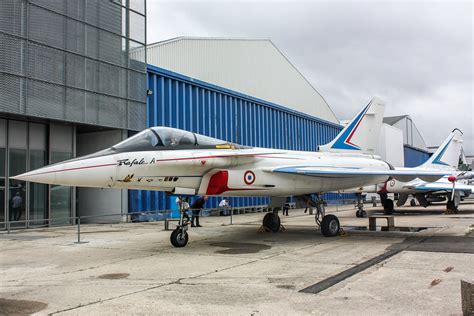
The subsequent development phases saw the introduction of the Rafale C (single-seat for the Air Force), Rafale B (two-seat for training and nuclear strike), and Rafale M (carrier-based variant for the Navy). Each variant was meticulously crafted to fulfill specific operational requirements, ensuring the Rafale’s adaptability across different branches of the French military.
Design Philosophy and Technical Specifications
The Rafale’s design embodies a harmonious blend of aerodynamic efficiency, stealth features, and advanced avionics. Its delta wing coupled with active close-coupled canards grants exceptional maneuverability, allowing the aircraft to perform high-angle-of-attack maneuvers with ease. The fly-by-wire flight control system ensures stability and responsiveness, enhancing pilot confidence during complex missions.
Airframe and Performance
- Length: 15.3 meters
- Wingspan: 10.9 meters
- Height: 5.3 meters
- Maximum Speed: Mach 1.8
- Service Ceiling: 50,000 feet
- Range: 3,700 km with external fuel tanks
The Rafale’s airframe incorporates composite materials, reducing weight and radar cross-section. Its SNECMA M88-2 turbofan engines deliver a combined thrust of 150 kN, enabling supercruise capabilities and rapid acceleration.
Avionics and Sensor Suite
Equipped with the Thales RBE2-AA Active Electronically Scanned Array (AESA) radar, the Rafale can detect and track multiple targets simultaneously. The Front Sector Optronics (FSO) system provides passive infrared search and track capabilities, enhancing situational awareness without emitting detectable signals. The SPECTRA electronic warfare system offers comprehensive threat detection and jamming capabilities, ensuring survivability in contested environments.
Armament and Payload
With 14 hardpoints (13 for the Rafale M), the aircraft can carry a diverse array of weapons:
- Air-to-Air Missiles: MICA IR/EM, Meteor
- Air-to-Ground Missiles: SCALP EG, AASM
- Anti-Ship Missiles: AM39 Exocet
- Nuclear Weapon: ASMP-A missile
- Gun: 30mm GIAT 30 internal cannon
The Rafale’s multirole capability allows it to seamlessly transition between different mission profiles, often within a single sortie.
Operational History and Global Footprint
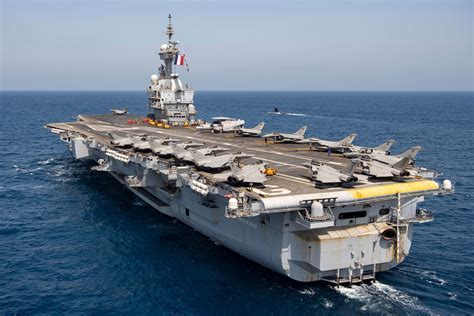
Since its induction, the Rafale has demonstrated its prowess in various theaters of operation. The French Navy deployed the Rafale M aboard the Charles de Gaulle aircraft carrier during missions in Afghanistan, Libya, and against ISIS targets in the Middle East. The French Air Force has similarly utilized the Rafale in numerous operations, showcasing its versatility and reliability.
Internationally, the Rafale has garnered significant interest and sales:
- Egypt: Acquired 24 Rafales in 2015, marking the first export sale.
- Qatar: Ordered 36 Rafales, enhancing its air combat capabilities.
- India: Procured 36 Rafales for the Air Force and an additional 26 for the Navy, with deliveries expected between 2029 and 2031.
- Greece and Croatia: Both nations have integrated Rafales into their fleets, replacing older aircraft and strengthening NATO’s southern flank.
These sales underscore the Rafale’s reputation as a reliable and advanced multirole fighter, capable of meeting diverse operational requirements.
Continuous Evolution and Future Prospects
Dassault Aviation remains committed to the Rafale’s continuous improvement. The F3R standard, validated in 2018, introduced enhancements such as the Talios targeting pod and integration of the Meteor missile. The forthcoming F4 standard, slated for full implementation by 2025, will incorporate upgraded sensors, improved connectivity, and artificial intelligence features to assist pilots in decision-making.
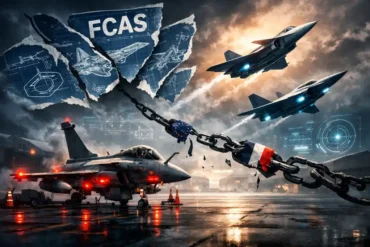
Looking ahead, the Rafale is expected to play a pivotal role in the Future Combat Air System (FCAS), a collaborative project between France, Germany, and Spain. This initiative aims to develop a next-generation fighter aircraft, with the Rafale serving as a technological bridge and testbed for emerging capabilities.
Conclusion
The Dassault Rafale stands as a paragon of modern fighter aircraft design, combining agility, versatility, and cutting-edge technology. Its successful deployment across various combat scenarios and adoption by multiple nations attest to its operational excellence. As it continues to evolve, the Rafale is poised to remain at the forefront of aerial combat, embodying the pinnacle of French aerospace engineering.