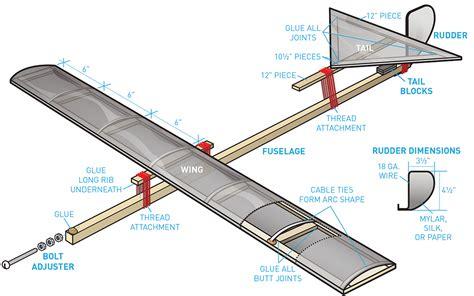
Glider design stands as a pinnacle of aerodynamic refinement in the aviation world, where the absence of an engine shifts all emphasis to drag reduction, lift maximization, and energy management. Unlike powered aircraft, where thrust can compensate for inefficiencies, gliders rely entirely on optimized aerodynamic geometry, lightweight materials, and strategic energy harvesting to remain airborne, often for hours and across hundreds of kilometers.
The core principles of glider design reflect a convergence of scientific precision and artistic elegance. From the earliest wooden structures to today’s composite marvels with whisper-quiet electric sustainers, glider evolution reveals the forefront of what is possible in low-drag flight engineering.
The Convergence of Gliders and Ultralight Aircraft
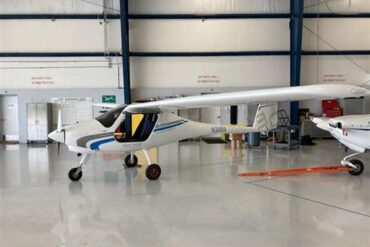
In recent years, a noteworthy convergence has emerged between ultralight aircraft and high-performance sailplanes. The two domains, historically distinct, are now informed by shared design philosophies. As designers of ultralight aircraft strive for higher aerodynamic efficiency, they increasingly turn to glider-derived features, such as laminar airfoils, high aspect ratios, and refined fuselage junctions.
This trend is driven by mutual goals: low operating cost, autonomous operation, and enhanced flight envelope utilization. The intersection between microlight innovation and sailplane aerodynamics signals the future of recreational aviation.
The Primacy of Aspect Ratio in Glider Wing Design
One of the most decisive elements in glider performance is aspect ratio, defined as the wingspan squared divided by the wing area. A high aspect ratio directly reduces induced drag, the primary component of drag at lower speeds where gliders operate most of the time. Modern sailplanes like the Concordia (28m wingspan) and Eta (30.8m) illustrate how far this principle can be pushed.
Higher aspect ratios improve lift curve slope, responsiveness, and control authority. However, this design choice introduces challenges:
- Increased structural stress at the wing root
- Aeroelastic phenomena, including flutter risks
- Reduced internal volume for gear and systems
- Handling complications due to higher roll inertia
Advanced materials and finite element analysis have made these trade-offs manageable, but not trivial.

Refining Aerodynamics Through Wing Section Optimization
The heart of sailplane aerodynamics lies in wing section design, particularly the use of laminar flow aerofoils like the NACA 63-418 or FX 79-K-144-17. These profiles are engineered to maintain laminar boundary layers over as much of the wing chord as possible, minimizing profile drag and skin friction.
However, laminar sections come with sensitivities. They are highly dependent on:
- Reynolds number effects—performance degrades at lower airspeeds and smaller chords.
- Surface contamination—even minor debris or bug strikes can cause premature transition.
To counteract this, designers refine every surface, seal every gap, and even tailor the root wing profile to handle crossflow gradients near the fuselage.
Reducing Drag: From Parasitic to Trim Drag
Effective glider design necessitates meticulous attention to multiple drag components:
- Induced Drag: Dominant at low speeds; mitigated via aspect ratio and span efficiency.
- Profile and Skin Friction Drag: Controlled through laminar wing sections and surface smoothness.
- Parasitic Drag: Reduced by eliminating external excrescences and sealing discontinuities.
- Trim Drag: Minimized through small tails and precise static stability margins.
Even the glider’s undercarriage, usually a retractable single-wheel, is optimized to disappear into the fuselage during flight, reducing both drag and turbulence.
Flap Systems and Lateral Control Integration
Unlike powered aircraft, gliders use center-hinged flaps not for takeoff or landing, but for performance tuning across speed regimes. These flaps shift camber to match lift requirements without introducing excessive drag. They are often mixed with ailerons, presenting intricate design challenges in lateral control effectiveness, particularly at slow speeds or in thermal climbing configurations.
The flap system must balance:
- Drag penalties from deflection
- Control harmonization with ailerons
- Structural complexity and maintenance
Fuselage and Tailplane Integration
The fuselage of a modern sailplane is more than just a pod for the pilot—it is a critical aerodynamic surface. Designers aim to maintain laminar flow along the fuselage for as long as possible, avoiding flow separation. Key strategies include:
- Turbulent root sections on the wing to handle streamwise gradients
- Minimal contour filleting to control corner vortices
- Sealed access panels and hatches
Tailplane design further complements efficiency. Narrow chord, high aspect ratio horizontal stabilizers with internally sealed control surfaces ensure effective pitch control without adding drag.
Flutter and Aeroelastic Considerations
As wings grow longer and thinner, aeroelasticity becomes a dominant design constraint. Flutter, the uncontrolled oscillation of aerodynamic surfaces, poses catastrophic risk. To prevent it, modern gliders undergo detailed aeroelastic modeling, ensuring:
- Adequate torsional stiffness
- Proper control mass balancing
- Avoidance of mode interaction between bending and control deflection
Only a handful of advanced aerospace labs and universities possess the tools to conduct such analyses. The investment is justified by the glider’s silent, elegant resilience at speed.
Innovations in Electric Propulsion for Gliders
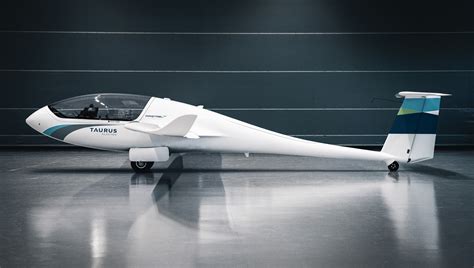
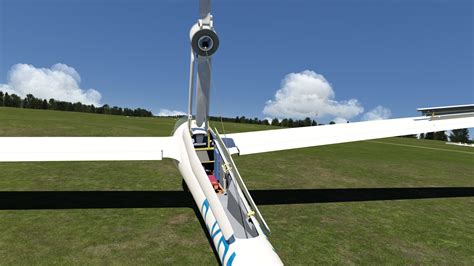
Recent advancements in electric propulsion have revolutionized glider independence. Models like the Antares 20E feature:
- A 42kW brushless motor
- 72 lithium-ion batteries weighing 76kg
- 13 minutes of autonomous climb power
Such systems enable self-launch and sustained cross-country capability without sacrificing silence or efficiency. Jet and front-sustainer options also exist but come with weight and drag penalties.
The Future of Recreational Gliding
Glider and microlight design spaces are merging. With increasing interest in low-cost, autonomous, high-performance flight, a new generation of electric self-launchers is bridging the gap between sailplane and light GA aircraft. Despite limitations in electric endurance, their ability to harness atmospheric energy extends mission profiles and opens new terrain.
As designers refine energy harvesting strategies—not stopping for thermals, but gliding efficiently through regions of good lift—gliders become more capable and rewarding. The pilot’s role, too, is evolving, demanding heightened awareness, adaptive airmanship, and precise route selection.
Conclusion: A Blueprint for Aerodynamic Perfection
The glider is more than an aircraft—it is an expression of what flight can be when nothing is wasted. Every surface, contour, and control system is honed for pure aerodynamic efficiency. As recreational aviation embraces sustainability and autonomy, the glider offers not only a model of technical excellence, but also a path toward a quieter, more harmonious interaction with the atmosphere.
Glider design teaches us that true efficiency is not about adding power, but about removing everything that does not serve the mission of graceful, sustained, and efficient flight.