In the realm of fluid dynamics, the concept of a slipstream is one of subtle yet powerful consequence. A slipstream refers to a region of disturbed, fast-moving fluid—typically air or water—trailing immediately behind a moving object. Within this wake, the fluid tends to move at a velocity similar to the object itself, relative to the surrounding ambient medium. The practical implications of this are immense, particularly in industries where fluid resistance is a major consideration, such as aerospace, automotive racing, and marine design.
When a solid object pushes through a fluid, it displaces the medium in its path. Depending on the object’s shape and velocity, it creates either a turbulent or laminar wake. A turbulent wake, rich in swirling vortices, lowers pressure immediately behind the object. Conversely, a laminar wake results in slightly elevated pressure levels. The extent of this phenomenon is governed by the Reynolds number, a dimensionless value indicating the flow regime—laminar or turbulent.
Aerodynamic Profiles and Wake Dynamics
The geometry of an object critically influences the slipstream’s formation. For example, a boxy vehicle or aircraft generates a large turbulent wake, wasting energy and producing more drag. In contrast, an aerodynamically streamlined object, such as a bullet-shaped body, encourages a smoother flow of air around its surface. This reduces the size and intensity of the wake, resulting in less pressure drag. A tapered rear end helps the displaced fluid particles to rejoin more gradually, maintaining cohesion in the flow.
However, engineering for optimal slipstream conditions is a balancing act. While a smoother taper reduces wake turbulence, it simultaneously increases skin friction—the resistive force exerted by the fluid on the object’s surface. In high-speed applications, such as jet aircraft or race cars, designers must weigh the trade-offs between minimizing drag and maintaining control.
The Science and Strategy of Slipstreaming
“Slipstreaming” or “drafting” is the deliberate act of positioning a secondary object within the primary object’s wake to exploit its reduced-drag zone. When a vehicle—be it a bicycle, race car, or aircraft—travels within the slipstream of another, it experiences significantly lower aerodynamic resistance. This allows it to maintain speed with less power output.
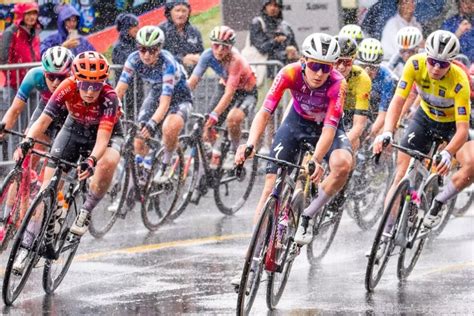
The concept is highly prevalent in competitive cycling, where racers cluster tightly in pelotons to conserve energy. Similarly, in motor racing, drivers draft to reduce fuel consumption and build momentum for strategic overtakes. The leading vehicle experiences a slight increase in drag due to the trailing presence but not enough to negate the benefits for the follower.
Truck platooning demonstrates a practical application of this principle in logistics. Multiple trucks drive in formation on highways, with electronic systems coordinating their spacing. The fuel savings in such convoys are substantial, with studies citing reductions of up to 10% in fuel use for the trailing vehicles.
Spiral Slipstream: A Unique Aerodynamic Force
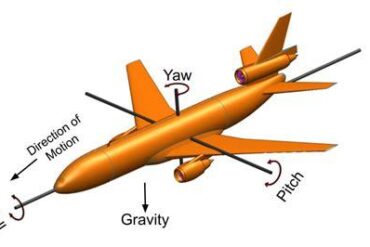
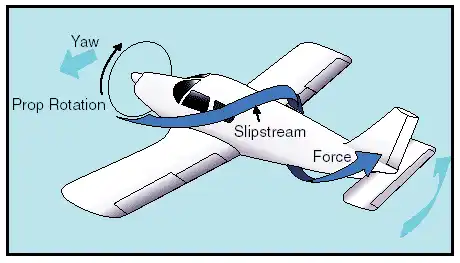
One of the most specialized forms of slipstream occurs in aviation, known as spiral slipstream or propwash. When a propeller rotates, it generates a corkscrew-shaped flow of air spiraling around the aircraft’s fuselage. This dynamic air movement exerts a lateral force on the vertical stabilizer, causing the aircraft to yaw left in designs where the propeller spins clockwise.
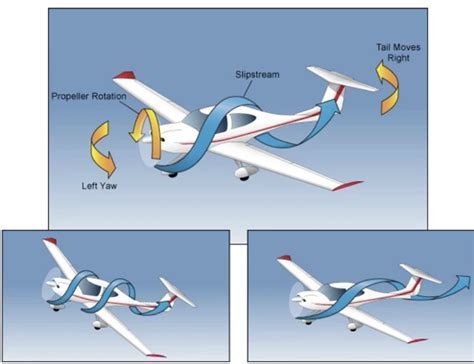
Aircraft manufacturers often counteract this yaw with subtle design features. The Hawker Hurricane, a renowned World War II fighter, was built with a slightly offset vertical fin to neutralize the spiraling slipstream’s influence at cruise speeds. Although this design trick is effective, it only aligns optimally at specific speeds and throttle settings.
Moreover, propeller slipstream enhances lift by increasing airflow over the wing’s surface. The additional airspeed over the wing sections delays stall onset, reducing the aircraft’s stall speed. This effect is particularly valuable during takeoff and landing, where maintaining lift at lower speeds is crucial.
Natural Slipstreaming: Lessons from Migratory Birds
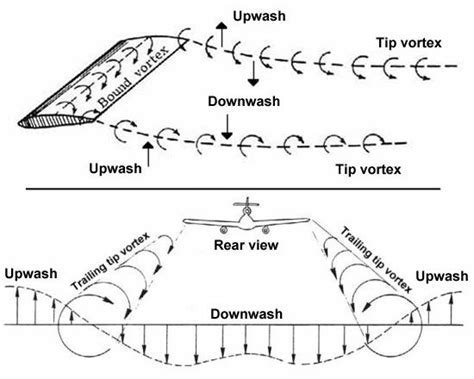
Nature has long utilized slipstream effects for energy efficiency. Migratory birds, notably geese, travel in V-formations to exploit vortex surfing. The bird at the front expends more energy, while those behind benefit from uplift created by the leader’s wingtip vortices. This phenomenon reduces fatigue and extends the overall range of the flock.

This biologically optimized technique mirrors the principles applied in aeronautics. Aircraft flying in coordinated formations can achieve fuel savings of up to 20%, according to tests by NASA and the U.S. Air Force. These trials, dubbed “sky surfing” or “vortex surfing,” demonstrate the potential for synchronized aerial operations to redefine long-haul flight efficiency.
Slipstream Engineering in Motorsport and Aviation
In Formula One racing, slipstreaming is both a strategy and a challenge. Drivers often use the wake of opponents to gain a temporary speed boost on straightaways, allowing for overtakes just before braking zones. However, in corners, the loss of clean air reduces downforce, making it harder to maintain grip.
Engineers must account for this duality. Drag Reduction Systems (DRS), now common in F1, exploit slipstream zones by momentarily reducing rear-wing resistance, enhancing overtaking chances without compromising cornering stability. Teams simulate airflow behavior using Computational Fluid Dynamics (CFD) to predict wake behavior and optimize car placement.
Aviation follows similar principles. Winglets and raked wingtips are aerodynamic enhancements designed to manage the wake created by wingtip vortices, effectively reducing induced drag. By controlling how air departs the wings, these devices minimize the slipstream’s adverse effects and improve range. Aircraft such as the Boeing 787 Dreamliner incorporate advanced slipstream mitigation to enhance fuel economy by nearly 25% compared to older models.
Environmental and Technological Implications
The importance of slipstream management transcends performance. In an era where sustainability defines innovation, controlling and exploiting wake dynamics plays a vital role. From cargo logistics to passenger jets, optimizing the slipstream contributes to lower fuel consumption, reduced emissions, and extended component life.
Technologies like active flow control, boundary layer suction, and wake deflectors are under experimental investigation. These systems aim to manipulate airflow in real-time, dynamically adjusting surface textures or injecting air to shape the wake and enhance laminar flow. Their implementation could drastically redefine efficiency in both high-speed and heavy-duty transport applications.
Conclusion: The Silent Force That Shapes Motion
The slipstream is far more than an abstract scientific concept; it is a foundational force that governs performance, efficiency, and strategy across domains. Whether in the flapping wings of migratory birds, the synchronized wheels of cycling champions, or the roaring engines of transatlantic aircraft, the manipulation of fluid wakes allows for smarter, faster, and more sustainable movement.
Understanding and engineering around the slipstream continues to unlock new frontiers in aerodynamics, vehicular design, and environmental conservation. As our world accelerates, both literally and metaphorically, mastering the silent trails we leave behind will remain a defining edge of innovation.