Ground effect is a critical aerodynamic phenomenon that every pilot must understand, as it plays a significant role in both takeoffs and landings. When an aircraft approaches the ground during landing, it begins to experience changes in airflow that affect its lift, drag, and overall stability. The most noticeable of these effects is the floating sensation experienced by pilots, particularly when landing at high speeds. Understanding the science behind ground effect is crucial for pilots, as it helps them optimize their landings and avoid mishaps. In this article, we will break down the mechanics of ground effect, explain how it impacts aircraft, and explore how different types of airplanes interact with this phenomenon.
What Is Ground Effect?
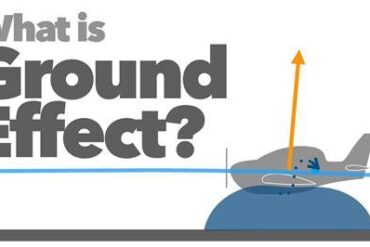
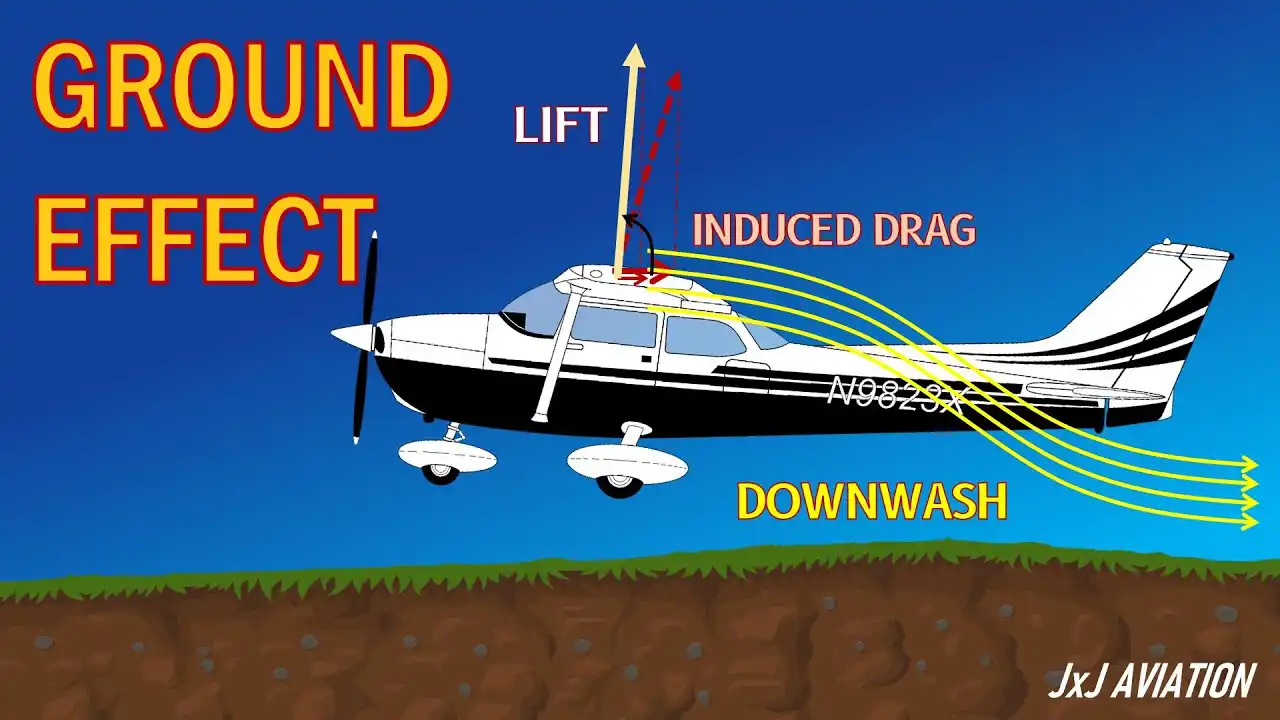
Ground effect refers to the aerodynamic phenomenon that occurs when an aircraft is close to the ground, typically within one wingspan of the surface. The proximity to the ground causes a reduction in induced drag, allowing the aircraft to experience greater lift with less energy. This effect is primarily a result of changes in the behavior of wingtip vortices and downwash as the aircraft nears the runway.
As the aircraft’s wings generate lift, they also create spiraling vortices that extend behind the aircraft. These vortices result in a downward flow of air known as downwash, which acts to reduce the aircraft’s effective lift and increase drag. However, when the aircraft approaches the ground, these vortices are disrupted because they can no longer extend downward in their usual pattern. The ground interferes with the vortices, reducing the downwash and the induced drag.
This reduction in drag is a key factor in the floating sensation that pilots experience when landing. In essence, the aircraft requires more time to descend, causing it to remain airborne longer than expected. This can be particularly problematic during fast approaches, where the aircraft might continue to float down the runway well beyond the desired landing point.
How Ground Effect Impacts Lift and Drag
At its core, ground effect alters the balance between lift and drag. Lift is always perpendicular to the relative wind, but the amount of lift generated by an aircraft depends on the angle of attack and the magnitude of the downwash. When an aircraft is high above the ground, the wingtip vortices cause the downwash to be more pronounced, creating more drag and reducing the vertical component of lift. However, as the aircraft nears the ground, the wingtip vortices dissipate, and the downwash diminishes, which reduces drag and increases lift.
The reduction in induced drag is particularly significant. Induced drag occurs as a byproduct of the generation of lift, and it increases with the amount of downwash. With less downwash near the ground, the induced drag is substantially reduced, allowing the aircraft to float longer. This is the reason why pilots often experience a prolonged descent when they are too fast during landing.
Ground Effect and Aircraft Design
Not all aircraft experience ground effect the same way. The effect is influenced by the wingspan and design of the aircraft. For example, low-wing aircraft such as the Piper Warrior experience a stronger ground effect than high-wing aircraft like the Cessna 172. The difference in ground effect is primarily due to the distance between the wings and the ground. In a low-wing airplane, the wings are closer to the runway, allowing for more significant interaction with the ground effect. Conversely, in a high-wing aircraft, the wings are positioned farther from the ground, reducing the strength of the effect.
Aircraft with shorter wingspans typically experience stronger ground effect as they approach the runway. In contrast, aircraft with longer wingspans see a reduced ground effect, as the vortices created by the wings have a greater opportunity to dissipate before they interact with the ground. The angle of the wing relative to the ground also plays a role in determining how much ground effect is experienced during the approach.
The Influence of Ground Effect on Landing Distance
One of the most noticeable impacts of ground effect is its influence on landing distance. As the aircraft approaches the runway, the reduced drag and increased lift can cause it to float longer than expected. This is especially true for aircraft that approach the runway at high speeds or with improper configuration. In some cases, pilots may find themselves floating down the runway far beyond their intended landing point.
To compensate for this phenomenon, pilots must adjust their approach speed to ensure that they do not float excessively. A slower approach speed allows for a quicker descent, reducing the chances of floating. It is also crucial for pilots to flare properly during landing to ensure that they transition from flying to landing in a controlled manner. Flaps, which change the aircraft’s angle of attack, also play a role in managing ground effect during landing.

How Close to the Ground Does Ground Effect Begin?
The effectiveness of ground effect depends on how close the aircraft is to the surface. As a general rule, ground effect begins to become noticeable when the aircraft is within one wingspan of the ground. At this point, the induced drag starts to decrease, and the aircraft begins to experience a noticeable increase in lift. As the aircraft gets even closer to the runway, the effect becomes more pronounced.
For example, a Cessna 172 with a 36-foot wingspan experiences a significant reduction in induced drag when the aircraft is just 7 feet off the ground. This is because, at this height, the aircraft is within approximately 20% of its wingspan from the surface, where the ground effect begins to take hold. For a Piper Warrior, with a 35-foot wingspan and a wing height of about 3.5 feet from the ground, the induced drag is reduced by about 60%, which significantly amplifies the floating sensation.
Practical Applications of Ground Effect in Aircraft Design
While ground effect can cause issues during landing, it is also a valuable asset in specific types of aircraft, particularly those designed for operation within ground effect. A prime example is the Ekranoplan, a Soviet-era aircraft designed to fly close to the surface and take full advantage of ground effect. Unlike traditional aircraft that require altitude to generate lift, the Ekranoplan remained within a few feet of the ground, utilizing the ground effect to carry more payload than would normally be possible. This unique design allowed it to operate at high speeds with significantly less fuel consumption than other aircraft.
While the Ekranoplan is an extreme case, it highlights the potential benefits of designing aircraft that specifically exploit ground effect. Today, engineers continue to explore the possibilities of ground-effect vehicles (GEVs) for both military and civilian applications, as these vehicles can operate efficiently within a narrow altitude range, offering new possibilities for transport over water and land.
Managing Ground Effect in Aviation
As a pilot, managing ground effect is crucial for ensuring safe and efficient landings. The first step is to recognize the conditions under which ground effect will be most pronounced, such as during fast approaches or when flying in low-wing aircraft. Understanding how close the aircraft is to the ground and adjusting the approach speed accordingly can help mitigate the unwanted floating that occurs during landing.
Moreover, pilots should always be prepared to perform a go-around if they find themselves floating excessively. A go-around is a technique in which the pilot adds power and climbs away from the runway to reset the landing approach. This is often the safest option if the pilot realizes they are too high or too fast during the final stages of landing.
Conclusion: The Key to Successful Landings
In conclusion, ground effect is an integral part of aviation that plays a significant role in both takeoffs and landings. While it can sometimes cause issues during landing, such as excessive floating, it also provides important aerodynamic advantages for aircraft that are designed to operate within ground effect. By understanding the principles behind ground effect and adjusting their approach techniques accordingly, pilots can improve their landings and avoid common pitfalls associated with this phenomenon. Ground effect is not just a challenge to overcome; it is a key element of aviation that, when managed properly, can enhance the performance and efficiency of aircraft on the ground.