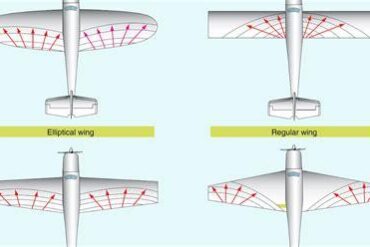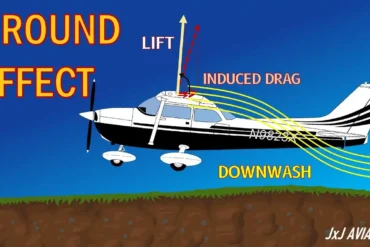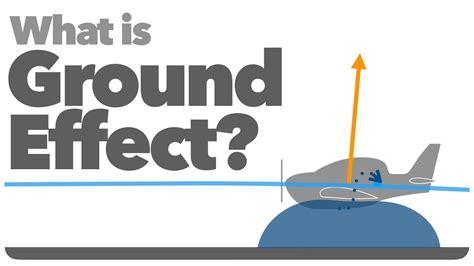
When a fixed-wing aircraft operates at or below approximately half its wingspan above a solid surface, it experiences a significant reduction in induced drag and a marked increase in lift. This phenomenon, known as ground effect, stems from the interference with wingtip vortices and the alteration of downwash patterns. The result is a higher lift-to-drag ratio, enabling aircraft to perform more efficiently during low-altitude operations such as takeoff and landing.
Pilots often notice a “floating” sensation during takeoff runs in ground effect, as the reduced drag allows the aircraft to lift off the runway at lower speeds. However, it is crucial to maintain a careful balance; while the aircraft lifts more easily, it may not achieve sufficient climb performance until accelerating beyond ground effect influence.
Low-wing aircraft experience ground effect more profoundly than their high-wing counterparts. This differential occurs because proximity to the surface further disrupts wingtip vortices for wings closer to the ground, enhancing lift benefits. Pilots must also be wary of airspeed indicator errors caused by localized pressure changes around the static source in ground effect conditions.
The Science Behind Lift and Drag in Ground Effect
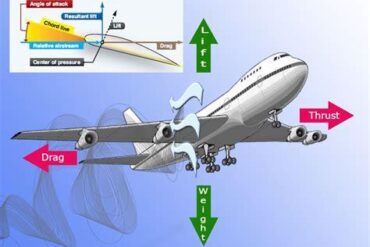
Lift generation in an aircraft wing occurs by deflecting the relative airflow downward. According to Newton’s Third Law, the downward deflection results in an upward force identified as lift. In ground effect, the near-surface environment causes air pressure to increase beneath the wing—sometimes referred to as the “ram” or “cushion” effect—which reduces the need for a higher angle of attack to generate equivalent lift.
Wind tunnel tests confirm that, with constant airspeed and angle of attack, the lift coefficient increases notably within ground effect, corroborating the observations of enhanced lift and decreased drag. As a result, less thrust is necessary to maintain the same velocity, enabling energy-efficient performance at low altitudes.
Ground Effect in Rotorcraft Operations
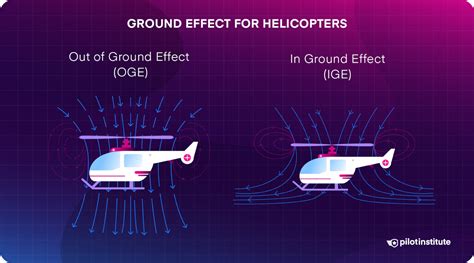
Rotorcraft, including helicopters, also benefit significantly from ground effect. When hovering near a surface, the downward airflow generated by the rotor disc meets the ground and is deflected outward, reducing vertical downflow and, consequently, the induced power required to hover.
The benefit is so substantial that some helicopters, otherwise unable to hover out of ground effect (OGE), can maintain a hover within ground effect (IGE) conditions. Helicopter performance charts typically illustrate the differential capabilities between IGE and OGE, guiding pilots in understanding weight and environmental limitations.
In overloaded scenarios, rotorcraft pilots may initiate forward movement while still in ground effect to transition into safe climb performance, exploiting the reduced induced drag and increased lift during the initial phase of forward flight.
Unique Challenges for VTOL Aircraft in Ground Effect
Vertical take-off and landing (VTOL) aircraft encounter additional complexities when operating in ground effect, notably suckdown, fountain lift, and hot gas ingestion (HGI).
- Suckdown acts as a downward force on the airframe, counteracting lift.
- Fountain lift occurs when multiple lift jets impinge on the ground and combine, creating an upward force beneath the fuselage.
- Hot gas ingestion arises when the aircraft re-ingests hot exhaust gases, reducing engine thrust by 3–4% for every 12.222 °C rise in inlet temperature.
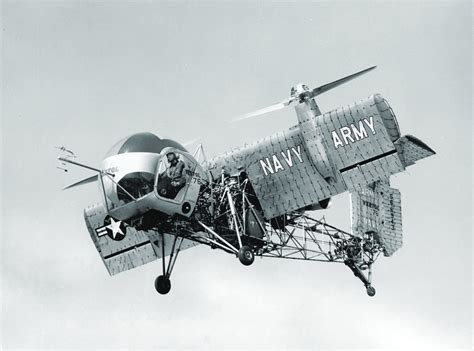
Early VTOL experimental platforms, such as the Bell X-14, faced significant challenges with suckdown and HGI. Engineers addressed these by raising the aircraft with extended landing gear and operating from open-grid platforms that allowed hot exhaust to dissipate below the aircraft.
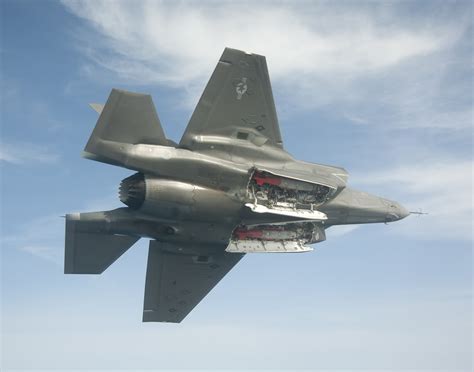
Further advancements came with the Dassault Mirage IIIV and the Hawker P.1127, both of which utilized grid surfaces and ventral strakes to better capture fountain flow and mitigate suckdown losses. Strakes and lift-improvement devices (LIDS) introduced on later Harrier models, such as the AV-8B, boxed in the under-fuselage region where fountain flow accumulated, boosting lift by up to 1,200 pounds. The F-35B refined these innovations by incorporating weapon bay inboard doors that open during hover to channel fountain lift effectively and counteract suckdown.
Ground Effect’s Impact on Stall Behavior
While ground effect improves lift, it also alters stall dynamics. The stalling angle of attack within ground effect is reduced by approximately 2–4 degrees compared to free air conditions. This means that an aircraft may stall at a lower pitch attitude when close to the ground, a critical consideration during takeoff and landing phases.
If a pilot over-rotates during takeoff without sufficient speed, the resultant drag spike from premature flow separation can prevent the aircraft from achieving liftoff. Historical accidents, such as the overruns of two de Havilland Comets, underscore the dangers of misjudging stall behavior in ground effect.
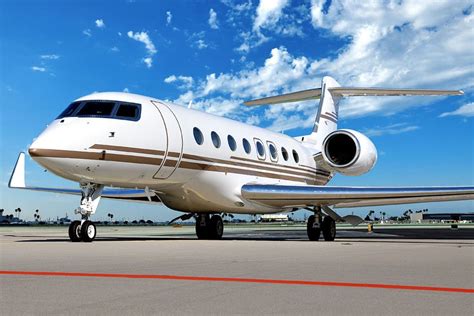
Similarly, asymmetric wing stall poses severe risks. During certification testing of the Gulfstream G650 business jet, an over-rotation during takeoff in ground effect led to one wingtip stalling. This induced an uncommanded roll that overwhelmed lateral controls, culminating in the loss of the test aircraft.
Ground-Effect Vehicles: Exploring New Frontiers
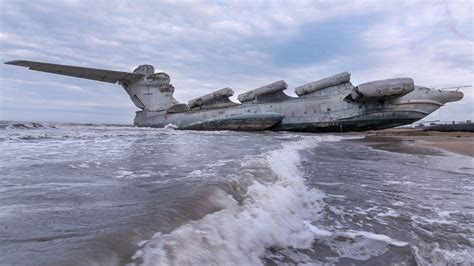
Beyond traditional aircraft, the principles of ground effect have inspired the development of specialized ground-effect vehicles, often designed to skim close to the water’s surface. These craft, like the famed Soviet Ekranoplans, leveraged the enhanced lift and reduced drag for high-speed transport over water.
Despite their promise, ground-effect vehicles face considerable operational challenges. Maintaining optimal altitude without substantial automation or pilot skill is difficult, and their proximity to the surface makes them vulnerable to environmental obstacles and rough terrain. These limitations have confined ground-effect vehicles primarily to experimental and niche military applications rather than widespread civilian use.
Conclusion
Ground effect aerodynamics profoundly influences the design, operation, and performance of diverse flight platforms, from conventional fixed-wing aircraft to rotorcraft and VTOL designs. By understanding the nuances of lift enhancement, drag reduction, and altered stall behavior, aviation professionals can better harness ground effect to enhance safety and efficiency.
Advances in technology, particularly for VTOL aircraft, continue to mitigate some of the adverse effects like suckdown and HGI, opening new possibilities for exploiting ground effect advantages. Yet, whether for future urban air mobility solutions or specialized military operations, the fundamental principles of ground effect remain as relevant and critical today as they were during the earliest experiments in aviation science.