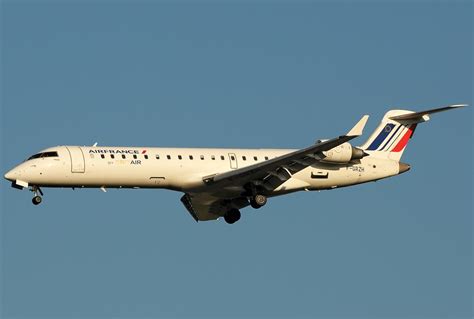
The Bombardier CRJ700 series stands as a defining chapter in the evolution of regional aviation, emerging as a direct response to market demand for higher-capacity regional jets without sacrificing efficiency or flexibility. Conceived under the designation CRJ-X program in 1994, the aircraft was tailored to compete directly with the BAe 146, Embraer’s E-Jet family, and the Fokker 70/100 series. Building upon the structural and operational DNA of the earlier CRJ100/200, the CRJ700 introduced an elongated fuselage, redesigned high-lift wings, and advanced General Electric CF34-8C engines, providing an optimal balance between range, performance, and commonality.
The CRJ700’s first flight occurred on May 27, 1999, followed by type certification and commercial service entry in 2001. French regional carrier Brit Air became the launch customer, signaling Bombardier’s ambitions to claim significant ground in the regional jet marketplace.
Engineering Evolution: Aerodynamics, Engines, and NextGen Enhancements
At its core, the CRJ700 introduced a combination of aerodynamic and mechanical improvements aimed at boosting regional performance. The aircraft featured a stretched fuselage, allowing seating for 68–78 passengers depending on configuration, and a newly designed supercritical wing with leading-edge slats and trailing-edge flaps for superior lift and low-speed handling. The implementation of CF34-8C1 and later -8C5 engines marked a leap in thrust capability while maintaining fuel discipline.
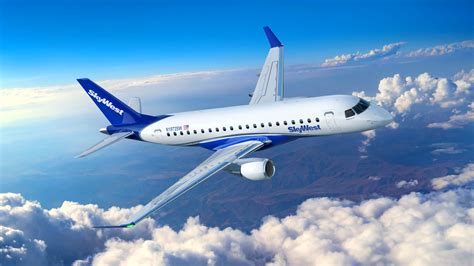
With Bombardier’s announcement of the NextGen package in 2007, the CRJ700 series received its most impactful update. Operators such as SkyWest Airlines (CRJ700) and Mesaba Airlines (CRJ900) became launch carriers for the revised design. The upgrades included:
- +5.5% fuel burn improvement
- New interior cabin styling with improved overhead bin volume and ergonomic lighting
- Enhanced avionics and maintenance intervals
Later developments in 2016 introduced the Atmosphere cabin, enhancing the passenger experience with larger windows, spacious luggage bins, full-spectrum LED lighting, and a lower cabin altitude, reaffirming the CRJ’s viability in a competitive landscape.
Unveiling the Variants: From CRJ550 to CRJ1000
The CRJ700 series gave rise to a diverse family of derivatives, each tailored to specific operational and regulatory niches:
CRJ550
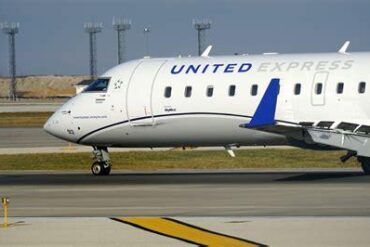
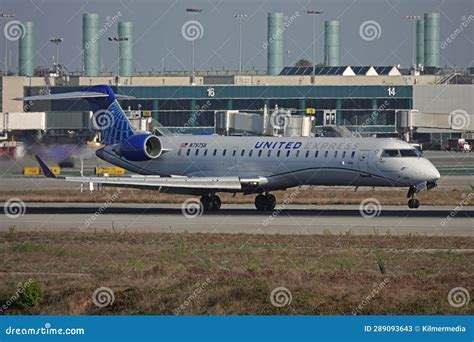
Born out of necessity to comply with U.S. scope clauses, the CRJ550 is a reconfigured CRJ700 limited to 50 seats. United Airlines launched the variant in 2019 to provide a premium-feel product in a regional jet format, complete with a larger galley, improved baggage space, and an upgraded cabin layout.

CRJ700
The foundational model of the series, the CRJ700 typically seats 68 passengers, expandable to 78 in the Series 702 variant. It includes an Extended Range (ER) version, reaching up to 2,032 nautical miles, making it a favorite among carriers serving thinner, long-range regional routes.
CRJ705
A niche variant developed for Air Canada Jazz, the CRJ705 features 75 seats with a heavier focus on business-class configuration. Although successful within its niche, it was gradually phased out and converted to CRJ900s by 2018 to streamline operations.

CRJ900
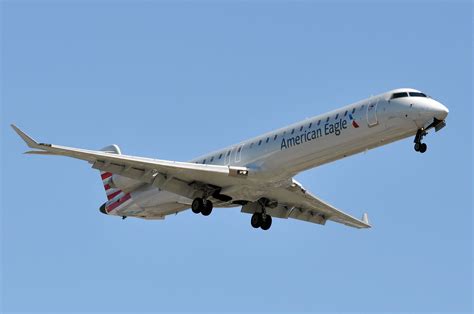
Representing the next step in scale, the CRJ900 accommodates up to 90 passengers and sports significant improvements, including a FADEC-controlled CF34-8C5 engine, enhanced APU, and modified wings with upturned wingtips for efficiency. With MTOWs reaching 84,500 pounds and a range between 1,350 and 1,828 nautical miles, the CRJ900 was Bombardier’s most commercially successful variant.
CRJ1000
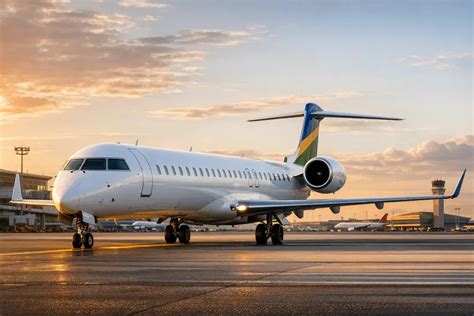
The final and largest evolution of the platform, the CRJ1000 pushes the seating capacity to 104 passengers. Introduced in 2010, it integrated advanced versions of the CF34 engines, a new digital cabin management system, and improved structural reinforcements. Despite the innovation, the CRJ1000 faced limited market traction due to high competition from Embraer’s larger E-Jets and Airbus’s A220.
Global Commercial Success and Competitive Pressures
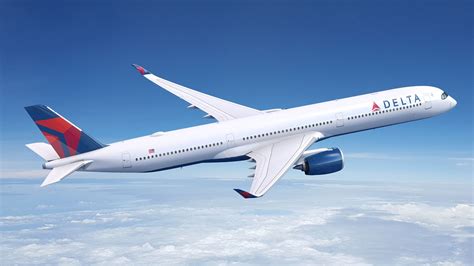
One of the program’s most transformative moments came in 2000, when Delta Air Lines placed a $10 billion order for 500 CRJ700/200 aircraft. This watershed deal anchored Bombardier’s credibility in the North American regional market. Subsequent large-scale commitments came from Comair, Scandinavian Airlines (SAS), Lufthansa CityLine, Garuda Indonesia, and PLUNA. The CRJ’s common type rating across all variants allowed operators to minimize pilot training costs and operational complexity, fueling its adoption.
At its peak, CRJ700 series aircraft accounted for over 20% of North American jet departures. By 2015, the series supported over 200,000 global monthly flights, underscoring its deep entrenchment in regional networks.
End of Production and Transition to Mitsubishi
The regional jet market shifted dramatically in the late 2010s, and Bombardier began a strategic retreat from commercial aviation. After divesting the CSeries (now Airbus A220) to Airbus and the Q400 turboprop to Viking Air, Bombardier finalized the sale of the CRJ program to Mitsubishi Heavy Industries on June 1, 2020.
The agreement allowed Bombardier to fulfill remaining aircraft orders through December 2020, and the final CRJ900 rolled off the line on February 28, 2021. While Mitsubishi no longer produces the CRJ, it maintains aftermarket support, manuals, and parts provisioning through MHI RJ Aviation Group.
Major Operators and Operational Footprint
As of early 2021, 896 CRJ700 series aircraft had been delivered, broken down as follows:
- 330 CRJ700/550 units
- 16 CRJ705 aircraft
- 487 CRJ900 jets
- 63 CRJ1000 models
Leading operators include:
- SkyWest Airlines (operating for United and Delta)
- Endeavor Air (a Delta Connection carrier)
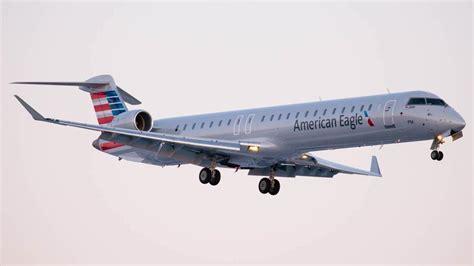
- PSA Airlines (American Eagle)
- GoJet and Mesa Airlines
Their reliability, ease of maintenance, and availability of parts have ensured that the CRJ700 series remains indispensable to regional aviation, especially in hub-and-spoke operations across North America and parts of Europe.
Safety Record and Notable Incidents
While the CRJ family is widely regarded for its safety and dispatch reliability, two significant incidents highlight the operational realities of high-frequency aircraft:
- On January 29, 2025, American Eagle Flight 5342, a CRJ700, tragically collided with an obstacle during descent into Washington National Airport and crashed into the Potomac River. All 67 occupants perished, marking the deadliest CRJ accident on record.
- On February 17, 2025, Delta Connection Flight 4819, operating a CRJ900, overran the runway on landing at Toronto Pearson Airport. Remarkably, no fatalities occurred, though the airframe sustained irreparable damage.
These events, while rare, prompted renewed focus on runway safety training, descent protocols, and airport obstacle clearance awareness for regional jet operators.
Legacy and the CRJ’s Place in Aviation History
The Bombardier CRJ700 series stands not merely as a product line, but as a cornerstone of the modern regional airline business model. Its scalable design, efficient performance envelope, and adaptability to airline constraints—such as U.S. scope clauses and airport infrastructure—solidified its reputation.
Although no longer in production, the series’ durability and aftermarket support continue to ensure its presence in global skies. As Embraer and Airbus vie for dominance in the post-CRJ landscape, the CRJ700 series remains a testament to Canadian aerospace innovation and a linchpin in the transition from turboprops to jets for short-haul air travel.