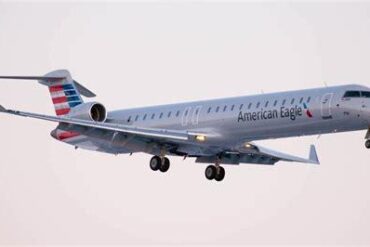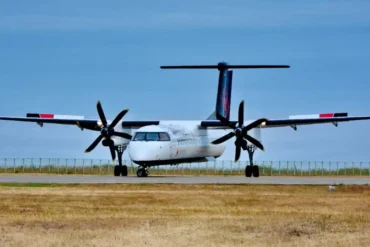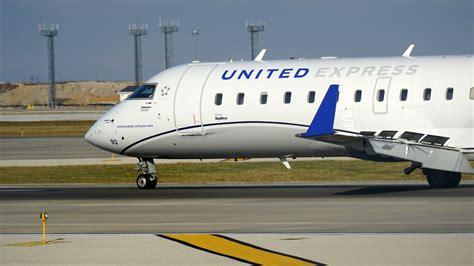
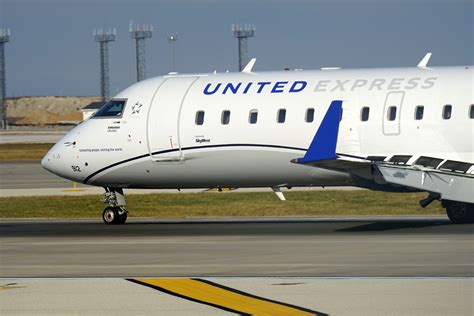
On December 29, a United Express Bombardier CRJ700 encountered a dramatic and potentially hazardous event as it attempted to land at Charlottesville–Albemarle Airport (CHO). Operated by SkyWest Airlines, the aircraft—registered N779SK—was completing Flight UA 5532 from Chicago O’Hare International Airport (ORD) when the right wingtip struck the runway during the initial landing attempt. The incident, although resulting in no injuries, has raised serious questions about landing safety protocols and the implications of continuing flight operations after structural contact with the runway surface.
The Incident: A High-Stakes Approach into Charlottesville
The CRJ700, a twin-engine regional jet seating up to 70 passengers, departed from Chicago at 08:53 AM, significantly delayed from its original 07:10 AM schedule. After flying for approximately 90 minutes, the jet approached the runway at CHO amid gusty wind conditions—a factor cited by the airline in its post-incident statement.
As the aircraft descended for landing, wind shear or crosswind conditions may have contributed to a banking motion, resulting in the right wingtip grazing or striking the runway surface. Flight tracking data from Flightradar24 confirms that the aircraft aborted the landing immediately afterward, executing a go-around maneuver and circling for approximately 15 minutes before completing a safe landing on the second attempt.
SkyWest Airlines issued a brief statement afterward:
“SkyWest flight 5532, operating as United Express from Chicago, landed safely in Charlottesville, Virginia, on Dec. 29 after wind gusts caused a wingtip to briefly contact the runway. There were no injuries and passengers deplaned normally at the gate.”
Post-Landing Actions and Aircraft Grounding
Although the aircraft landed without further incident, aviation safety protocols dictated immediate inspection and grounding. The CRJ700, with tail number N779SK, remained at CHO for over 48 hours, during which time preliminary damage assessments were likely conducted. Such groundings are standard procedure following any structural impact, especially involving vital components like the wing.
Following this inspection window, the aircraft was ferried to Tucson International Airport (TUS)—a known SkyWest maintenance hub equipped with a state-of-the-art maintenance hangar spanning over 100,000 square feet. This move strongly suggests that technicians identified the need for deeper structural analysis and potential repairs.
Understanding Wingtip Strikes: Rarity and Risks
While tail strikes are relatively more common during aggressive rotation or landing flare maneuvers, wingtip strikes are significantly rarer due to the aircraft’s lower roll angles during approach and departure. Yet, when they occur, they demand immediate scrutiny due to the location of critical flight systems and fuel storage within the wings.
Unlike tail sections, which often incorporate protective skids, wing structures are unprotected and more vulnerable to hidden internal damage. A wingtip strike may seem minor externally, but the potential for internal fractures or compromised composite materials can pose long-term safety risks if not detected.
In this incident, while the airline characterized the contact as brief, the decision to dispatch the aircraft to Tucson implies engineers could not confidently rule out damage without extensive teardown and inspection. Aircraft wings endure continuous pressurization cycles and aerodynamic loads, making any undetected flaw progressively dangerous.
Operational Decision: Was a Go-Around After Impact the Right Move?
The crew’s choice to perform a go-around immediately after the wingtip strike introduces a critical question in the ongoing aviation discourse: should an aircraft with known surface impact be allowed to continue in flight, even briefly?
In this case, the flight crew’s situational awareness and training likely prioritized preserving energy, altitude, and control authority rather than risking a potentially compromised landing rollout. While some critics argue that halting the aircraft immediately might be safer, aviation doctrine acknowledges that a controlled go-around often presents fewer risks in the absence of definitive structural failure.
A post-incident investigation—if launched by the Federal Aviation Administration (FAA) or the National Transportation Safety Board (NTSB)—may provide deeper insight into whether the go-around was entirely appropriate or if protocols need refinement.
Aircraft History: N779SK’s Long Regional Legacy
The CRJ700 involved, N779SK, is a 16-year-old airframe that has served under the United Express brand since its delivery to SkyWest in May 2009. Configured with six business class seats and 64 economy seats—including 16 in Economy Plus—this aircraft has likely flown tens of thousands of regional segments across the U.S.
Despite its age, the aircraft’s mechanical reliability is largely determined by rigorous maintenance cycles and inspections, including C-checks and structural reviews mandated by FAA regulations. The age of the aircraft, however, could play a factor in the extent of material fatigue and the severity of the wing damage.
Maintenance Implications: Tucson’s Strategic Role
Tucson’s facility represents a critical node in SkyWest’s fleet maintenance network, capable of accommodating up to six CRJ700s or similar aircraft simultaneously. The presence of advanced diagnostic equipment and structural repair tools allows engineers to disassemble, inspect, and restore aircraft to airworthy status after incidents like wingtip strikes.
Should deeper wing damage be found—such as cracked spars, delaminated composites, or hydraulic line compromise—the aircraft may undergo weeks of repair, followed by ground tests and multiple flight test cycles before re-entering commercial service.
Wing Damage: Subtle Fractures, Serious Consequences
One of the greatest challenges in aviation maintenance is identifying subsurface damage. A minor scrape on a wingtip might hide more severe issues beneath the paint. With the CRJ700’s fuel tanks integrated within the wings, any structural breach risks fuel leakage, fire hazards, or aerodynamic imbalance.
Moreover, modern aircraft wings incorporate electronic components, such as wingtip navigation lights, static dischargers, and vortex generators. A strike might compromise not only the physical structure but also essential systems wiring, requiring intricate diagnostic work.
Safety Oversight and Broader Implications
The aviation industry closely monitors such incidents, using them as case studies for procedural updates. Regulatory agencies may now revisit:
- The adequacy of wind forecasting and pilot briefing tools for CHO and other regional airports.
- The standard operating procedures surrounding post-impact go-arounds.
- The role of simulator training for wingtip or partial-surface impact response.
Passengers on board UA 5532 may never have realized the near-miss severity of the situation. But in the aviation world, every scratch, strike, and scrape is documented, analyzed, and—ultimately—used to improve future flight safety.
Awaiting Answers: Investigation and Return to Service
At this time, no official statement has been issued regarding the final damage assessment or N779SK’s timeline for return to service. Aviation analysts will be watching SkyWest’s fleet movement closely, as a prolonged absence of the aircraft from flight logs would suggest extensive repairs or part replacements.
Whether the NTSB chooses to pursue a full investigation may depend on data from the aircraft’s Flight Data Recorder (FDR) and any ground-based eyewitness reports. If deemed significant, findings from this incident could contribute to future operational training, risk mitigation strategies, and perhaps even aircraft design updates.
In an industry where safety is paramount, even a brief wingtip scrape is never treated lightly.