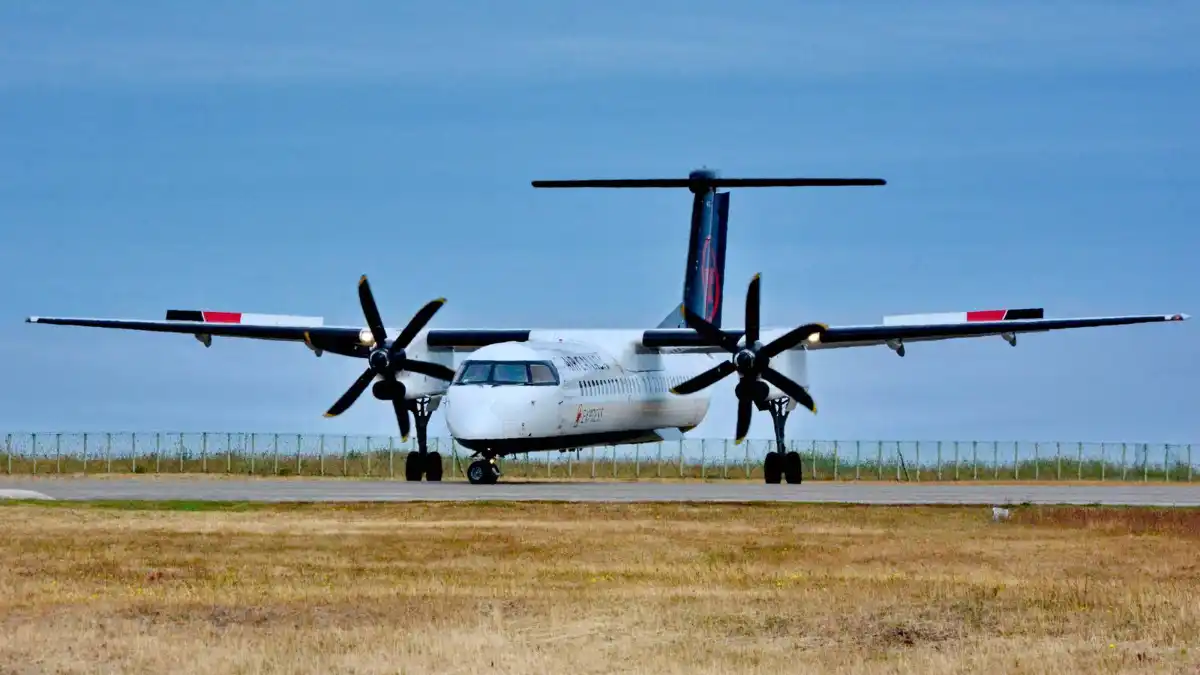
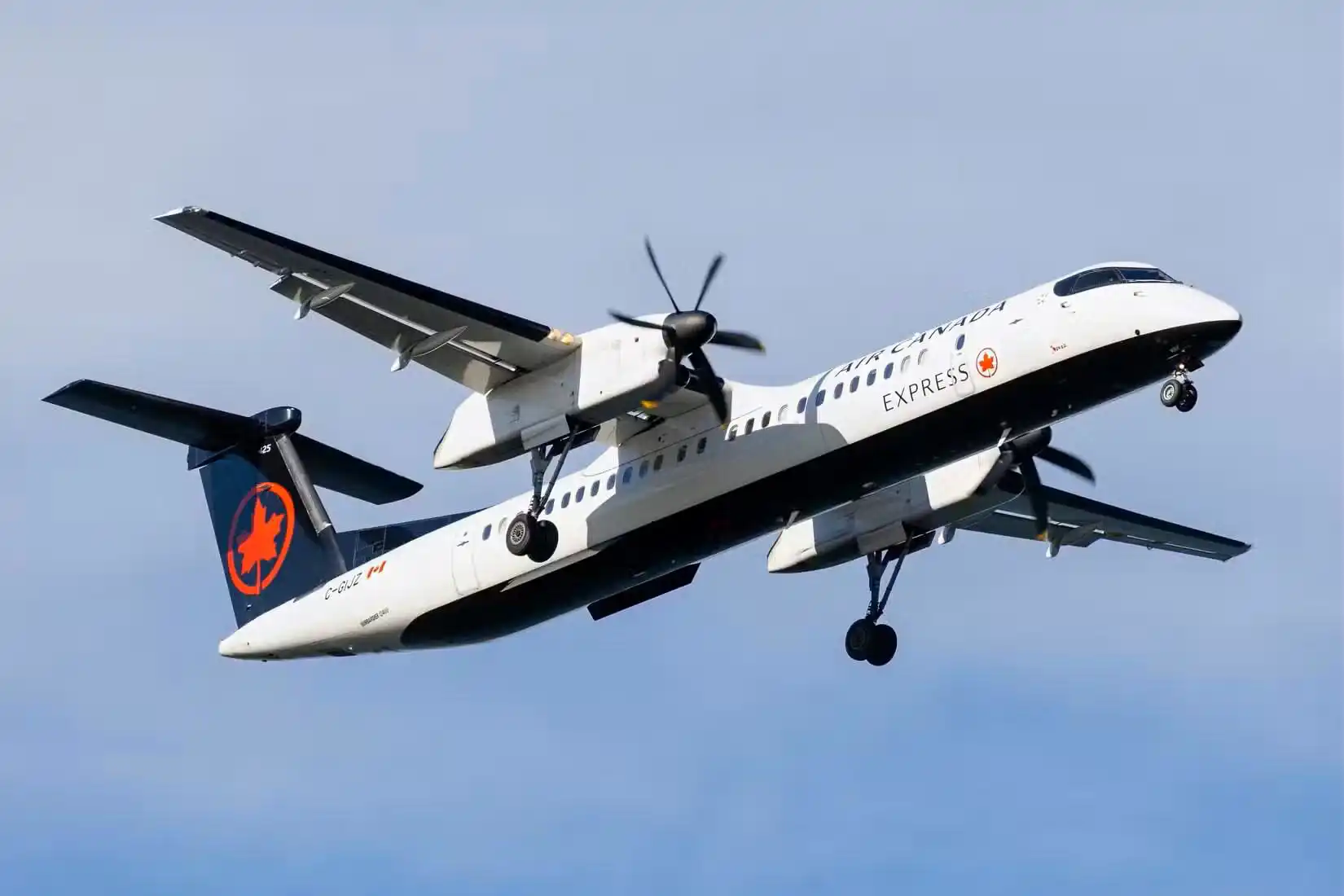
Air Canada Express flight AC7664 was forced to make an emergency diversion to Boston on Wednesday after the aircraft’s captain suffered a medical emergency while en route from Newark Liberty International Airport to Halifax Stanfield International Airport. The dramatic incident unfolded aboard a PAL Airlines-operated De Havilland Canada DHC-8-400 turboprop carrying 61 passengers, highlighting the aviation industry’s extensive safety procedures and the critical role of cockpit redundancy.
Scheduled as a routine international regional service, Flight AC7664 departed Newark shortly before 1:00 PM local time on its daily journey to Nova Scotia. Under normal circumstances, the flight takes just over two hours, connecting travelers between two important northeastern aviation markets. However, what began as an ordinary operation quickly escalated into a serious inflight emergency when the captain reportedly suffered a seizure while the aircraft was cruising toward Canada.
According to reports, the captain’s medical episode resulted in involuntary and uncontrolled movements severe enough to require intervention from both crew members and passengers. Witness accounts indicated that the pilot had to be restrained in the cabin to ensure the safety of everyone on board and to prevent further disruption during the emergency.
By design, commercial aviation incorporates multiple layers of safety, and those safeguards proved decisive aboard AC7664. The aircraft’s first officer immediately assumed full control of the De Havilland Q400, stabilized the aircraft, and initiated diversion procedures while coordinating with air traffic control.
Emergency Diversion Sends Flight AC7664 to Boston
Flight tracking data shows that AC7664 departed Newark Liberty International Airport at approximately 12:54 PM. Roughly one hour into the flight, the crew elected to divert to Boston Logan International Airport, one of the region’s busiest airports and a logical choice given its proximity, emergency response capabilities, and operational infrastructure.
The urgency of the situation reportedly prompted air traffic controllers to prioritize the aircraft’s arrival. Despite the unexpected circumstances, the first officer executed a safe landing at Boston Logan at approximately 1:56 PM, just over an hour after departure.
Airport officials confirmed that emergency personnel, including Massport Fire Rescue and Boston Emergency Medical Services, were standing by upon arrival. Medical teams immediately attended to the incapacitated captain before transporting him to a local hospital for further evaluation and treatment.
An Air Canada spokesperson later emphasized that airline pilots are rigorously trained to safely operate and land aircraft independently when circumstances require. Such training is a cornerstone of modern airline operations and ensures that a single pilot can complete a flight safely during extraordinary situations.
Passengers Continue to Halifax Following Extended Ground Delay
While the immediate medical emergency had been resolved, passengers aboard AC7664 still faced significant disruption. Following the unscheduled landing in Boston, Air Canada coordinated with operational teams to determine how best to continue the journey to Halifax.
The aircraft remained on the ground at Boston Logan for nearly five and a half hours as airline personnel addressed operational requirements and ensured that the flight could resume safely.
Eventually, the same aircraft departed Boston at 7:20 PM local time. After a flight lasting approximately 71 minutes, it landed at Halifax Stanfield International Airport at 9:31 PM local time, nearly five hours behind its original schedule.
PAL Airlines Q400 Involved Has Returned to Normal Operations
The aircraft involved in the incident was identified as registration C-GPOE, a 25-year-old De Havilland Canada DHC-8-400 operated by PAL Airlines on behalf of Air Canada Express. The regional turboprop is a familiar sight throughout Atlantic Canada, regularly operating flights linking Halifax with destinations across eastern Canada.
Despite the serious inflight incident, the aircraft itself was unaffected mechanically. After arriving in Halifax later that evening, the turboprop resumed scheduled service the following day.
Flight tracking information indicates that C-GPOE subsequently operated its planned morning service from Halifax to Ottawa before continuing onward to Quebec City and additional regional destinations. The rapid return to service underscores that the emergency was solely medical in nature and unrelated to any technical issue with the aircraft.
Midair Medical Emergencies Demonstrate Aviation Safety Systems
Although pilot incapacitation events remain extremely rare, commercial aviation regulations are specifically designed to address such scenarios. Airlines worldwide train flight crews extensively for situations involving sudden medical emergencies affecting cockpit personnel.
Modern airline operations rely on standardized procedures, recurrent simulator sessions, and robust crew resource management principles to ensure safe outcomes even during highly unusual events. The successful diversion of Air Canada Express Flight AC7664 serves as another example of those systems functioning exactly as intended.
Thanks to the swift actions of the first officer, cabin crew, passengers, air traffic controllers, and emergency responders in Boston, all 61 passengers ultimately reached Halifax safely despite an extraordinary and highly challenging inflight event.