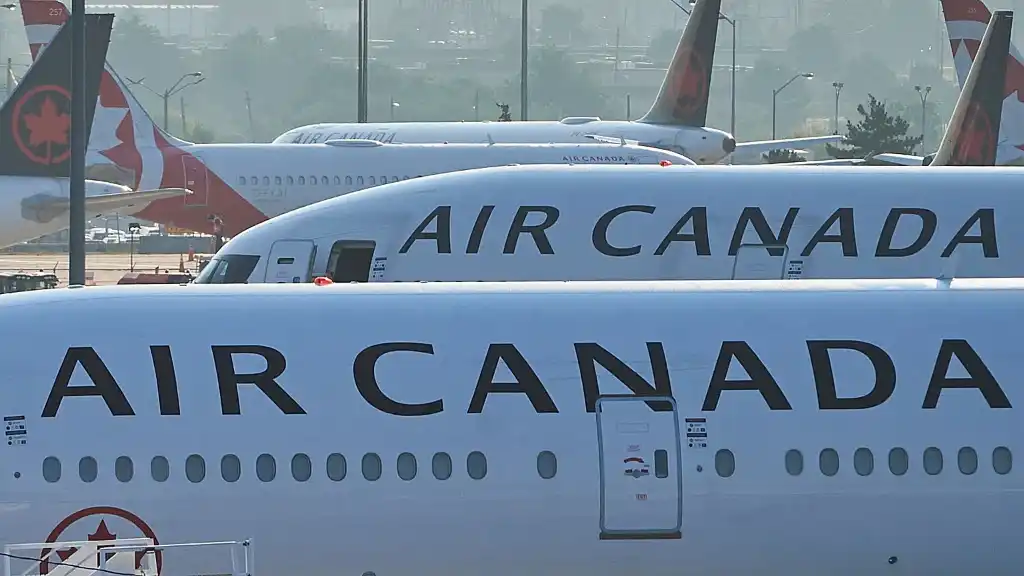
A former Air Canada captain has been arrested and charged after authorities alleged that he spent years operating some of the airline’s largest aircraft without holding the specific license legally required to serve as a commercial airline captain. The case has shocked the aviation industry, not because it involves an individual with no flying experience, but because it allegedly exposed a critical gap in credential verification within one of North America’s most heavily regulated airlines.
According to investigators, 59-year-old Geoffrey Wall of Barrie, Ontario, flew more than 900 domestic and international flights between 2009 and 2025 while serving as an Air Canada captain. Police allege that during this period he operated aircraft including the Boeing 767, Boeing 777, and Boeing 787 despite not possessing the Airline Transport Pilot License (ATPL) required for command of large commercial passenger aircraft.
The case has sparked widespread discussion across the aviation sector, raising difficult questions about oversight, regulatory compliance, and how licensing discrepancies can remain undetected for such a prolonged period within a modern airline environment.
After Transport Canada launched a regulatory review into the pilot’s credentials, the matter evolved into a criminal investigation known as Project Icarus. The investigation ultimately resulted in Wall’s arrest and multiple criminal charges. Air Canada confirmed that the pilot was removed from active flying duties once the issue was identified and is no longer employed by the airline.
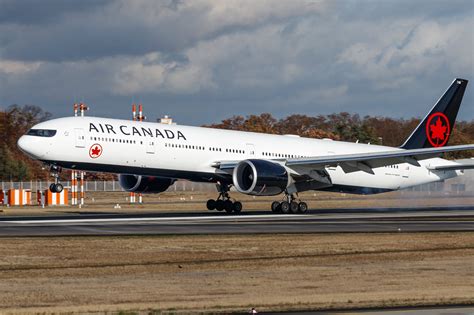
The Investigation That Uncovered a Long-Term Licensing Discrepancy
The investigation began when Transport Canada initiated a review of a commercial airline captain’s licensing records and professional conduct. What initially appeared to be a regulatory matter quickly escalated after authorities allegedly discovered inconsistencies in the documentation supporting the pilot’s qualifications.
Peel Regional Police allege that Wall used fraudulent pilot licensing documents and repeatedly misrepresented his credentials to both Air Canada and Transport Canada throughout his airline career. Investigators claim these actions allowed him to occupy a captain’s position for more than sixteen years while receiving compensation exceeding C$2.9 million.
Authorities arrested Wall on June 1 and subsequently charged him with fraud exceeding C$5,000, two counts involving forged documents, three counts of possession of a counterfeit mark, and public mischief. The public mischief allegation stems from claims that he filed a false police report concerning supposedly stolen pilot documentation.
The scale of the alleged deception has attracted significant public attention because it involves one of Canada’s most prominent airlines and a pilot occupying a highly senior position within the company. Unlike many aviation compliance violations that are discovered quickly through audits or inspections, this case allegedly remained hidden for well over a decade.
Deputy Police Chief Nick Milinovich described the seriousness of the allegations by comparing the situation to a medical professional practicing beyond the scope of their qualifications. The analogy highlighted the central issue facing investigators: whether a professional can be considered legally qualified for a position if they lack the specific credentials required by law, regardless of their practical experience.
Understanding the Difference Between a Commercial Pilot License and an ATPL
A key aspect of the case involves understanding the distinction between a Commercial Pilot License and an Airline Transport Pilot License. This difference has often been misunderstood in public discussions surrounding the investigation.
A Commercial Pilot License permits a pilot to receive compensation for operating aircraft professionally. It represents a significant achievement and requires extensive training, testing, and flight experience. However, it is not the highest level of pilot certification available.
The Airline Transport Pilot License is considered the pinnacle of civilian pilot licensing. It requires substantially greater experience, additional examinations, and stricter qualification standards. Most importantly, it is the credential required for pilots serving as captains of large commercial airliners carrying hundreds of passengers.
According to police allegations, Wall possessed a valid Commercial Pilot License but never obtained the Airline Transport Pilot License necessary for his captain position. This distinction is crucial because it means the case does not involve someone entirely lacking aviation qualifications.
Instead, authorities claim the pilot possessed substantial aviation credentials but lacked the specific certification required to legally command widebody commercial aircraft.
This difference helps explain why the situation allegedly went unnoticed for so long. A pilot with significant experience and valid lower-level certifications may be capable of performing airline duties successfully while still failing to meet the precise legal requirements for a particular position.
Why Air Canada Says Flight Safety Was Not Compromised
One of the most debated aspects of the case concerns Air Canada’s insistence that passenger safety was not compromised despite the alleged licensing violation.
The airline has stated that all of its pilots undergo rigorous recurrent training every six months. These training cycles are designed to evaluate proficiency in aircraft handling, emergency procedures, decision-making, and operational compliance. Pilots must repeatedly demonstrate competence in highly realistic simulator environments that replicate both normal and emergency flight conditions.
In addition to semiannual training, airline pilots also undergo annual flight evaluations conducted by certified Transport Canada check pilots. These assessments are intended to verify that pilots remain capable of safely operating the aircraft assigned to them.
According to Air Canada, the former captain successfully completed all required training events and met or exceeded operational standards throughout his employment.

However, training competency and licensing compliance are separate issues. Training demonstrates that a pilot possesses the skills necessary to operate an aircraft safely. Licensing confirms that the pilot has fulfilled all legal and regulatory requirements associated with a particular role.
The investigation therefore focuses not on whether the pilot could physically fly the aircraft, but whether he was legally entitled to occupy the captain’s seat in the first place.
This distinction lies at the heart of the controversy. It explains how an airline can maintain that operational safety standards were satisfied while law enforcement simultaneously pursues allegations of fraud and document falsification.
How Credential Verification May Have Failed
Perhaps the most troubling aspect of the case is not the alleged actions of a single pilot but the apparent failure of administrative safeguards designed to detect such discrepancies.
Modern commercial aviation is often regarded as one of the most regulated industries in the world. Airlines maintain extensive documentation systems, regulatory agencies conduct oversight activities, and pilots undergo continuous monitoring throughout their careers.
Despite these layers of oversight, authorities allege that a licensing gap remained undetected for approximately sixteen years.
Industry experts note that verification systems often rely heavily on documentation submitted by pilots themselves. If fraudulent records are sufficiently convincing and repeatedly accepted during administrative reviews, discrepancies may persist unless a targeted investigation occurs.
Air Canada has stated that it voluntarily reported the matter after identifying concerns regarding the pilot’s credentials. The airline subsequently conducted an audit of its pilot workforce and reported finding no additional cases of non-compliance.
The carrier has also strengthened internal procedures, including enhanced verification of original licensing documents issued directly by Transport Canada.
These changes indicate that both regulators and airline management recognize the need for more robust credential authentication systems to prevent similar incidents in the future.
Similar Cases Show Pilot Credential Fraud Is Rare but Not Unprecedented
Although unusual, the Air Canada investigation is not entirely without precedent. Aviation history includes several notable cases involving alleged credential fraud among airline pilots.
One of the most widely known examples involved Swedish pilot Thomas Salme, who reportedly flew commercial passenger jets across Europe for years before authorities arrested him in 2010. Salme was detained at Amsterdam Schiphol Airport while preparing to operate a Corendon Airlines Boeing 737 flight to Ankara.
Another highly publicized case emerged at South African Airways. Pilot William Chandler reportedly served for approximately two decades while allegedly lacking the Airline Transport Pilot License required for his position. Questions regarding his credentials surfaced following an investigation involving an Airbus A340-600 incident.
In Pakistan, aviation authorities launched a sweeping review in 2020 after allegations emerged that numerous pilots possessed questionable qualifications or had benefited from fraudulent examination practices. The resulting investigation prompted the grounding of hundreds of pilots and drew international concern regarding aviation oversight standards.
While these incidents differ significantly in scale and circumstances, they share a common theme: the vulnerability of credential verification systems when documentation is falsified or administrative controls fail.
A Case That Could Reshape Aviation Oversight
The Air Canada investigation has become more than a criminal case involving one former pilot. It has evolved into a broader examination of how airlines, regulators, and licensing authorities verify professional qualifications in an industry where public trust is essential.
Canadian transportation officials have already indicated that the federal government will review the circumstances surrounding the case and determine whether additional safeguards are necessary. Transport Canada has also imposed a monetary penalty on the former pilot related to licensing violations.
If the allegations are ultimately proven in court, the most significant legacy of the case may not be the criminal charges themselves. Instead, it may be the questions raised about how a credential discrepancy allegedly survived within a sophisticated regulatory environment for more than sixteen years.
For passengers, the case serves as a reminder that aviation safety depends not only on technical expertise and pilot skill but also on the integrity of the systems that verify who is qualified to sit in the cockpit. In an industry built on precision, accountability, and trust, even a single failure in administrative oversight can reverberate throughout the entire aviation community.