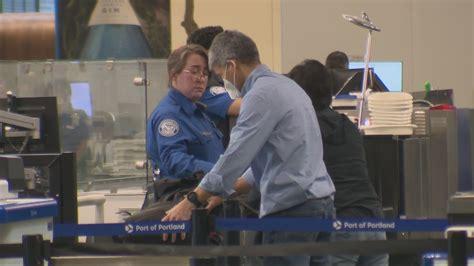
A routine departure from Portland International Airport (PDX) in November turned into a case study in aviation security failure after a passenger boarded a Delta Air Lines aircraft carrying a full-sized meat cleaver in his carry-on bag. The weapon was not detected during standard screening procedures and was only discovered after boarding had been completed. Newly released surveillance footage has now provided a clearer view of how the breach unfolded, raising renewed scrutiny over checkpoint reliability and enforcement decisions.
The incident did not result in injuries, but its implications were significant. A large bladed weapon passing through a federal checkpoint challenges the fundamental assumption underpinning modern aviation security: that layered screening systems are designed to prevent precisely this type of oversight. The fact that the passenger was not arrested further intensified public debate.
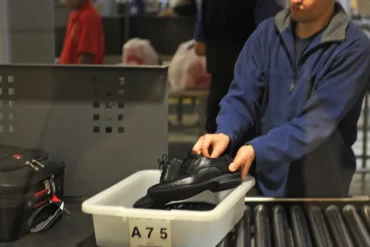
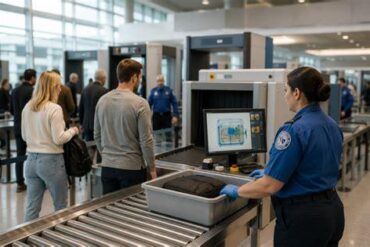
In the video footage, the passenger is seen moving through the security checkpoint carrying a shopping bag containing the cleaver. There is no visible hesitation, confrontation, or secondary inspection that would suggest suspicion. The item passed through X-ray screening without being flagged, allowing the individual to proceed directly to the departure gate and board the aircraft alongside other travelers.
How the Meat Cleaver Evaded TSA Screening
According to reports cited by Local12, the screening equipment in use at the time should have identified the cleaver as a prohibited item. Under Transportation Security Administration (TSA) regulations, large knives and bladed tools are strictly forbidden in carry-on luggage. The cleaver’s size and shape would normally appear clearly on X-ray imaging systems, which are designed to highlight dense metallic objects.
Yet in this case, the item was not intercepted. Whether the failure resulted from human oversight, image misinterpretation, workload pressure, or equipment calibration issues has not been publicly detailed. The TSA later confirmed awareness of the breach, stating that a passenger departing Portland had passed through screening with a meat cleaver in their carry-on bag.
The discovery occurred only after the passenger had taken his seat. Once alerted, the flight crew immediately contacted authorities. The aircraft was prevented from departing, and all passengers were required to deplane so that a comprehensive security sweep and rescreening could be conducted. The disruption caused significant delays, though no injuries or altercations were reported.
Why the Passenger Was Not Arrested
Despite the seriousness of carrying a prohibited weapon past a federal checkpoint, authorities opted not to pursue criminal charges. Investigators determined that the passenger had legally purchased the cleaver and had not demonstrated malicious intent. There were no reports of threats, aggressive behavior, or attempts to conceal the item in a deceptive manner.
Intent is a critical factor in enforcement decisions. Aviation security law distinguishes between deliberate acts meant to endanger or intimidate and violations stemming from negligence or misunderstanding. In this instance, the passenger reportedly cooperated fully once the oversight was identified. The cleaver was confiscated, and the matter was treated as a procedural security lapse rather than a criminal offense.
This distinction underscores an important reality: not every breach of checkpoint protocol results in arrest. Prosecution typically hinges on evidence of hostile intent, concealment tactics, or refusal to comply. In the absence of those elements, administrative action and internal review are more common outcomes.
The Broader Implications for Aviation Security
Large bladed weapons rarely bypass airport screening systems, which makes this incident particularly notable. Aviation security operates on a principle of layered defense, combining imaging technology, behavioral observation, random secondary checks, and intelligence-based risk assessment. When one layer fails, others are expected to compensate.
In this case, multiple layers appear to have been ineffective until the aircraft cabin stage. That reality has renewed discussions about screener workload, staffing levels, and training consistency—particularly during high-volume travel periods. Labor representatives have cited systemic pressure and fatigue as factors that can increase the likelihood of oversight.
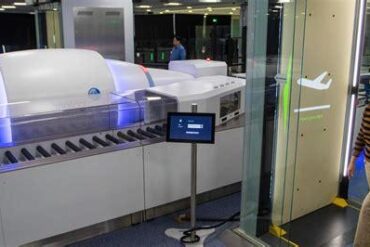
The incident also highlights the evolving role of advanced imaging technology. Traditional X-ray scanners rely heavily on operator interpretation. Newer computed tomography (CT) scanners, now being deployed at major airports, generate three-dimensional images that allow screeners to rotate and examine objects from multiple angles. These systems significantly improve detection accuracy for complex or cluttered bags. Whether CT technology was in use at the specific checkpoint has not been disclosed.
Operational Disruption and Public Confidence
Even though the situation ended without harm, the operational ripple effects were immediate. All passengers were removed from the aircraft, rescreened, and delayed. Aircraft scheduling is tightly calibrated, meaning a single interruption can cascade across connecting flights and crew rotations. For airlines, such incidents translate into logistical strain and reputational risk.
Public confidence is another intangible cost. Aviation security depends not only on technical capability but also on trust. Passengers assume that prohibited weapons will not reach the cabin. When footage surfaces showing a clear violation of that expectation, scrutiny intensifies.
The TSA has indicated that screening procedures are continuously reviewed and updated in response to identified gaps. Internal reviews following such incidents typically examine staffing patterns, procedural adherence, and equipment performance. While no disciplinary outcomes have been publicly announced, the event now stands as a reference point in ongoing discussions about checkpoint resilience.
A Rare but Revealing Security Failure
The Portland incident illustrates how even a single lapse can disrupt operations and spark nationwide debate. It demonstrates that aviation security is not static but an adaptive system that evolves through stress tests—some intentional, others accidental.
A meat cleaver making it onto a Delta flight was not the result of a systemic collapse, but it exposed the thin margin for error within high-throughput screening environments. The absence of malicious intent prevented a criminal prosecution, yet the breach itself remains significant.
Security systems are designed around probabilities, not perfection. Rare anomalies do occur. What matters most is how swiftly institutions respond, investigate, and correct weaknesses. In this case, the swift deplaning, rescreening, and internal review prevented harm and reinforced the expectation that even unusual failures must be addressed decisively.