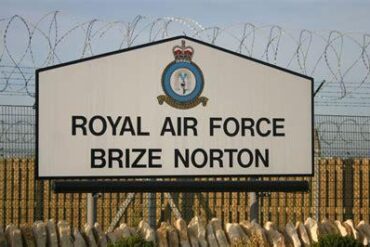
In a dramatic escalation of domestic protest tactics, a break-in at RAF Brize Norton by pro-Palestinian activists has triggered a nationwide security review across the United Kingdom’s military bases. The incident, which occurred in the early hours of Friday morning, has cast a sharp spotlight on both the operational vulnerabilities of British military infrastructure and the rising assertiveness of politically motivated activist groups.
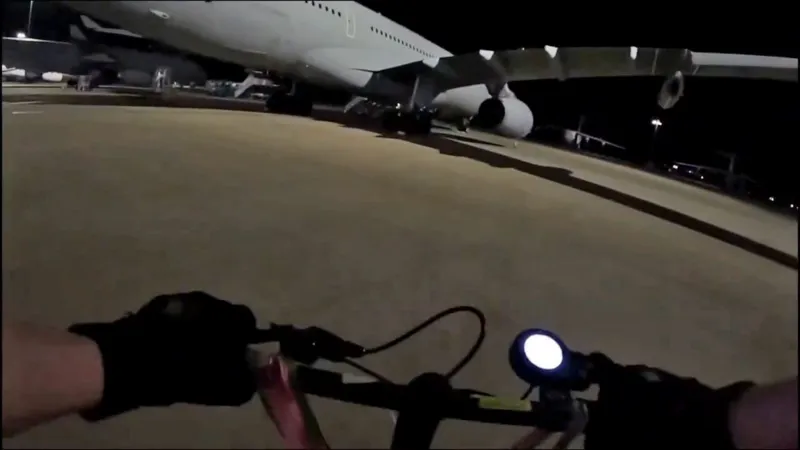
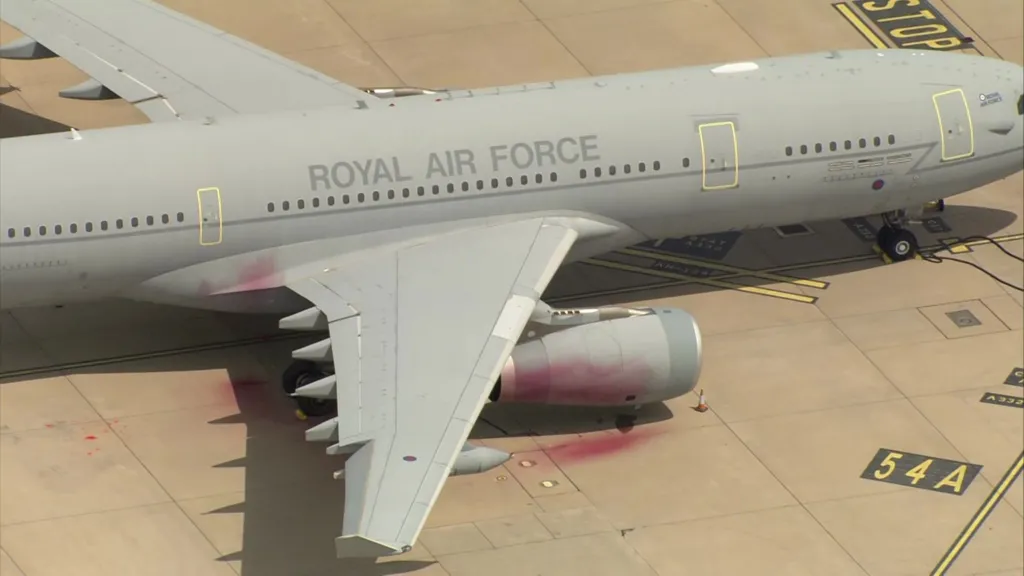
Footage released by Palestine Action shows two individuals moving through the Oxfordshire airbase undetected, one riding a scooter directly up to an Airbus Voyager and spraying red paint into its jet engine using a repurposed fire extinguisher. The activists claimed they rendered the aircraft “out of service,” though RAF engineers are still assessing the full extent of the damage.
RAF Brize Norton: Strategic Role and Vulnerabilities
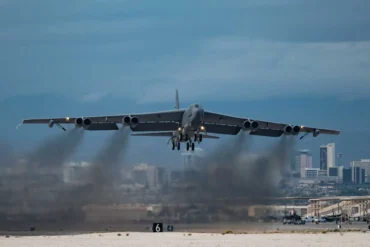
RAF Brize Norton is the largest Royal Air Force station in the United Kingdom, serving as the central hub for strategic air transport and aerial refuelling. It supports a wide array of missions, including personnel deployment, equipment logistics, and aerial refuelling across the Middle East, including to RAF Akrotiri in Cyprus, a critical base for reconnaissance operations over Gaza and combat support against Islamic State targets in Iraq and Syria.
Despite its high security profile, the activists managed to infiltrate the site, bypassing perimeter fencing, surveillance systems, and routine patrols. A defence source conceded that while the base is equipped with extensive security infrastructure—including manned checkpoints, cameras, and motion sensors—the sheer scale of the facility makes full surveillance coverage virtually impossible.
Government and Military Reaction: Outrage and Accountability
The breach provoked an immediate response from the highest levels of government. Prime Minister Sir Keir Starmer condemned the intrusion as a “disgraceful act of vandalism” and reaffirmed his government’s commitment to safeguarding military installations. Defence Secretary John Healey described the event as “deeply disturbing” and ordered both an urgent investigation into the breach and a wider review of security protocols across all UK military sites.
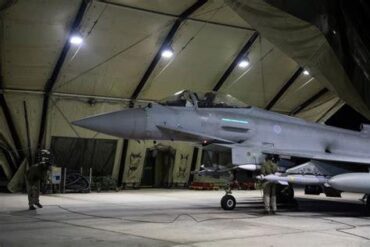
The Ministry of Defence (MoD) clarified that no flight operations were interrupted, and the targeted Voyager aircraft had not been involved in any support missions for Israeli forces, contrary to the activists’ claims. The MoD spokesperson emphasized that these aircraft are deployed primarily to support RAF Typhoon jets and humanitarian missions.
Activist Motivations and Allegations Against UK-Israel Military Links
Palestine Action, the group behind the incursion, released a statement framing the attack as part of its ongoing campaign to disrupt what it claims are the UK’s indirect military contributions to Israel’s operations in Gaza. The group argued that while the UK government verbally criticizes Israeli military conduct, it simultaneously enables that conduct by refuelling and transporting allied assets.
The activists’ bold choice of target—specifically the Voyager air-to-air refuelling fleet—was intended to symbolize this alleged complicity. However, Air Marshal Greg Bagwell, a former RAF deputy commander, pushed back against this logic, stating that Voyager aircraft are not compatible with the refuelling systems used by Israeli or US jets. “These are mostly logistics and transport aircraft,” he noted, calling the attack “misguided but effective in garnering attention.”
Security and Legal Ramifications
The break-in is being treated as a serious national security concern. Counter-terrorism officers from South East England are working alongside Thames Valley Police and the MoD to investigate the breach. The perpetrators remain unidentified and at large, although active efforts are ongoing to locate and apprehend them. Authorities have confirmed that criminal damage charges are being considered, in addition to potential violations under national security laws.
The method of attack—using scooters, crowbars, and fire extinguishers filled with paint—has raised eyebrows within security circles. The fact that bodycam footage shows activists roaming freely around the base has led to intense scrutiny of RAF Brize Norton’s internal patrol frequency, sensor coverage, and alarm response protocols.
Lord West, former First Sea Lord and UK Security Minister, called the incident “extremely worrying,” emphasizing that such breaches signal a broader vulnerability in Britain’s military readiness posture. “We can’t afford to have intrusions like this—it undermines national morale and encourages repeat attempts,” he said in an interview.
Political Responses: Cross-Party Alarm
The incident has triggered an unusual degree of bipartisan consensus. While the Labour government scrambles to reassure the public, Conservative opposition leaders have not hesitated to call for stronger deterrents against such acts. Kemi Badenoch, leader of the Conservative Party, described the activists as engaging in “politically motivated criminality” and called for a reclassification of such groups under anti-terror frameworks.
Mark Francois, Shadow Armed Forces Minister, emphasized the dangerous implications of tampering with aircraft engines, stating that the event exposed “serious gaps” in base-level security that demand immediate redress. Local Liberal Democrat MP Charlie Maynard added that the stunt was “stupid and dangerous,” calling for an independent review into perimeter surveillance policies.
Activist Tactics and Escalation Trends
This is not Palestine Action’s first high-profile incursion. The group, which has consistently focused on arms manufacturers and military transport systems, claimed responsibility in May for daubing a US military aircraft in Ireland with red paint in a similar stunt. Its evolving strategy—transitioning from protest outside buildings to direct incursions into military facilities—signals a growing radicalization and operational ambition.
What differentiates this latest incident is the symbolism of the target, the degree of access gained, and the sophistication of the visual propaganda. The scooter footage, bodycams, and coordinated messaging via social media were all deployed within hours of the incursion, maximizing global reach and media penetration.
Aircraft Involved: Clarifying the Misinformation
The RAF Voyager aircraft is a multi-role aerial tanker and transport plane, a variant of the Airbus A330. While its primary mission is air-to-air refuelling, it can be reconfigured for VIP transport, logistics operations, and medevac scenarios. It is also used to support operations in the Red Sea and Eastern Mediterranean, particularly during international coalitions against regional insurgents like the Houthis in Yemen.
Despite claims by Palestine Action, MoD sources confirm that no Voyager aircraft at RAF Brize Norton were used in support of Israel’s military operations in Gaza. The Vespina aircraft, which transports the Prime Minister on international trips, was present at the base but was not targeted.
What Happens Next: Fortification and Legal Deterrence
In the coming weeks, the Ministry of Defence is expected to release its initial findings from the security review. This will likely include recommendations for:
- Perimeter reinforcement, including intelligent fencing systems and increased surveillance drones
- Augmented internal patrol schedules
- Rapid response protocols to detect and isolate intrusions
- Criminal classification updates for activist incursions on defence premises
The MoD may also seek new legislation that reclassifies breaches of military bases as acts of domestic extremism, thereby opening new prosecutorial avenues under national security law.
Conclusion: A Flashpoint for Civil Liberties and National Security
The RAF Brize Norton incident has ignited a critical debate in the UK over the limits of protest, the scope of national security, and the responsibility of activist groups. While critics decry the activists’ tactics as reckless and criminal, supporters argue that such dramatic actions are necessary to draw attention to perceived government hypocrisy regarding foreign policy.
As the security review unfolds, the event will serve as a crucial case study in balancing public dissent and national defence, particularly in a democratic society increasingly polarized by global conflicts. Regardless of political alignment, the consensus is clear: Britain’s military installations must not be this vulnerable again.