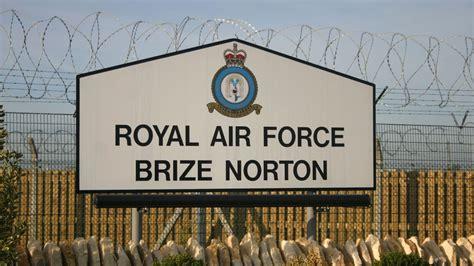
On June 20, 2025, RAF Brize Norton—the Royal Air Force’s largest airbase and a cornerstone of British military logistics—became the center of a serious security breach that has since ignited legal, political, and public backlash. Four individuals, connected to the direct action group Palestine Action, allegedly infiltrated the high-security site and caused significant damage to two Airbus A330 MRTT Voyager aircraft, with estimated costs reaching £7 million (approx. $9.5 million).
The operation, brazen in execution and disruptive in impact, was broadcast on social media by the activists themselves. According to Palestine Action, the targeted aircraft were instrumental in British logistical support of Israeli military operations in Gaza. The claim, although yet unproven in court, has sparked heated debate across both Parliament and the public domain.
The Infiltration: How a Secure Airbase Was Breached
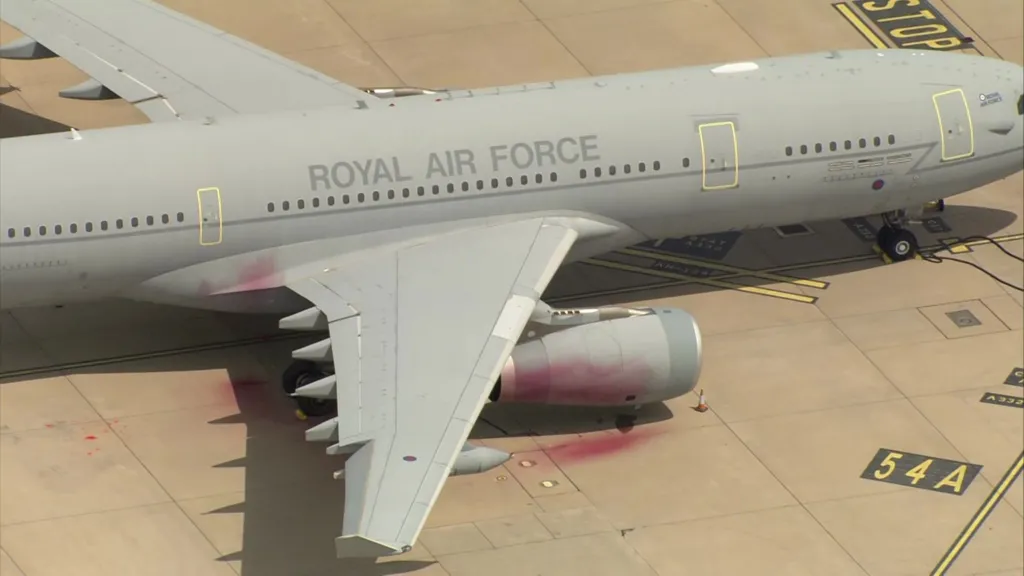
RAF Brize Norton, located in Oxfordshire, is home to AirTanker-operated Voyager aircraft, primarily used for air-to-air refueling and strategic personnel or cargo transport. As a key node for missions extending to Akrotiri, Cyprus, the base holds stringent perimeter controls and 24/7 security surveillance. Nevertheless, on that fateful June morning, four individuals allegedly breached the base’s fencing and proceeded directly to two parked Airbus A330 MRTT aircraft.
Equipped with modified fire extinguishers filled with red paint and crowbars, the intruders deliberately targeted the engine nacelles, fuselage panels, and cockpit glazing. The symbolic use of red paint—representing blood—was a hallmark of Palestine Action’s previous protest methodology. More concerning, however, is the physical damage to military-grade systems, which potentially renders both aircraft temporarily inoperable pending inspection and repair.
Footage from the break-in was uploaded by Palestine Action, portraying it as a direct protest against the UK’s alleged support of Israeli military actions through logistical facilitation. The visual evidence not only showed the act but demonstrated how the group accessed sensitive equipment with minimal resistance, sparking alarm across military and governmental echelons.
Criminal Charges and Legal Fallout
On July 2, 2025, Counter Terrorism Policing South East announced the formal charging of four individuals—aged between 22 and 35—under serious criminal statutes. These include:
- Conspiracy to enter a prohibited place knowingly for a purpose prejudicial to UK safety or interests.
- Conspiracy to commit criminal damage.
Police further revealed that the Crown Prosecution Service (CPS) intends to submit evidence linking the offenses to terrorism, invoking Section 30 of the Terrorism Act 2000. If the court agrees, this would elevate the gravity of the offenses, leading to far stricter sentencing guidelines.
Two of the individuals are known to reside in London, while the other two are described as having no fixed address, underscoring a potentially nomadic or transient activist strategy. A fifth individual, a 41-year-old woman, was arrested later on June 26 for allegedly assisting the offenders. She has been released on bail pending further investigation. Meanwhile, a 23-year-old man, arrested on June 28, was released without charge.
RAF Voyager Aircraft: Strategic Workhorses of the British Military
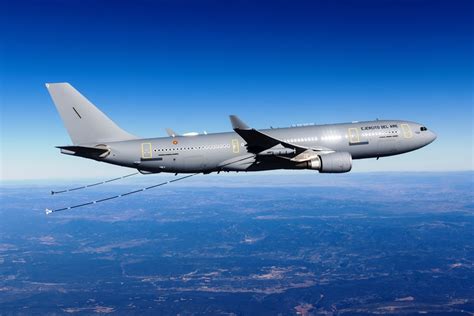
The Airbus A330 MRTT, referred to locally as the Voyager, is not just a refueling aircraft. It is a dual-role military asset used extensively for troop deployment, cargo movement, and aerial refueling during joint operations. The RAF leases 14 of these aircraft via the AirTanker consortium, which includes Babcock, Airbus, and Rolls-Royce.
Each Voyager is estimated to cost upwards of £200 million ($270 million), including modifications for military refueling booms and secure communications equipment. The damage caused by crowbars to external panels and avionics covers can compromise aircraft certification and require extensive revalidation, not to mention the risk of microfractures or contamination in sensitive systems.
These aircraft are frequently dispatched to RAF Akrotiri in Cyprus, a base often used to stage missions in the Middle East and Eastern Mediterranean. Thus, their temporary removal from service may directly impact the UK’s logistical footprint in the region.
Political Response: Palestine Action Declared a Terrorist Group
The incident arrived amid growing scrutiny of direct action protest groups in the UK. On the same day that charges were announced—July 2, 2025—UK Parliament passed a resolution officially proscribing Palestine Action as a terrorist organization. This legal designation now gives law enforcement broader powers to:
- Freeze assets associated with the group.
- Arrest members under counter-terrorism statutes.
- Criminalize public support or promotion of the group’s agenda.
This proscription is among the strongest moves against domestic activism in recent memory, placing Palestine Action in a legal category alongside groups such as National Action and Al-Muhajiroun. Civil rights organizations have raised immediate concerns about the implications for protest freedoms, especially for groups opposing UK foreign policy or arms trade agreements.
Counter-Terrorism and Security Reevaluation at RAF Bases
Security analysts and military experts have been swift to condemn the breach, citing systemic weaknesses that allowed unsanctioned individuals to get within damaging proximity of multimillion-pound national assets. In the wake of the event, RAF Brize Norton has been directed to undergo a full counter-terrorism vulnerability audit.
Questions are now being raised about:
- Perimeter intrusion detection systems: How were they bypassed or failed to trigger response?
- Response time: How long were the intruders active before military police arrived?
- Material access control: How were the aircraft vulnerable to unsophisticated tools like crowbars?
The Ministry of Defence (MoD) has declined to provide specifics, citing ongoing investigations, but sources suggest that a significant overhaul of base-level security protocol is already underway.
Broader Implications: Civil Disobedience or Domestic Terrorism?
The case also reopens broader societal questions about the limits of civil disobedience. Palestine Action has staged several high-profile disruptions at weapons factories, Israeli-owned firms, and military contractors across the UK, often resulting in arrests but not necessarily in long-term incarceration.
Supporters argue that these acts are justified resistance against UK complicity in foreign military aggression, while critics view the tactics as increasingly radical and unlawful. The RAF Brize Norton incident, due to the nature and value of the damaged property, has tilted public opinion further toward viewing these as acts of sabotage with national security consequences.
Notably, defense commentators have emphasized the strategic symbolism of the attack: targeting the very aircraft that enable rapid UK global response in conflict or crisis. This raises potential concerns not just about Palestine Action but about the vulnerability of symbolically significant targets within the UK’s military infrastructure.
Trial Outlook: Legal Precedent in the Making
With the CPS pushing for a terrorism connection, this case could establish a significant legal precedent. Convictions under terrorism-related statutes—especially involving conspiracy—carry potential sentences of up to life imprisonment, particularly when critical national assets are involved.
The presiding court will also have to navigate First Amendment-style arguments over protest rights versus national interest. Surveillance footage, forensic evidence from the scene, and online posts are all expected to form the prosecution’s narrative. Defense attorneys are likely to argue political motivation and lack of intent to cause physical harm, although that may carry little weight given the damage severity.
Public interest in the case is expected to intensify as the trial progresses. The UK’s shifting attitude toward protest, policing, and national security will be on full display as Parliament, judiciary, and civil society observe the unfolding legal drama.
Conclusion: A Flashpoint for UK Protest Culture and Military Security
The Brize Norton break-in is far more than a localized act of vandalism—it is a national security event with geopolitical and civil rights implications. The upcoming court proceedings could redefine the boundaries of protest in the UK and serve as a wake-up call for improved military base security.
As the RAF reassesses operational risks and lawmakers debate how best to preserve both security and democratic dissent, one thing remains certain: the attack has punctured assumptions about domestic safety in even the most fortified institutions of British power.