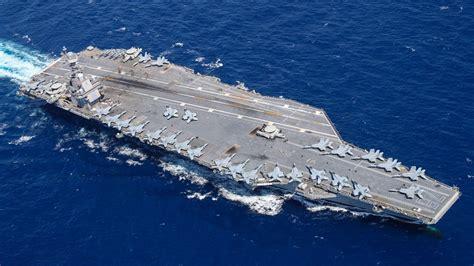
The U.S. Navy’s aircraft carriers represent the pinnacle of maritime power—floating airbases capable of projecting force across oceans. Yet beneath their immense capability lies a deceptively simple operational principle known as the “Five-Mile Rule.” This invisible buffer, extending roughly five nautical miles around a carrier, is a cornerstone of safety, security, and combat readiness. It is not merely a guideline; it is a calculated shield designed to protect one of the most valuable military assets on Earth.
At its core, the rule establishes a protective exclusion zone that keeps other vessels at a safe distance. Aircraft carriers are not nimble ships. Weighing over 100,000 tons, vessels like the USS Abraham Lincoln cannot stop or pivot quickly. Their massive inertia means that any nearby object—whether a civilian boat or a military escort—could become a hazard in seconds. The buffer ensures that navigation remains predictable and that catastrophic collisions are avoided.
Despite its importance, this rule is not absolute. Under certain high-stakes conditions, the Navy deliberately breaks it. These moments are rare, calculated, and often urgent—revealing the complex balance between rigid protocol and real-world unpredictability.
The Strategic Purpose Behind the Five-Mile Exclusion Zone
The Five-Mile Rule exists primarily for force protection, a doctrine shaped by both physics and history. One of the most defining moments influencing this policy was the USS Cole bombing in 2000, when a small explosive-laden boat inflicted devastating damage on a U.S. warship. That attack exposed the vulnerability of even the most advanced naval vessels to asymmetric threats.
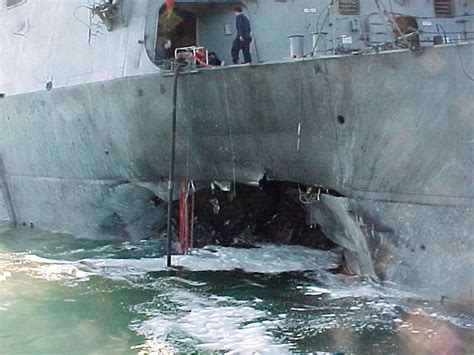
From that point forward, the Navy intensified its emphasis on standoff distance. A five-mile buffer ensures that unauthorized or hostile vessels cannot approach undetected or unchallenged. It gives escort ships—such as guided-missile destroyers and cruisers—time and space to intercept potential threats before they come dangerously close.
Beyond physical threats, the exclusion zone also accounts for the carrier’s electromagnetic footprint. Aircraft carriers emit powerful radar and electronic warfare signals that can interfere with nearby civilian navigation systems. Maintaining distance minimizes unintended disruptions while preserving the carrier’s operational secrecy and effectiveness.
Flight Operations Demand Space, Precision, and Margin for Error
Aircraft carriers are defined by their ability to launch and recover aircraft in open seas, a process that is both routine and inherently dangerous. Every takeoff and landing involves precise coordination between pilots, deck crews, and navigation officers. The Five-Mile Rule ensures a clear operational bubble for these activities.
When recovering aircraft—especially those low on fuel or experiencing technical issues—the carrier must often turn into the wind. This maneuver increases lift for incoming jets but requires a wide turning radius. Any vessel within that radius becomes a potential obstacle, turning a controlled operation into a high-risk scenario.
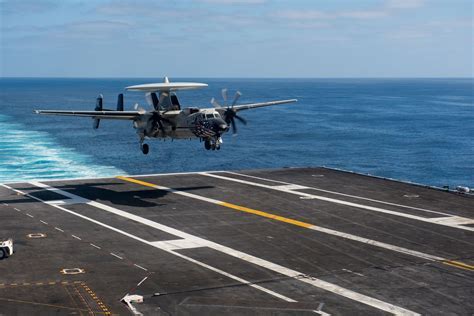
The exclusion zone also protects surrounding ships from unexpected hazards. Aircraft returning with armed weapons or fuel imbalances pose a risk if something goes wrong during landing. A clear perimeter reduces the chance of collateral damage, ensuring that any emergency remains contained within a controlled space.
When the Navy Breaks the Rule: Emergencies and Combat Realities
For all its importance, the Five-Mile Rule is not immune to real-world demands. There are moments when adhering to it becomes secondary to saving lives or achieving mission objectives. These are the scenarios where commanders make the deliberate decision to break the buffer.
Emergencies are the most common trigger. A man overboard situation, for instance, demands immediate action. Nearby ships may close in to assist with recovery, or the carrier itself may adjust course rapidly—temporarily collapsing the exclusion zone. Similarly, mechanical failures, onboard fires, or aviation incidents can require ships to move closer than normally permitted.
Combat introduces another layer of complexity. In high-threat environments, coordination between vessels may necessitate tighter formations. While this increases risk, it can also enhance defensive coverage and rapid response capability. In such cases, the rule bends to accommodate the fluid dynamics of naval warfare.
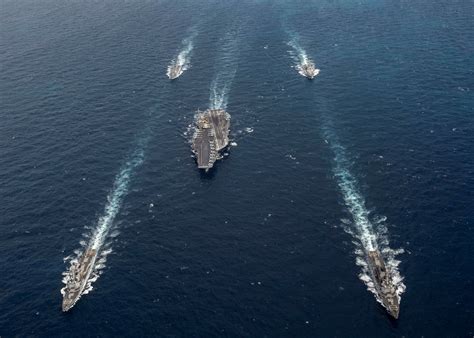
These decisions are never casual. Every sailor involved is trained extensively for such contingencies, understanding both the risks and the protocols required to mitigate them. Breaking the rule is less about ignoring safety and more about prioritizing the greater operational picture.
A Rule Defined by Discipline—and Flexibility
The enduring relevance of the Five-Mile Rule lies in its balance between strict enforcement and situational adaptability. It reflects a broader truth about military operations: even the most carefully designed procedures must account for unpredictability.
Aircraft carriers operate in environments where seconds matter and margins are thin. The exclusion zone provides a vital cushion against those realities, preserving safety during routine operations while allowing flexibility when circumstances demand it. It is a rule born from experience, reinforced by necessity, and occasionally set aside in the face of urgency.
Ultimately, the Five-Mile Rule is not just about distance—it is about control, awareness, and readiness. And when it is broken, it signals that something extraordinary is unfolding just beyond the horizon.