A transatlantic journey turned into a costly dispute when a passenger was charged a $583 no-show fee by Air France, despite presenting what he claims is compelling evidence that he had, in fact, boarded and completed his outbound flight. The case has quickly drawn attention online, raising deeper concerns about airline reservation systems, automated ticket enforcement, and the rigidity of fare rules when data conflicts arise.
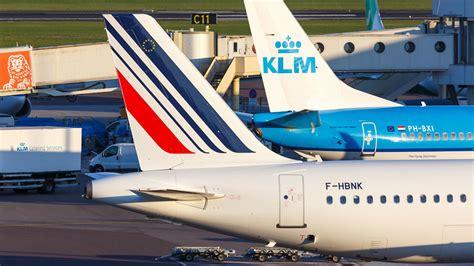
The traveler’s experience began with what should have been a routine itinerary: a flight from New York JFK to Amsterdam Schiphol, operated by KLM, followed by a return journey from Paris to New York on Air France. However, somewhere within the airline’s backend systems, a critical error allegedly occurred—one that would ultimately cost him hundreds of dollars and spark a public debate.
At the center of the issue is a “no-show” designation, a label that airlines apply when a passenger fails to board a booked flight segment. In this case, Air France’s system reportedly marked the traveler as absent from his outbound flight, triggering a cascade of consequences tied to strict ticket usage policies.
A Paper Trail That Tells a Different Story
The passenger did not rely on a single piece of evidence to dispute the airline’s claim. Instead, he assembled a multi-layered timeline of proof, aiming to demonstrate that he had indeed traveled from New York to Amsterdam as scheduled.
Among the documentation presented were mobile phone records from Verizon, showing that his device connected to a Dutch cellular network shortly after the flight’s arrival time. This data point alone suggests physical presence in the Netherlands, aligning precisely with the flight’s expected timeline.
He also provided timestamped photographs taken during the journey, along with airport purchase receipts from both JFK and Schiphol Airport, reinforcing the continuity of his travel. Additionally, the traveler retained his boarding pass for the KLM-operated flight, a standard yet critical piece of evidence in any aviation dispute.
Perhaps most compelling was an email from KLM sent the following day, apologizing for a delay related to the same flight. This communication directly ties the passenger to the flight’s operational history, further strengthening his claim.
Despite this extensive documentation, the airline’s system reportedly remained unchanged, continuing to classify him as a no-show.
Why a Single Data Error Can Trigger a $583 Charge
Air France’s actions were not arbitrary—they were rooted in clearly defined contractual rules. Under its General Conditions of Carriage, tickets must be used in the exact sequence issued. If a passenger skips a segment, intentionally or otherwise, the airline reserves the right to invalidate subsequent flights or impose additional fees.
This rule is particularly strict on international itineraries, where fare structures often rely on connected segments being flown in order. According to the airline’s published policy, a passenger who fails to use the first flight coupon may be required to pay a fixed surcharge of €500 (approximately $583) in Economy or Premium cabins.
From a policy standpoint, the fee applied to this passenger aligns perfectly with those rules—if he had truly missed the outbound flight.
But that “if” is precisely where the dispute intensifies.
The Real Issue: System Accuracy vs. Passenger Reality
This case is not about whether airlines are allowed to charge no-show fees. That authority is well established and widely disclosed in fare conditions. Instead, the controversy lies in whether the airline’s internal records accurately reflected reality.
Airline reservation systems depend on multiple data inputs: check-in scans, boarding gate confirmations, and post-flight reconciliations. In theory, these systems are robust. In practice, however, data mismatches can occur, especially when multiple airlines are involved in a single itinerary.
Here, the outbound flight was operated by KLM, while the return leg was handled by Air France. Although both airlines are part of the same group, data synchronization between systems is not always seamless. A missed or improperly recorded boarding scan could potentially result in a passenger being incorrectly flagged.
When such discrepancies arise, the consequences can be immediate and severe. Passengers may face denied boarding, ticket cancellations, or unexpected fees, often with limited recourse at the airport itself.
A Costly Decision at the Check-In Counter
Faced with the prospect of being unable to return home, the traveler made a pragmatic decision: pay the $583 fee and board the flight. While this ensured he could complete his journey, it also shifted the burden of resolution to a later stage—likely through customer service channels or formal complaints.
This scenario highlights a critical imbalance in airline disputes. At the airport, time pressure and limited flexibility often leave passengers with no real choice but to comply, even when they believe the airline is at fault.
The financial impact is immediate, while the process of seeking reimbursement can be lengthy, uncertain, and opaque.

What This Case Reveals About Modern Air Travel
This incident underscores a broader reality in modern aviation: automation governs nearly every aspect of the passenger experience, from booking to boarding. While these systems enable efficiency at scale, they also introduce vulnerabilities when errors occur.
For travelers, the lesson is clear—documentation matters. Boarding passes, receipts, emails, and even mobile data can become crucial evidence in resolving disputes. Yet even with strong proof, outcomes are not guaranteed when systems fail to recognize that evidence in real time.
For airlines, the case raises important questions about error resolution protocols. Should frontline staff have greater authority to override system flags when presented with credible documentation? Or does strict adherence to automated records remain the safer operational choice?
An Unresolved Dispute with Wider Implications
As of now, the airline has not publicly addressed the specific claims, leaving the case unresolved in the public domain. What remains is a stark example of how a single data discrepancy can escalate into a financial penalty, even when a passenger appears to have done everything right.
In an industry built on precision and timing, this case serves as a reminder that the gap between system records and human reality can still exist—and when it does, passengers may bear the cost first, and ask questions later.