The search for extraterrestrial life has long captured humanity’s imagination, but today the pursuit is driven less by speculation and more by methodical science. Mars, Earth’s nearest potentially habitable neighbor, stands at the center of this effort. With robotic explorers already operating on the Red Planet and human missions being seriously planned for the coming decades, researchers are narrowing down exactly where the strongest clues of ancient life might be hiding. According to NASA scientists, the most promising places to look are not random locations scattered across the Martian landscape, but areas where ice or ancient water deposits have preserved chemical evidence of biological activity for millions of years.
The idea that Mars once hosted life is no longer considered fringe science. Geological observations from orbiters and rovers have revealed river channels, mineral deposits formed in water, and sediments that resemble ancient lakebeds. These discoveries point toward a Mars that was once warmer and wetter billions of years ago. If microbial life ever emerged during that distant era, traces of it may still exist today—not as living organisms, but as biosignatures, the chemical fingerprints left behind by biological processes.
In 2025, a team of researchers published a significant study in the journal Astrobiology that helped clarify where those biosignatures could survive the longest. The scientists simulated Martian surface conditions by exposing dead Escherichia coli bacteria to intense gamma radiation, mimicking the cosmic radiation that constantly bombards Mars due to its thin atmosphere and lack of a protective magnetic field. The results were striking. The amino acids within the microbial cells showed remarkable resilience when frozen, suggesting that organic molecules trapped in Martian ice could remain detectable for up to 50 million years.
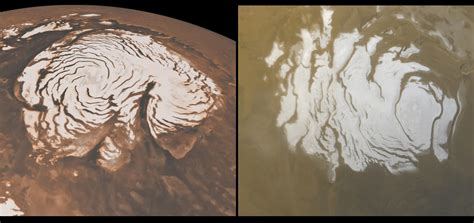
This discovery dramatically sharpened NASA’s search strategy. Ice acts like a natural deep freezer, shielding fragile molecules from destructive radiation and chemical breakdown. On Mars, such frozen environments exist in polar ice caps, subsurface permafrost layers, and buried glacier remnants scattered across the planet’s mid-latitudes. These regions may function as time capsules, preserving the molecular remnants of ancient Martian biology.
Finding preserved organic molecules would not necessarily mean discovering living organisms. Instead, scientists are looking for complex carbon compounds and molecular patterns that indicate biological activity. Even this modest evidence would be revolutionary. Demonstrating that life once arose independently on another planet would fundamentally reshape our understanding of biology, evolution, and the likelihood of life throughout the universe.
While frozen regions may hold the best long-term preservation potential, they are not the only promising targets. Ancient water environments also remain high on NASA’s priority list, especially locations where lakes or rivers once existed. Such environments on Earth are hotspots for microbial ecosystems, and the same may have been true on early Mars.
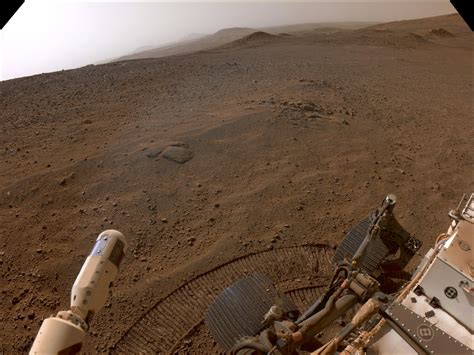
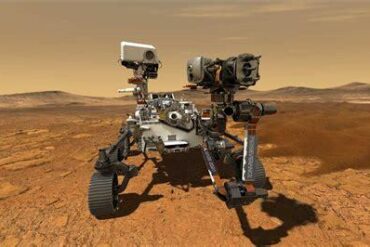
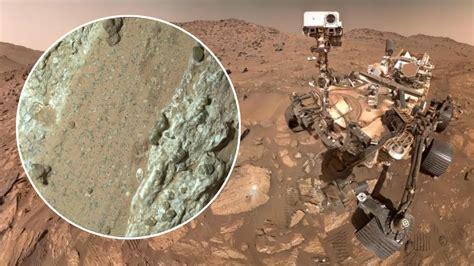
One of the most compelling discoveries came from NASA’s Perseverance rover, which landed in Jezero Crater, a site believed to have once hosted a vast lake fed by a branching river delta. In 2025, Perseverance collected samples of mudstone, a fine-grained rock formed from compacted clay sediments. These rocks are particularly valuable because they trap and preserve organic material exceptionally well.
Preliminary analysis revealed organic carbon compounds embedded within the mudstone. These molecules appear to be the byproducts of chemical reactions commonly associated with microbial life in cold environments. While the findings are not yet proof of biology, they represent some of the most intriguing chemical clues ever discovered on Mars.
Confirming their origin requires far more sophisticated laboratory analysis than current rovers can perform. For that reason, NASA and its international partners are planning missions designed to return Martian samples to Earth, where powerful instruments can examine them in detail. If those samples reveal unmistakable biosignatures, the implications would be staggering.
Future Mars missions may therefore divide their attention between two critical targets: ice-rich regions capable of preserving ancient molecules for tens of millions of years, and sedimentary deposits formed in long-vanished lakes and rivers. Together, these environments form a roadmap for one of the most profound scientific quests ever attempted.
Some researchers suspect that if life ever existed on Mars, it may have disappeared billions of years ago as the planet lost its atmosphere and surface water. Yet even extinct life would transform our understanding of the cosmos. The discovery of alien biosignatures on Mars would confirm that life is not unique to Earth, but rather a natural outcome of planetary evolution under the right conditions.
For NASA, the question is no longer whether to search for life on Mars. The real challenge now is digging in exactly the right places—and the evidence increasingly suggests that the answers may be frozen in the Martian ice, waiting patiently to be uncovered.