For most airlines, the story of the Airbus A380 has become one of retreat. Fleets were downsized, retirement plans accelerated, and executives quietly admitted that the era of giant four-engine aircraft had passed. Yet in Australia, the narrative is unfolding very differently. Qantas is not merely keeping the A380 alive — it is actively investing in it while simultaneously preparing to launch some of the world’s longest nonstop flights aboard the Airbus A350-1000.
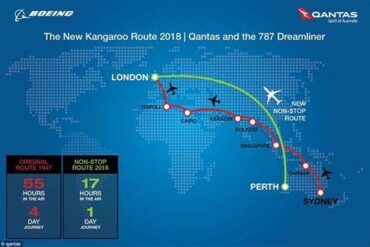
At first glance, the strategy appears contradictory. The future of aviation is supposed to belong to smaller, fuel-efficient twinjets capable of connecting distant cities directly without relying on massive hub operations. The Boeing 787 and Airbus A350 have reshaped long-haul economics around flexibility rather than brute capacity. Qantas itself helped pioneer this transition with nonstop services from Perth to London and increasingly ambitious ultra-long-haul experiments.
Yet the airline continues pouring resources into an aircraft many competitors rushed to abandon.
That decision reveals something important about modern aviation economics: while the industry loves talking about the future, airlines still make money in the present. For Qantas, the A380 remains one of the most effective tools for dominating high-demand international trunk routes from Australia, especially when airport slots are limited and premium demand continues climbing.
The result is a fascinating two-track strategy where the world’s largest passenger aircraft and the world’s longest flights are not competing ideas, but complementary pillars of the same long-haul network vision.
After years of uncertainty, the A380 has become central to Qantas’s identity once again.
Qantas’s Complicated Relationship With The Airbus A380
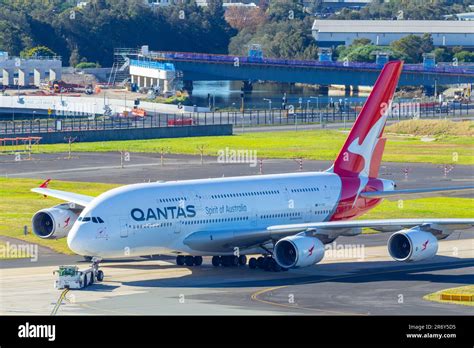
Qantas was among the earliest supporters of the A380 program. Back in 2000, when Airbus was still calling the aircraft the A3XX, the Australian flag carrier saw the giant double-decker as the logical successor to the Boeing 747. At the time, Qantas’s long-haul network relied heavily on dense trunk routes linking Australia to hubs like Singapore, Los Angeles, and London.
The airline envisioned a future dominated by large aircraft transporting huge numbers of passengers between major global gateways. The A380 fit perfectly into that model.
But aviation changed dramatically during the following decade.
Instead of concentrating passengers through massive hubs, airlines increasingly shifted toward point-to-point operations enabled by efficient twin-engine aircraft. The Boeing 787 Dreamliner fundamentally altered route planning by allowing carriers to profitably operate thinner long-haul routes that previously could not support large aircraft.
Qantas embraced this transformation enthusiastically.
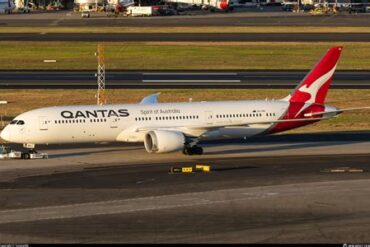
The arrival of the 787-9 Dreamliner allowed the airline to launch nonstop Perth-London flights and expand ultra-long-haul operations with lower risk. Former CEO Alan Joyce even openly expressed regret over parts of Qantas’s earlier fleet decisions, famously wishing for a “time machine” so he could replace some A380 and A330 orders with Boeing 777s instead.
Those comments reflected a broader industry sentiment. The A380 increasingly looked like an aircraft designed for a world aviation had already left behind.
When the COVID-19 pandemic devastated global travel, many assumed Qantas would permanently retire its superjumbo fleet. The airline placed its A380s into long-term desert storage alongside countless other grounded widebodies worldwide. With international demand collapsing and operating costs under intense scrutiny, the giant aircraft seemed destined for retirement.
But Qantas never fully gave up on them.
That distinction mattered.
Instead of scrapping the fleet outright, the airline spent millions preserving the aircraft in storage conditions that would allow future reactivation. Maintaining dormant A380s was neither cheap nor simple. The decision suggested that Qantas still believed the aircraft would have a valuable role once global travel recovered.
That gamble ultimately paid off.
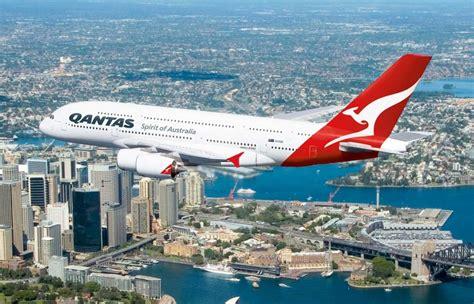
By late 2025, ten of Qantas’s original twelve A380s had returned to commercial service, one of the strongest post-pandemic recoveries for the type anywhere in the world.
Why The Airbus A380 Still Makes Sense For Australia
Australia’s geography changes the economics of aviation in ways many overseas analysts underestimate.
Unlike European or Asian airlines operating within densely populated regions, Qantas serves a country isolated by enormous oceans and vast distances. Most of its major international flights are exceptionally long sectors connecting Australia to major overseas hubs thousands of miles away.
That reality gives the A380 several advantages that remain highly valuable.
The aircraft’s enormous range allows Qantas to operate routes such as Sydney to Dallas/Fort Worth, Sydney to Los Angeles, and Sydney to Johannesburg with strong payload capability and operational flexibility. These are demanding missions where aircraft performance matters significantly.
The Sydney-Dallas route especially demonstrates why the A380 still fits Qantas’s network. At roughly 7,454 nautical miles, the service ranks among the airline’s most challenging operations. While smaller aircraft can technically fly such routes, doing so with full passenger loads and meaningful cargo capacity becomes more difficult.
The A380 handles these missions comfortably.
Its sheer size also becomes strategically important because Qantas lacks another true high-capacity long-haul aircraft. Before the pandemic, the airline relied heavily on Boeing 747-400s to perform this role. Once the 747 fleet retired, the A380 became the airline’s only genuine mega-capacity aircraft.
Without it, Qantas would face a difficult problem.
Either the airline would need to dramatically increase frequencies using smaller aircraft, or it would have to reduce passenger capacity on some of its most important international routes. In many cases, adding frequencies is not realistic because airports like Sydney Kingsford Smith Airport and London Heathrow Airport are heavily slot constrained.
At airports where new slots are nearly impossible to secure, bigger aircraft become extremely valuable.
That reality helps explain why the A380 continues thriving on specific routes despite broader industry trends favoring smaller aircraft.
The Economics Behind Qantas’s A380 Survival Strategy
The A380’s reputation as an economic failure is both accurate and misleading.
The aircraft failed commercially because it never generated enough advantages over competing twinjets to justify its operational risks for most airlines. Selling 500 seats every day is difficult outside a limited number of global trunk routes.
But that does not mean the aircraft is inherently inefficient.
In fact, when fully loaded on dense long-haul sectors, the A380 can produce remarkably competitive seat-mile economics. Qantas understands this better than most carriers because many of its core international routes naturally generate the type of demand profile the aircraft requires.
The airline’s premium-heavy cabin strategy strengthens the equation further.
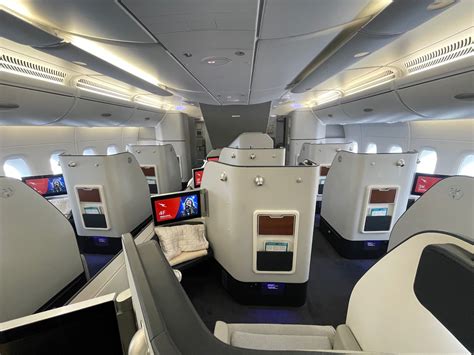
Rather than maximizing economy seating, Qantas redesigned its A380 interiors to emphasize high-yield premium traffic. The refurbishment program introduced upgraded business-class suites, refreshed onboard lounges, and expanded premium cabin areas aimed at affluent long-haul travelers.
This matters enormously because premium passengers generate disproportionate revenue on ultra-long-haul flights.
A380 economics become much more attractive when a significant percentage of seats are sold at premium fares, particularly on routes where business travelers and luxury leisure demand remain strong year-round.
The aircraft also offers substantial cargo capability alongside passenger operations. On routes linking Australia with North America, Europe, and South Africa, cargo revenue provides another important financial layer supporting A380 profitability.
Crucially, Qantas’s alternative options are limited for now.
The airline’s Boeing 787-9 fleet is excellent for flexibility and ultra-long-haul experimentation, but the aircraft seats far fewer passengers than the A380. Deploying multiple Dreamliners instead of one superjumbo would increase crew costs, airport fees, maintenance complexity, and scheduling challenges.
Theoretical efficiency gains do not always translate neatly into real-world profitability.
In aviation, context matters more than slogans about fuel burn.
The A380’s Critical Role In Qantas’s Longest International Routes
Today, Qantas deploys the A380 on a carefully selected group of high-demand long-haul services where the aircraft’s strengths align closely with network realities.
These routes include:
- Sydney to Los Angeles
- Sydney to Dallas/Fort Worth
- Sydney to Johannesburg
- Sydney to Singapore
- Singapore to London Heathrow
Each route reflects a different strategic justification for operating the aircraft.
Los Angeles remains one of the most important international gateways for Australian travelers. Demand between Australia and the United States consistently ranks among Qantas’s strongest international markets, particularly with deep connections through its partnership with American Airlines.
Dallas/Fort Worth serves a similar role while providing extensive North American connectivity through American’s enormous hub network. The route’s extraordinary distance also highlights the A380’s endurance capabilities.
Johannesburg presents another unique case. High-altitude airport operations combined with long sector lengths favor aircraft with powerful performance margins. The A380’s four-engine configuration provides advantages in hot-and-high conditions that can become operationally useful.
Meanwhile, London remains the symbolic crown jewel of Qantas’s international network.
Even as the airline develops ultra-long-haul nonstop ambitions through Project Sunrise, the traditional Kangaroo Route via Singapore continues generating massive passenger demand. The A380 remains ideal for transporting large volumes of travelers between Australia and Europe’s busiest aviation gateway.
These routes are not experiments.
They are proven, mature, high-density international corridors capable of consistently supporting large aircraft.
Project Sunrise And The Shift Toward Ultra-Long-Haul Flying
While Qantas recommits to the A380, it is simultaneously preparing for a radically different future through Project Sunrise.
The initiative aims to connect Australia nonstop with destinations previously considered too distant for commercial aviation, including direct flights from Sydney to London and New York.
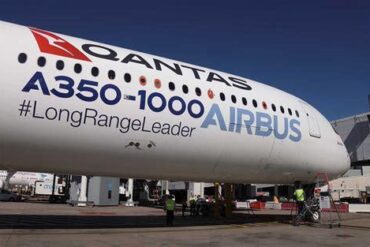
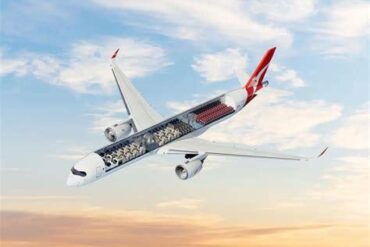
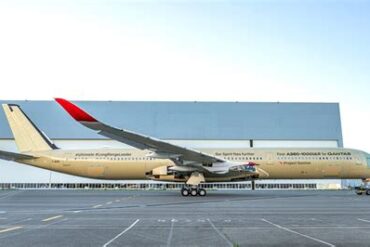
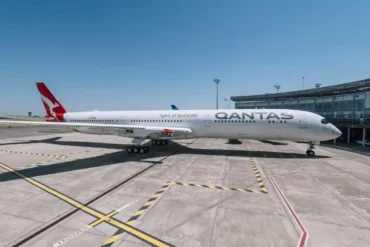
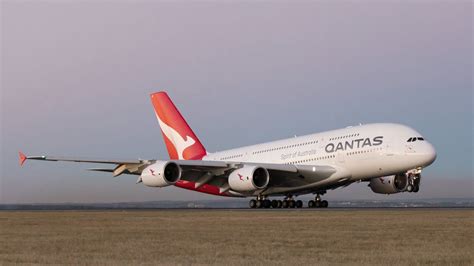
These services will rely on specially configured Airbus A350-1000ULR aircraft designed for extreme endurance missions.
At first, this strategy appears to contradict Qantas’s continued A380 investment. In reality, both aircraft support different parts of the airline’s broader network philosophy.
The A350-1000ULR prioritizes range, passenger comfort, and premium-heavy long-haul economics on ultra-long sectors where frequency and convenience matter more than raw capacity.
The A380 prioritizes density and efficiency on trunk routes where demand already exists at enormous scale.
One aircraft expands the network outward.
The other protects the airline’s strongest existing corridors.
This dual approach gives Qantas unusual flexibility compared to airlines pursuing only one long-haul model. Instead of abandoning hub-style flying entirely, the airline is blending traditional high-capacity operations with next-generation nonstop connectivity.
That balance may ultimately prove smarter than betting exclusively on either strategy.
Project Sunrise flights will attract intense attention because of their record-breaking duration, but they will initially operate with relatively small passenger counts focused heavily on premium travelers.
The A380, meanwhile, continues doing the less glamorous but highly profitable work of moving huge numbers of passengers between major international gateways every single day.
Why Passengers Still Love Flying On The Airbus A380
Passenger perception also plays a surprisingly important role in the A380’s survival.
Most travelers cannot distinguish between a Boeing 787, Airbus A330, or Boeing 777. To the average passenger, modern widebody aircraft feel broadly similar.
The A380 is different.
Its size alone creates a sense of occasion that few other aircraft can match. Travelers recognize the double-decker silhouette instantly, and many actively seek out flights operated by the type.
That popularity translates into real commercial value.
Passengers consistently praise the A380 for its quieter cabin, smoother ride quality, spacious interiors, and reduced sense of crowding despite carrying hundreds of travelers. The aircraft’s immense cabin dimensions allow airlines to create premium environments difficult to replicate on narrower twinjets.
For Qantas, this brand effect matters significantly.
The airline positions itself as a premium global carrier representing Australia on some of the world’s most prestigious international routes. The A380 reinforces that image in ways smaller aircraft often cannot.
The aircraft also supports another critical aspect of Qantas’s premium identity: first class.
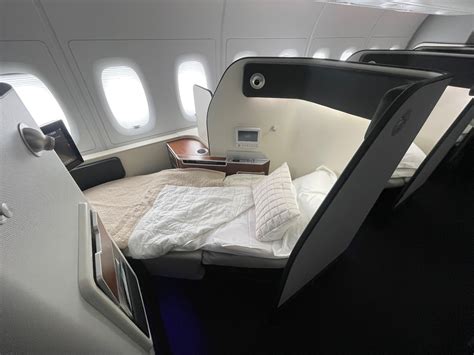
Currently, the A380 is the only aircraft in the Qantas fleet offering a dedicated first-class cabin. Eliminating the superjumbo would effectively eliminate traditional first class from much of the airline’s network until future A350 deliveries arrive.
Qantas clearly believes premium differentiation still matters.
While many airlines have shifted focus almost entirely toward business class, Qantas continues investing in top-tier luxury offerings aimed at affluent international travelers willing to pay extraordinary fares for comfort and exclusivity.
The A380 remains the ideal platform for delivering that experience.
Why Qantas’s Airbus A380 Fleet Could Last Into The 2030s
The long-term future of the A380 at Qantas will ultimately depend on timing.
The airline has already ordered Airbus A350-1000 aircraft that will gradually reshape its international operations during the late 2020s and early 2030s. Over time, these aircraft may eventually assume many roles currently performed by the A380.
But replacement will not happen quickly.
Qantas still requires a large-capacity flagship aircraft today, and the economics of replacing the A380 are not straightforward. Until enough next-generation widebodies arrive in sufficient numbers, the superjumbo continues filling an essential gap inside the fleet.
The aircraft’s survival also reflects a broader aviation reality emerging after the pandemic.
Many airlines discovered they retired large aircraft too aggressively during the crisis. When international demand rebounded faster than expected, carriers suddenly faced severe widebody shortages and delivery delays for new aircraft.
In that environment, existing A380s became unexpectedly valuable again.
Qantas benefited because it preserved most of its fleet rather than dismantling it permanently.
That foresight now gives the airline substantial capacity flexibility at a time when aircraft production bottlenecks continue affecting global fleet planning.
The irony is remarkable.
For years, the A380 was portrayed as an outdated symbol of aviation’s past. Yet in an era defined by constrained airport slots, delayed aircraft deliveries, booming premium travel demand, and congested international hubs, the giant aircraft suddenly looks useful again.
Perhaps not everywhere.
But certainly in Australia.
And for Qantas, that is more than enough reason to keep the world’s largest passenger aircraft flying far into the next decade.