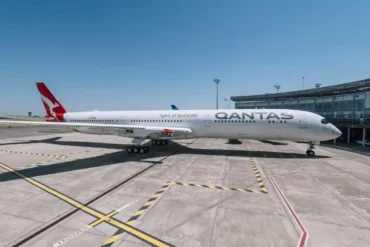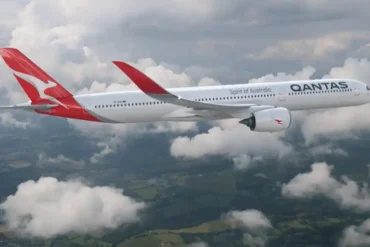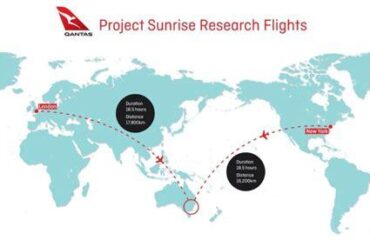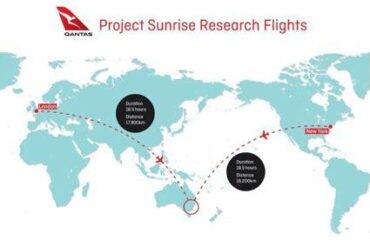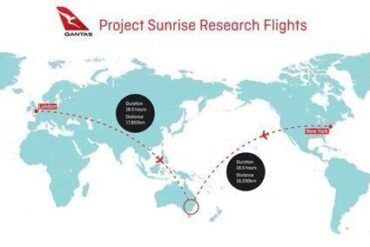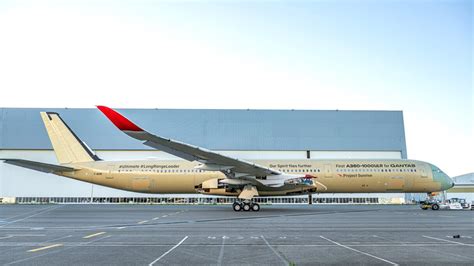
Qantas is set to redefine ultra-long-haul travel with its ambitious Project Sunrise, which aims to operate nonstop flights from Sydney to London and New York using the newly acquired Airbus A350-1000ULR aircraft. These flights, expected to exceed 20 hours, mark a bold move for the Australian carrier, combining technological innovation, cabin comfort, and strategic pricing to generate premium revenue. By configuring the aircraft with fewer seats than standard models and introducing unique onboard features, Qantas plans to command 20 to 30% higher fares than comparable one-stop services.
Project Sunrise represents a strategic pivot in Qantas’ operations, focusing on nonstop connectivity to high-demand international destinations. Historically, flights from Sydney to London have required at least one stop, often in Singapore, adding significant time and inconvenience for passengers. With the A350-1000ULR’s extended range of up to 9,000 nautical miles (16,668 km), Qantas can bypass intermediate airports, offering a direct alternative to conventional one-stop itineraries. This unique selling point becomes particularly attractive to business travelers and high-yield passengers who value time and convenience over price alone.
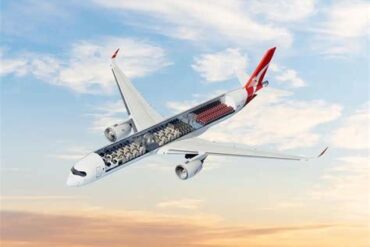
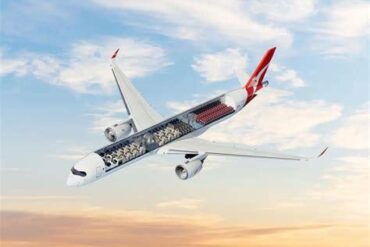
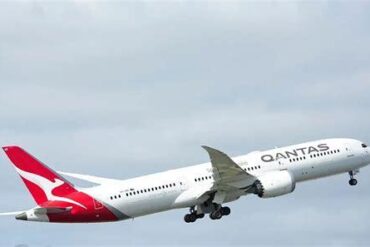
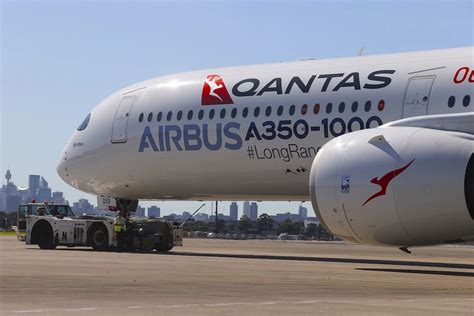
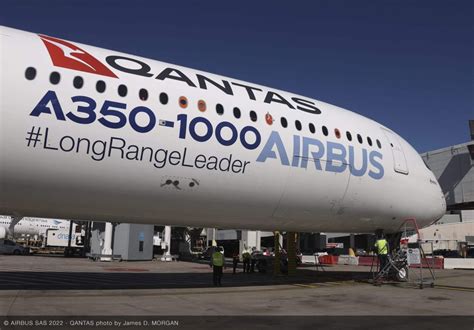
The A350-1000ULR is a specialized variant designed for ultra-long-haul operations. Unlike standard A350 models, the ULR can carry additional fuel necessary for flights surpassing 20 hours, while maintaining efficiency and safety margins. Qantas’ configuration of this aircraft reflects a careful balance between capacity and passenger comfort. The airline will operate with just 238 seats in a 350-seat airframe, significantly reducing density in premium cabins while still offering ample economy seating. This mirrors strategies observed in Singapore Airlines’ ULR services, where a deliberate sacrifice of capacity facilitates superior passenger experience.
Innovative Cabin Concepts Enhance Passenger Experience
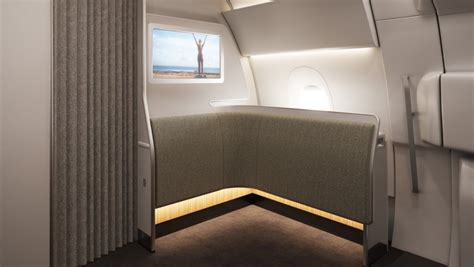
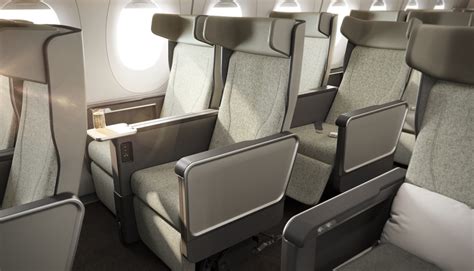
To justify higher fares, Qantas is introducing next-generation suite-style products in first and business class, alongside innovative economy and premium economy cabins designed for long-haul comfort. Each premium cabin includes self-serve refreshment stations, strategically placed to encourage social interaction and on-demand access to snacks and beverages. Economy passengers also benefit from a dedicated refreshment area and a wellness zone, where travelers can stretch, perform guided exercises, or use large display screens offering movement routines. This focus on wellness addresses a growing trend in aviation, where passengers increasingly prioritize comfort and health during flights exceeding 20 hours.
The cabin layout and amenities are not only about comfort; they play a critical role in revenue generation. By offering a more spacious and enjoyable flying environment, Qantas creates a tangible value proposition for passengers willing to pay a premium for nonstop service. The combination of fewer seats, enhanced comfort, and reduced travel time allows the airline to maintain profitability despite the operational challenges of ultra-long-haul flights.
Market Positioning and Pricing Strategy
Qantas’ revenue strategy for Project Sunrise leverages the scarcity of nonstop alternatives on these routes. For Sydney to London, passengers currently face one-stop itineraries ranging from 23 to 26 hours, depending on the carrier and layover duration. By eliminating layovers, Qantas reduces total travel time significantly, offering direct flights as a unique selling point. This advantage allows Qantas to justify 20-30% higher ticket prices, particularly in business and premium economy cabins where passengers are most sensitive to travel time savings.
An analysis of competing airlines reveals that the advantage is clear. Singapore Airlines, Emirates, British Airways, Etihad, and Qatar Airways all operate one-stop services that exceed 23 hours of total travel time. For frequent business travelers or premium leisure travelers, the additional cost for a nonstop flight is often offset by the time saved and reduced fatigue, making Qantas’ premium pricing strategy both viable and compelling.
Operational Efficiency and Cost Management
While the pricing strategy plays a critical role, operational efficiency is equally essential for profitability. The A350-1000ULR is among the most fuel-efficient widebody jets, providing lower fuel burn per seat than older aircraft models. This efficiency is complemented by the elimination of stopovers, which reduces airport fees, ground handling costs, and additional fuel consumption associated with takeoffs and landings.
By combining state-of-the-art aircraft technology with innovative cabin designs and strategic route planning, Qantas is positioning Project Sunrise not just as a premium product but as a financially sustainable operation. Reduced operational costs, paired with higher fares, create a framework in which the airline can maintain profitability while pioneering ultra-long-haul nonstop flights.
Strategic Insights from Competitors
Qantas has clearly drawn lessons from Singapore Airlines, which has pioneered ULR operations in the region. Singapore’s ULR flights prioritize premium travel and reduced capacity, sacrificing seat numbers to enhance comfort and overall passenger experience. Qantas applies a similar philosophy, retaining more economy seating but introducing wellness zones, refreshment stations, and cabin reconfigurations that elevate the flying experience for all passengers. By combining elements from proven models with new innovations, Qantas aims to create a distinctive ultra-long-haul product capable of attracting both leisure and business travelers willing to pay a premium.
The focus on premium cabins is particularly strategic given the competitive landscape. Routes to London and New York attract a high proportion of business travelers who are less price-sensitive and more focused on efficiency, reliability, and comfort. By emphasizing superior onboard products and nonstop service, Qantas can secure a larger share of high-yield passengers, enhancing overall revenue per flight.
Technological and Regulatory Considerations
Operating flights exceeding 20 hours is not merely a question of aircraft capability; it also involves compliance with aviation safety regulations. The A350-1000ULR incorporates additional fuel capacity, advanced avionics, and long-haul safety protocols to meet regulatory requirements for ultra-long-range operations. These modifications ensure that flights remain within weight and balance limits, critical for safe operation over vast oceanic distances.
Furthermore, the aircraft’s engineering allows for enhanced operational reliability, reducing the risk of delays or diversions, which could significantly impact the profitability of such long routes. Qantas’ investment in the ULR variant demonstrates a deliberate and calculated approach to combining technological capability with market demand.
Projected Profitability and Revenue Impact
Qantas projects substantial revenue potential from Project Sunrise. With 12 A350-1000ULR aircraft on order, the airline expects the new services to generate over AUD 400 million (USD 289 million) in pre-tax profit in the first full year of operation. This projection reflects both the high-yield nature of nonstop ultra-long-haul routes and the strategic pricing enabled by the aircraft configuration and cabin innovations.
The deployment of ULR aircraft on key international corridors also enhances Qantas’ network connectivity. Passengers traveling from regional Australian cities via Qantas’ domestic and subsidiary networks can access direct services to London and New York without requiring additional stopovers, effectively integrating Project Sunrise into a broader growth strategy. This network synergy has the potential to boost revenue across the carrier’s entire portfolio, reinforcing the business case for premium nonstop services.
Timing and Rollout of Project Sunrise
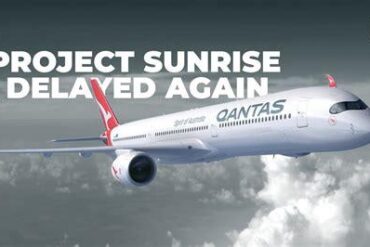
Qantas aims to commence Project Sunrise operations early in 2027, with the first two A350-1000ULR aircraft nearing completion at Airbus’ Toulouse facility. These initial aircraft will serve as a testbed for the airline’s new cabin concepts, pricing strategies, and operational protocols. Subsequent aircraft deliveries will allow Qantas to expand the service network, gradually incorporating additional nonstop routes and refining passenger experience based on early feedback.
The airline’s careful rollout strategy highlights a balance between market demand, operational capability, and financial risk management. By phasing the introduction of ULR aircraft and monitoring passenger response, Qantas can adjust pricing, cabin configuration, and ancillary offerings to maximize profitability while maintaining competitive advantage.
Competitive Advantages Beyond Nonstop Service
While the direct flight offering is the cornerstone of Qantas’ Project Sunrise value proposition, several other factors contribute to the airline’s ability to charge a premium. These include:
- Enhanced passenger wellness and onboard comfort, reducing the fatigue typically associated with ultra-long-haul travel.
- Advanced cabin products, including first-class suites and business class recliners designed for extended rest.
- Efficient fuel consumption and operational cost management, made possible by the A350-1000ULR’s design.
- Safety and reliability, achieved through regulatory-compliant design modifications and redundant systems for long-duration flights.
Collectively, these advantages ensure that passengers are not only paying for speed and convenience but also for a high-quality, differentiated travel experience, which strengthens Qantas’ market positioning in the ultra-long-haul segment.
The Future of Ultra-Long-Haul Travel
Project Sunrise underscores a broader trend in the aviation industry: the shift toward ultra-long-haul nonstop services that prioritize passenger experience, operational efficiency, and revenue maximization. Airlines are increasingly willing to invest in specialized aircraft and cabin innovations to attract premium passengers who value time, comfort, and reliability.
Qantas’ approach, combining a fuel-efficient ULR aircraft with reduced capacity, wellness zones, and innovative refreshment stations, exemplifies how carriers can transform traditionally grueling flights into marketable, profitable experiences. As global demand for nonstop international travel grows, airlines like Qantas will continue to explore ways to differentiate themselves while maintaining operational and financial sustainability.
The ultimate success of Project Sunrise will hinge on passenger adoption, competitive response, and the airline’s ability to sustain premium pricing while delivering consistent onboard experience. If successful, Qantas could set a new benchmark for ultra-long-haul travel, demonstrating that profitability and passenger satisfaction can coexist even on the world’s longest nonstop flights.
Project Sunrise is more than a technological and operational achievement—it represents a strategic leap in international aviation, combining speed, comfort, and exclusivity to justify higher fares. By addressing the challenges of ultra-long-haul travel while creating a differentiated, premium experience, Qantas is positioning itself at the forefront of global long-range aviation. The coming years will reveal whether this bold strategy can not only transform passenger expectations but also set a sustainable profit model for nonstop ultra-long-haul operations.