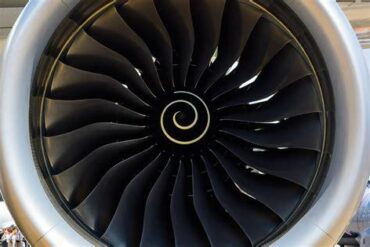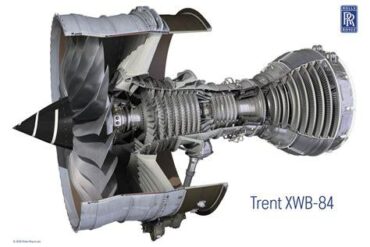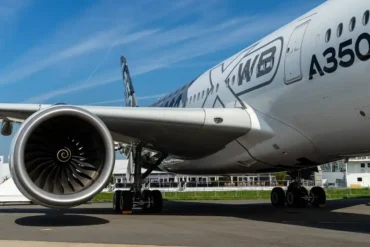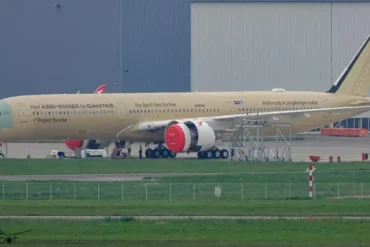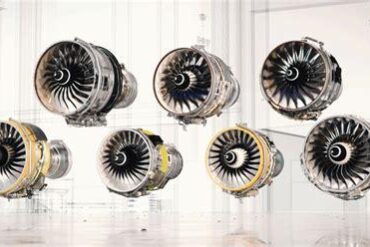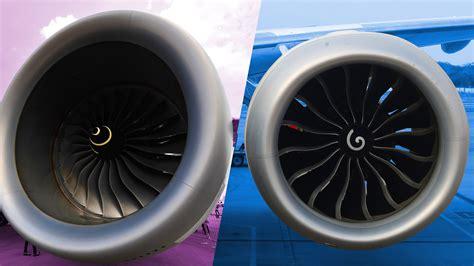
Project Sunrise is far more than another airline route launch. It represents one of the boldest commercial aviation projects ever attempted, pushing the practical limits of nonstop passenger flying. When Qantas committed itself to operating regular flights between Sydney and both London Heathrow and New York JFK, it was not simply purchasing a new aircraft. The airline was making a decades-long investment in reliability, operational certainty, passenger comfort, and financial sustainability. Although Boeing’s 777X promised cutting-edge technology and the revolutionary General Electric GE9X engine, Qantas instead selected the Airbus A350-1000ULR powered by the Rolls-Royce Trent XWB, an engine that is technically older but extensively proven in airline service.
The decision surprised many aviation observers because, on paper, the GE9X represents the most technologically advanced commercial aircraft engine ever developed. However, Project Sunrise demanded more than theoretical performance improvements. It required a combination of mature engineering, dependable dispatch reliability, predictable maintenance costs, and guaranteed delivery schedules. For flights lasting more than twenty hours across some of the world’s longest city pairs, operational confidence ultimately outweighed technological ambition.
Qantas’ selection demonstrates an important truth within commercial aviation: airlines rarely purchase the aircraft or engine with the highest headline specifications. Instead, they invest in the solution that minimizes operational risk while maximizing long-term profitability. In the case of Project Sunrise, the Rolls-Royce Trent XWB represented exactly that balance.
Project Sunrise Pushes Commercial Aviation Into A New Era
Project Sunrise aims to establish nonstop flights connecting Sydney with London Heathrow and New York JFK, creating the world’s longest scheduled passenger services. The Sydney-London sector alone stretches approximately 9,188 nautical miles (17,016 kilometers) and will require flight durations exceeding twenty hours under normal operating conditions.
Such missions introduce challenges unlike conventional long-haul flying. Aircraft must depart carrying enormous fuel loads while simultaneously transporting passengers, cargo, baggage, catering supplies, and multiple flight crews. Every kilogram becomes critical because additional fuel also increases takeoff weight, creating an intricate balance between payload and range.
While many questioned whether travelers would willingly remain onboard for more than twenty hours, history suggests otherwise. Similar doubts surrounded earlier ultra-long-haul routes such as Singapore-New York and Perth-London. Those services have since proven commercially successful, with passengers consistently valuing nonstop convenience over longer itineraries involving airport transfers, security checks, and layovers.
For Qantas, Project Sunrise is designed around premium convenience rather than simply distance. Eliminating intermediate stops significantly reduces total travel time while offering passengers a seamless journey between Australia and two of its most important international markets.
Why Airbus Won The Project Sunrise Competition
Before officially selecting the Airbus A350-1000ULR, Qantas conducted one of the aviation industry’s most comprehensive aircraft evaluations. Airbus proposed a specialized ultra-long-range version of its flagship A350-1000, while Boeing presented concepts centered around both the 777-8 and, later, the larger 777-9.
Although the Boeing 777X family promised exceptional performance, the Airbus solution offered a more immediate and practical pathway toward Project Sunrise. The A350 platform had already accumulated years of airline service, allowing Airbus to build upon an established design instead of introducing an entirely new aircraft architecture.
Technically, the A350-900ULR already demonstrated remarkable endurance through Singapore Airlines’ record-breaking nonstop operations. However, Qantas required significantly greater payload capability. Rather than sacrificing cargo space to increase fuel capacity, the airline wanted an aircraft capable of carrying more passengers, premium cabins, luggage, and freight while still achieving extraordinary range.
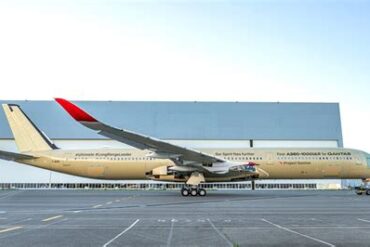
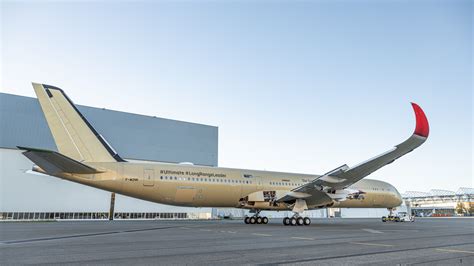
Airbus answered with the A350-1000ULR, combining the larger A350-1000 fuselage with additional engineering refinements specifically developed for Project Sunrise.
Rolls-Royce Trent XWB Offered Proven Reliability Instead Of Unproven Potential
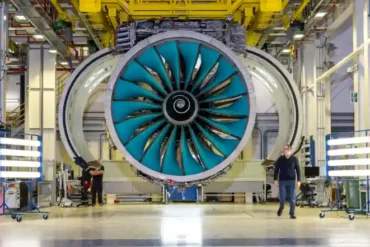
At first glance, choosing the Trent XWB over the GE9X appears counterintuitive. The GE9X incorporates numerous next-generation technologies, including ceramic matrix composite components, advanced turbine cooling systems, higher operating temperatures, and one of the largest composite fan assemblies ever installed on a commercial engine.
These innovations promise extraordinary thermal efficiency and lower fuel consumption. In engineering terms, the GE9X arguably represents a half-generation leap beyond today’s Trent XWB.
However, commercial aviation rarely rewards theoretical superiority alone.
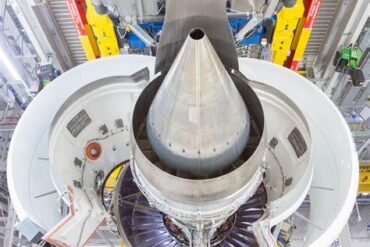
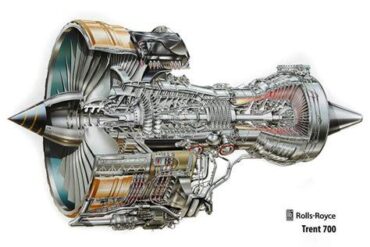
The Rolls-Royce Trent XWB had already established itself as one of the industry’s most dependable widebody engines. Since entering airline service, it has accumulated millions of flight hours while earning an excellent reputation for reliability, fuel efficiency, and operational consistency.
For an airline preparing to operate flights lasting more than twenty hours, proven dispatch reliability carries enormous financial value. Even a minor technical issue that delays departure can disrupt crew scheduling, aircraft utilization, passenger connections, maintenance planning, and airport slot allocations.
Every additional layer of uncertainty becomes magnified when operating some of the world’s longest commercial flights.
Why New Aircraft Programs Always Carry Hidden Risks
Every new commercial aircraft experiences an introductory period during which manufacturers identify unexpected operational issues. These so-called teething problems are normal and have affected nearly every modern airliner, regardless of manufacturer.
The Boeing 787 encountered battery challenges shortly after entering service. Early Airbus A380 operations required numerous modifications. Even mature aircraft families underwent software updates and component redesigns during their initial years.
The 777X, despite its enormous promise, remains susceptible to this industry reality.
Being among the earliest operators would have required Qantas to manage potential software updates, engineering improvements, spare parts shortages, maintenance learning curves, and certification-related modifications while simultaneously launching the world’s most demanding airline routes.
For Project Sunrise, introducing unnecessary technical uncertainty would have increased operational complexity at precisely the wrong moment.
Boeing’s Certification Delays Changed The Competitive Landscape
Timing ultimately became one of Boeing’s greatest disadvantages.
When Qantas publicly selected the Airbus A350 in 2019, Boeing still expected the 777-9 to enter commercial service around 2021, with the 777-8 following shortly afterward. Those schedules gradually slipped as certification challenges extended development far beyond initial expectations.
As delays accumulated, Project Sunrise’s original launch timeline became increasingly incompatible with Boeing’s production roadmap.
Even today, Boeing intends to prioritize deliveries of the larger 777-9 before shifting significant attention toward the smaller 777-8. Development of the passenger 777-8 progressed far more slowly due to comparatively limited market demand, further increasing uncertainty for potential operators.
Qantas simply could not build a flagship international strategy around an aircraft whose certification and delivery schedule remained fluid.
The GE9X May Be More Advanced But That Does Not Guarantee Lower Operating Costs
One common misconception is that a more advanced engine automatically produces a more economical aircraft. In reality, engine efficiency represents only one part of the equation.
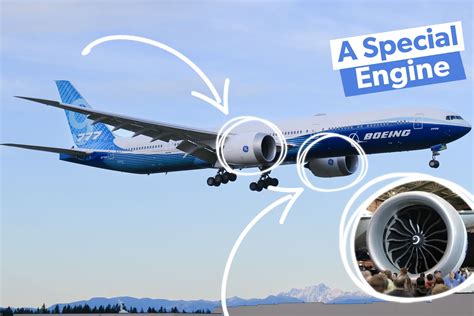
The Boeing 777X remains substantially larger and heavier than the Airbus A350-1000. Although the GE9X extracts exceptional efficiency from each kilogram of fuel, the aircraft itself still carries greater structural weight and features a significantly larger wing optimized for very high-capacity operations.
The larger 777-9 offsets these characteristics by transporting considerably more passengers, producing highly competitive per-seat economics.
However, Project Sunrise does not prioritize maximum seating capacity. Instead, it prioritizes extraordinary range while maintaining generous premium accommodations and passenger wellness.
Under these operating conditions, the lighter Airbus A350 platform becomes inherently more suitable despite relying on an older engine generation.
The A350-1000ULR Was Engineered Specifically For Qantas
Unlike the A350-900ULR, which primarily achieves additional range through fuel optimization and operational adjustments, the A350-1000ULR introduces substantial engineering improvements specifically designed for Project Sunrise.
One of its most significant innovations is an integrated 20,000-liter Rear Centre Tank, derived from technology developed for the Airbus A321XLR. This additional fuel capacity substantially extends operational range without requiring removable auxiliary tanks or sacrificing structural integrity.
The aircraft also receives a higher 322-ton Maximum Takeoff Weight, enabling greater payload capability while maintaining the endurance necessary for nonstop flights exceeding twenty hours.
Importantly, Qantas secured exclusivity for the A350-1000ULR configuration, ensuring that no competing airline will immediately duplicate its exact operational model.
Passenger Comfort Became As Important As Aircraft Performance
Ultra-long-haul flying introduces physiological challenges unlike traditional long-haul operations. Cabin humidity, fatigue, movement, meal timing, hydration, lighting, and personal space all become increasingly important as flights extend beyond twenty hours.
Recognizing this reality, Qantas intentionally configured the aircraft with only 238 seats, making it the world’s lowest-density A350-1000 passenger layout.
Passengers will enjoy six First Suites, fifty-two Business Class seats, forty Premium Economy seats, and one hundred forty Economy seats featuring additional legroom compared with many conventional long-haul aircraft.
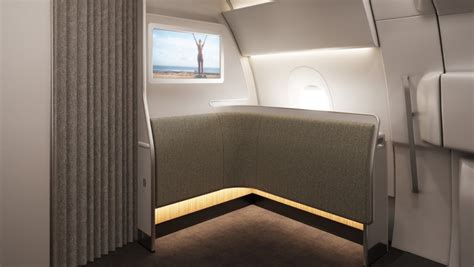
Perhaps the most distinctive addition is the dedicated onboard Wellness Zone, allowing passengers to stretch, move, and improve circulation throughout these exceptionally long journeys. Multiple pilot crews will also utilize enhanced crew rest facilities specifically designed for Project Sunrise operations.
Rather than maximizing ticket inventory, Qantas optimized cabin space to improve the overall passenger experience across flights lasting nearly an entire day.
Why The Rolls-Royce Decision Reflects Smart Airline Strategy
From an engineering perspective, the GE9X undoubtedly represents the future of large commercial turbofan technology. Its advanced materials, improved thermodynamic efficiency, and innovative design will likely establish new performance benchmarks as the engine matures.
Yet airline fleet planning extends far beyond engineering laboratories.
Fleet commonality, maintenance predictability, spare engine availability, established technician expertise, existing support infrastructure, dispatch reliability, production stability, certification certainty, and long-term operational confidence all influence billion-dollar purchasing decisions.
The Rolls-Royce Trent XWB excelled across each of these categories.
For Project Sunrise, Qantas required an aircraft capable of operating consistently from its very first commercial flight. Choosing a mature engine with years of successful airline experience significantly reduced operational uncertainty while allowing the carrier to focus on delivering a completely new travel experience rather than solving unexpected technical issues.
Conclusion
Qantas’ decision to select the Airbus A350-1000ULR powered by the Rolls-Royce Trent XWB was not a rejection of technological progress. Instead, it reflected a careful assessment of operational realities, financial risk, engineering maturity, and long-term fleet strategy.
Although the General Electric GE9X promises remarkable efficiency and will almost certainly become one of aviation’s defining engines over the coming decades, it remained attached to an aircraft program facing certification delays and early-service uncertainty. For the world’s longest commercial flights, reliability carried greater value than theoretical performance gains.
Project Sunrise demands extraordinary endurance from both aircraft and airline. By pairing the highly capable Airbus A350-1000ULR with one of commercial aviation’s most dependable engines, Qantas positioned itself to launch an unprecedented network of nonstop routes with confidence. In aviation, success is often determined not by selecting the newest technology, but by choosing the solution that consistently delivers when every flight pushes the boundaries of what is possible.