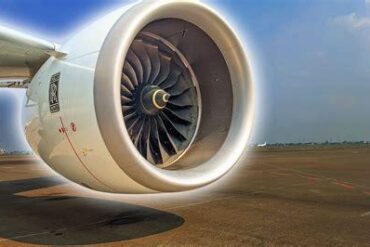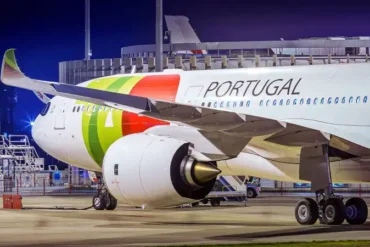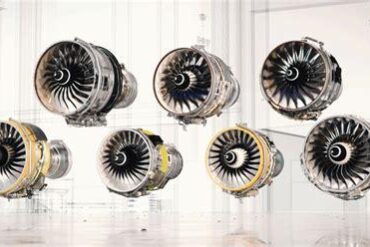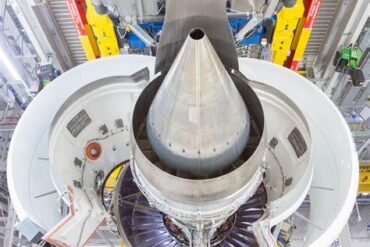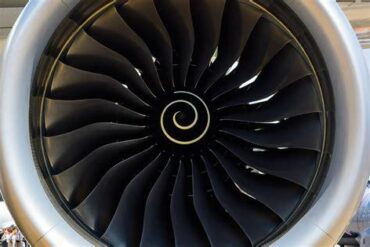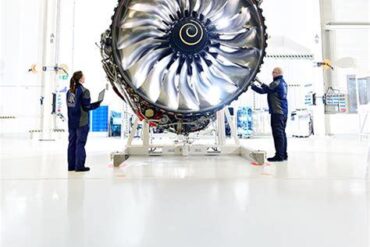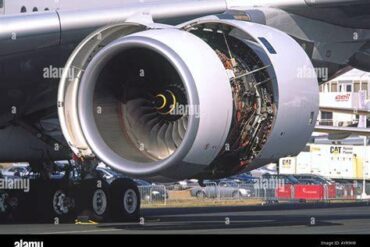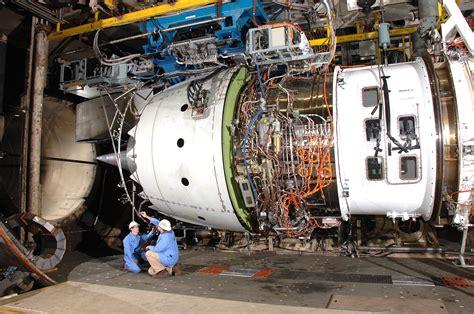
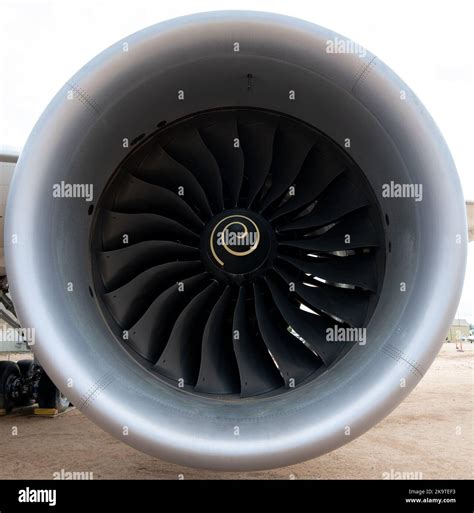
The Rolls-Royce Trent 1000 stands as a monumental achievement in aerospace engineering, a high-bypass turbofan engine meticulously designed and manufactured by the renowned British company Rolls-Royce. It was conceived primarily as one of two powerplants for the revolutionary Boeing 787 Dreamliner, placing it in direct competition with General Electric’s GEnx engine. The Trent 1000 embodies the culmination of decades of Rolls-Royce’s expertise in gas turbine technology, inheriting the signature three-spool architecture characteristic of the Trent engine family. This design philosophy aims to optimize efficiency and performance across various flight regimes. With a thrust range spanning from 62,264 to 81,028 pounds-force (lbf), or 276.96 to 360.43 kilonewtons (kN), and an impressive bypass ratio exceeding 10:1, the Trent 1000 is engineered to deliver the immense power required by the Dreamliner while striving for fuel efficiency and reduced environmental impact. Its prominent 2.85-meter (9 feet 4 inches) diameter fan is a visual testament to its power and advanced aerodynamic design.
The engine’s journey began with its first successful test run on February 14, 2006. This milestone was followed by its maiden flight on June 18, 2007, paving the way for joint certification by the European Union Aviation Safety Agency (EASA) and the Federal Aviation Administration (FAA) on August 7, 2007. The Trent 1000 officially entered service on October 26, 2011, powering the inaugural commercial flight of the Boeing 787. However, its operational history has not been without significant challenges. Beginning in early 2016, issues related to corrosion-induced fatigue cracking in the intermediate pressure (IP) turbine blades emerged, leading to the grounding of numerous aircraft and necessitating a comprehensive and costly rectification program by Rolls-Royce, with financial impacts estimated to be at least £1.3 billion. Despite these setbacks, the engine program has seen continuous development, including the introduction of the updated Trent 1000 TEN variant, which incorporates technologies from the later Trent XWB and the Advance3 demonstrator program, aiming for up to a 3% improvement in fuel burn efficiency.
Genesis and Early Development of the Trent 1000
The genesis of the Trent 1000 is intrinsically linked to Boeing’s ambitious plans for a new generation of highly efficient, long-range aircraft, initially dubbed the Boeing 7E7, which would later become the 787 Dreamliner. In 2003, Rolls-Royce proactively offered a scaled derivative of its successful Trent 900 engine (developed for the Airbus A380) as a potential powerplant for this innovative aircraft. This proposal suggested the incorporation of advanced technologies from the ANTLE (Affordable Near-Term Low Emissions) demonstrator program, signaling Rolls-Royce’s commitment to pushing the boundaries of engine performance and environmental responsibility. Boeing, after initially considering a sole-source engine supplier, ultimately decided to offer customers a choice, a move widely welcomed by airlines. On April 6, 2004, Boeing officially announced its selection of two engine partners for the 787 program: Rolls-Royce and its long-standing competitor, General Electric. This decision set the stage for a new chapter in the rivalry between the two aerospace giants.
The commercial appeal of the Trent 1000 quickly became evident. In June 2004, Air New Zealand became a crucial early adopter, selecting the Trent 1000 to power its initial firm orders for two 787s. This was followed by a landmark deal on October 13, 2004, when All Nippon Airways (ANA), a major Japanese carrier, selected Rolls-Royce to supply engines for its substantial order of 30 787-3s and 20 787-8s. This agreement, valued at approximately $1 billion (£560 million), provided a significant boost to the Trent 1000 program and solidified its position as a credible option for the Dreamliner. The first physical manifestation of years of design and engineering work occurred on February 14, 2006, when the Trent 1000 engine was run for the first time on a test bed. This successful first run was a critical step towards validating the engine’s design and performance parameters. Subsequently, on June 18, 2007, the Trent 1000 took to the skies for its inaugural flight, mounted on Rolls-Royce’s dedicated flying testbed, a modified Boeing 747-200, operating from TSTC Waco Airport in Texas. This flight test program was essential for gathering real-world operational data and fine-tuning the engine’s performance. The engine achieved a significant regulatory milestone on August 7, 2007 (symbolically 7/8/7 in European date format), receiving joint certification from both the FAA and EASA, clearing its path for commercial operation. Further commercial endorsements followed, including a notable order on July 7, 2007, from aircraft lessor International Lease Finance Corporation (ILFC), which placed an order worth $1.3 billion at list prices for Trent 1000s to power 40 of its 787s on order. The Trent 1000 held the distinction of being the launch engine for both initial 787 variants: the 787-8 with ANA and the 787-9 with Air New Zealand. On September 27, 2007, British Airways also announced its selection of the Trent 1000 to power its fleet of 24 Boeing 787s. However, the development phase was not without its hitches; on August 2, 2010, a Trent 1000 engine suffered an uncontained failure of its intermediate turbine during a test stand run, reportedly due to a fire in the engine oil system, highlighting the rigorous testing and occasional setbacks inherent in advanced engine development.
The Trent 1000 TEN: Pushing for Enhanced Performance
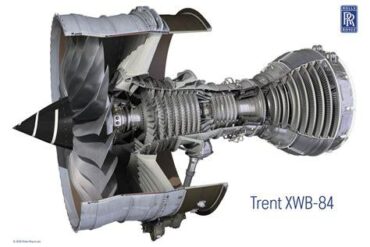
In a continuous effort to refine and enhance its product line, Rolls-Royce embarked on the development of an improved iteration of the Trent 1000, designated the Trent 1000 TEN (Thrust, Efficiency, and New technology). The primary objective behind the TEN variant was to achieve a significant improvement in fuel burn efficiency, targeting at least a 2% reduction compared to the then-current Trent 1000 Package C standard. Rolls-Royce ambitiously claimed that the TEN could offer up to a 3% lower fuel burn than its direct competitor, the GE GEnx, a compelling proposition for airlines constantly seeking to mitigate operational costs. By May 2015, Rolls-Royce reported that the Trent 1000, bolstered by the promise of the TEN, was making inroads into the GEnx’s market dominance on the Boeing 787, capturing 42% of newly declared engine orders at that time. The Trent 1000 TEN incorporates several key technological advancements derived from other successful Rolls-Royce engine programs. It features a scaled version of the highly efficient eight-stage intermediate pressure compressor from the Airbus A350’s Trent XWB-84 engine, renowned for its performance. Furthermore, it integrates core technology from the Advance3 engine demonstrator program, which focuses on next-generation engine architecture and materials. A critical design change involved improving the intermediate pressure compressor, where the rear stages were engineered to spin at higher speeds, contributing to enhanced efficiency. The new compressor design also saw the introduction of three blisk (bladed disk) stages, a technology that combines the rotor disk and blades into a single component, reducing weight and improving aerodynamic performance. Approximately 75% of the parts in the Trent 1000 TEN were either new or significantly changed from the baseline Trent 1000, underscoring the extent of the redesign.
The development timeline for the Trent 1000 TEN saw its first engine run in mid-2014. Rolls-Royce initially aimed to certify the TEN variant before the end of 2015, with an anticipated entry into service in late 2016. However, the program encountered delays due to design issues, including challenges with a weight-saving feature known as ‘banded stators,’ which required revision. These issues postponed the FAA Part 33 engine certification. Despite these hurdles, the Trent 1000 TEN achieved EASA certification in July 2016. Its first flight on a Boeing 787 occurred on December 7, 2016, a crucial step towards validating its in-flight performance and integration with the airframe. The Trent 1000 TEN was officially introduced into commercial service on November 23, 2017, with European LCC Norwegian Air, Singaporean carrier Scoot, and Air New Zealand among the first airlines to operate 787s powered by this upgraded engine. Despite its advancements, the TEN variant faced a regulatory challenge concerning smoke emissions. While it met EASA smoke-emissions limits, it did not meet the FAA’s requirements at all thrust points. Consequently, in August 2017, Rolls-Royce requested a temporary exemption from the FAA through 2019 to allow time to develop and implement a modification to address this. As of early 2018, in the ongoing competition for the 787 engine market, out of 1277 decided orders, General Electric’s GEnx had been selected for 681 aircraft (53.3%), while Rolls-Royce’s Trent 1000 (including the TEN) accounted for 420 aircraft (32.9%), with 176 orders (13.8%) still undecided.
Architectural Brilliance: The Design Philosophy of the Trent 1000
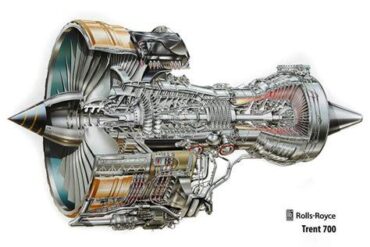
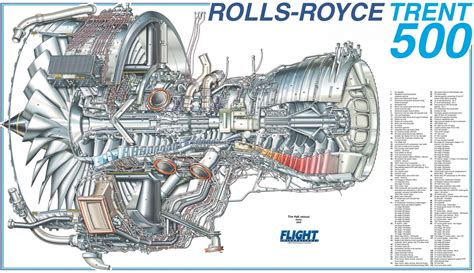
The Rolls-Royce Trent 1000 is a marvel of complex engineering, built upon the company’s signature three-shaft (or three-spool) high bypass turbofan architecture. This design, a hallmark of the Trent family, distinguishes it from many competitors who utilize a two-spool configuration. The three-spool layout consists of three independent, coaxial shafts that rotate at different, optimized speeds. The Low Pressure (LP) shaft supports the large, 2.85-meter (9 feet 4 inches) diameter swept-bladed fan at the front of the engine and is driven by a six-stage axial LP turbine located at the rear. The Intermediate Pressure (IP) spool comprises an eight-stage axial IP compressor, which is driven by a single-stage IP turbine. Finally, the High Pressure (HP) spool features a six-stage HP compressor, driven by a single-stage HP turbine. A notable characteristic of the Trent design is that the HP spool rotates in the opposite direction to the IP and LP spools, a feature intended to improve aerodynamic efficiency by reducing swirl in the airflow between compressor and turbine stages. The entire engine operation is managed by a sophisticated Full Authority Digital Engine Control (FADEC) system, referred to as an Electronic Engine Controller (EEC) by Rolls-Royce, which optimizes performance, efficiency, and engine health.
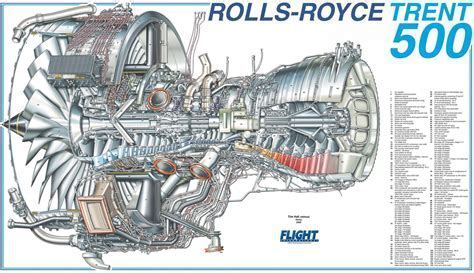
A key aspect of the Boeing 787 program was the unprecedented decision by Boeing to offer a standard interface for both engine options, the Trent 1000 and the GE GEnx. This means that, theoretically, any 787 airframe can be fitted with either engine type at any time, provided the pylon (the structure that attaches the engine to the wing) is also modified. This concept of engine interchangeability was intended to offer airlines greater flexibility in managing their fleets, allowing them to switch engine suppliers in response to future engine developments or changing operational profiles. However, the practical cost and complexity of such a change mean it would only be economically viable if there were a very significant operating cost differential between the two engine types, a scenario that has not largely materialized. The development of the Trent 1000 was a collaborative effort, with Rolls-Royce engaging several risk and revenue sharing partners (RRSPs). These partners included Kawasaki Heavy Industries (responsible for the intermediate compressor module), Mitsubishi Heavy Industries (combustor and low-pressure turbine blades), Industria de Turbo Propulsores (ITP) of Spain (low-pressure turbine), Carlton Forge Works (fan case), Hamilton Sundstrand (gearbox), and Goodrich Corporation (engine control system). Collectively, these partners held approximately a 35 percent stake in the Trent 1000 program, sharing both the financial risks and the potential rewards. The engine leverages extensive technology derived from the Trent 8104 demonstrator program, which served as a testbed for advanced concepts. To meet Boeing’s requirement for a “more-electric” aircraft architecture, the Trent 1000 features a bleedless design. This means that, unlike traditional engines that tap compressed air (bleed air) from the engine core for aircraft systems (like air conditioning and anti-icing), the Trent 1000 minimizes this, with power take-off primarily from the intermediate-pressure (IP) spool instead of the high-pressure (HP) spool, as found in other Trent family members. The large fan features a smaller diameter hub to maximize airflow, contributing to its high bypass ratio, which is achieved by careful adjustments to the core airflow. The combination of a high overall pressure ratio and the contra-rotating IP and HP spools further enhances its thermodynamic efficiency. For maintainability, the design incorporated more legacy components where feasible to reduce parts count and minimize maintenance costs, and features a tiled combustor for durability.
Operational Journey: From Inaugural Flight to Service Challenges
The Rolls-Royce Trent 1000 achieved a significant milestone on October 26, 2011, when it powered the first commercial flight of the Boeing 787 Dreamliner. This historic flight, operated by All Nippon Airways (ANA), flew from Tokyo Narita Airport to Hong Kong International Airport, marking the official entry into service for both the aircraft and its Rolls-Royce powerplant. The initial Trent 1000 engines delivered with the first 787s were known as Package A standard. These engines had a thrust specific fuel consumption (TSFC) that was approximately 1% worse than Boeing’s original specification for the aircraft. Rolls-Royce quickly worked to address this, and the subsequent Package B engines, certified in December 2011, successfully met the initial Boeing specification. Further improvements led to the Package C standard, which was EASA certified in September 2013. Package C engines offered a 1% better fuel burn than the original specification, demonstrating Rolls-Royce’s commitment to continuous improvement. However, in the competitive landscape of widebody aircraft engines, performance metrics are closely scrutinized. From early in the 787’s operational life, General Electric, supplier of the competing GEnx engine, claimed a 2% fuel burn advantage over the Trent 1000, as well as 1% better performance retention over time. These claims fueled the ongoing competition for market share. By March 2014, of the firm orders for the Boeing 787, Rolls-Royce’s Trent 1000 had been selected for 321 aircraft (31% of the decided share), while GE’s GEnx had secured 564 aircraft (55%), with 146 orders (14%) still undecided. While the performance improvement packages (A, B, and C) addressed initial fuel burn and some reliability concerns, more persistent durability problems with certain components began to emerge, affecting a significant portion of the active Trent 1000 fleet, estimated to be between 400 and 500 engines by 2017. These emerging issues would soon escalate into a major challenge for Rolls-Royce. By early 2018, the market share figures showed GE with 681 selections (53%), Rolls-Royce with 420 (33%), and 176 undecided (14%), indicating a relatively stable but keenly contested market.
Navigating Turbulence: The Intermediate Pressure Turbine Blade Cracking Issue
The operational serenity of the Trent 1000 fleet was significantly disrupted in early 2016 with the discovery of corrosion-related fatigue cracking of intermediate-pressure turbine (IPT) blades at All Nippon Airways. This issue primarily affected engines that had accumulated a substantial number of flight cycles. Engines exhibiting excessive corrosion or cracking were promptly pulled from service for repair, which involved extensive shop visits. Rolls-Royce initiated the development and rollout of more corrosion-resistant IPT blades as an interim measure. The problem was not isolated; further investigations led to checks for fatigue in High-Pressure Turbine (HPT) blades and inspections of Intermediate Pressure Compressor (IPC) rotor seals. The escalating situation forced several airlines to ground their Boeing 787 Dreamliners, causing significant operational disruption and financial strain. Rolls-Royce itself acknowledged the financial impact, allocating $35 million for unexpected “technical provisions” for its in-service Trent 1000 fleet in 2017 alone.
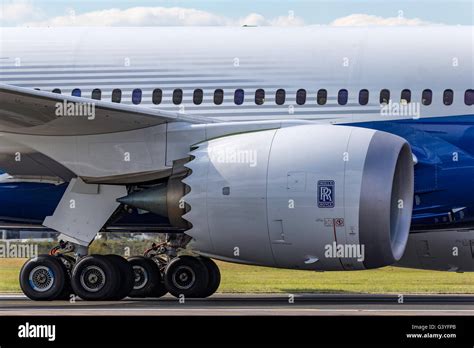
The situation intensified in April 2018 when regulatory authorities stepped in. The inspection interval for 380 Trent 1000 Package C engines was drastically reduced from every 200 flights to every 80 flights to address the ongoing durability problems. This directive, initially from EASA, was expected to be followed by the US FAA, and it had significant operational consequences, most notably the reduction of Extended-range Twin-engine Operational Performance Standards (ETOPS) certification from 330 minutes to 140 minutes for affected aircraft. This severely impacted trans-Pacific flights and other long-haul routes that relied on the longer ETOPS ratings. On April 17, 2018, the FAA confirmed this ETOPS reduction. Two days later, on April 19, EASA issued an Airworthiness Directive explicitly stating that “occurrences were reported on RR Trent 1000 ‘Pack C’ engines, where some IPC Rotor 1 and Rotor 2 blades were found cracked. This condition, if not detected and corrected, could lead to in-flight blade release, possibly resulting in reduced control of the aeroplane.” While EASA increased inspection rates, it initially maintained ETOPS under its jurisdiction, but the FAA’s stricter stance prevailed for US-registered or US-bound operations. The FAA formally limited ETOPS for Package C engines on April 26, 2018. This affected a wide range of global airlines, including Air Europa, Air New Zealand, Avianca, British Airways, Ethiopian Airlines, LATAM, LOT Polish Airlines, Norwegian Air, Royal Brunei Airlines, Scoot, Thai Airways, and Virgin Atlantic. The severity of the crisis prompted Boeing to dispatch Keith Leverkuhn, then head of the 737 MAX program, to assist Rolls-Royce in overcoming these challenges, underscoring the critical importance of resolving the engine issues. At one point, 34 aircraft were grounded, with projections that this number could rise as more of the 383 affected engines—powering about a quarter of the global 787 fleet—underwent inspection. While Boeing stated that its production ramp-up to 14 Dreamliners per month by mid-2019 would not be affected (as approximately 70% of new 787s were being delivered with GE engines at the time), seven newly assembled airliners were reportedly awaiting Trent 1000 engines. As mandated inspections by FAA and EASA were due by June 9, 2018, the number of grounded airliners was anticipated to peak around 50. After 80% of the affected engines were checked, 29% failed inspection and remained grounded. Rolls-Royce mobilized significant resources, assigning 200 personnel to address the issue and fast-tracking the development and testing of a revised IP compressor blade, aiming to have parts available for overhaul from late 2018. To cover these extensive remediation efforts, Rolls-Royce budgeted £340 million ($450 million) for 2018 and a lesser amount for 2019. In early June 2018, a redesigned blade was flight-tested on Rolls-Royce’s Boeing 747-200 testbed, as the number of grounded 787s reached 35. Easing ETOPS restrictions required convincing regulatory agencies that the probability of an engine failure leading to a diversion disruption was acceptably low. Unfortunately, a similar IP Compressor durability issue was subsequently identified on some Package B engines. Consequently, the 166 Package B engines in service were also slated for on-wing inspections following an EASA AD published in June 2018. Rolls-Royce initiated a precautionary redesign of the Package B part, as well as for the newer Trent 1000 TEN, although the younger TEN fleet had not yet shown similar IPC durability degradation. A shortfall in compressor blade stocks further complicated the situation, leading to fixes taking up to three days longer than planned, with grounded jets peaking at 43. The total financial commitment by Rolls-Royce to address these issues eventually neared £1 billion ($1.3 billion). The number of aircraft-on-ground (AOG) peaked at 44 before starting to decline, slightly less than the initially feared 50. Rolls-Royce also reported that turbine blade production capacity, a limiting factor in the repair process, had increased by 50% since the beginning of 2018. The company reassured stakeholders that these specific problems were not expected to spread to the Trent XWB (powering the Airbus A350), as it was developed with more modern design tools and featured a different design flow, nor to the Trent 7000 (for the Airbus A330neo), which would incorporate improvements learned from the Trent 1000 issues. Ultimately, Rolls-Royce took an exceptional charge of £554 million ($725 million) for 2018 related to these problems, representing about 40% of the total anticipated cash cost through to 2022.
Engineering Solutions: Mitigating the Blade Durability Crisis
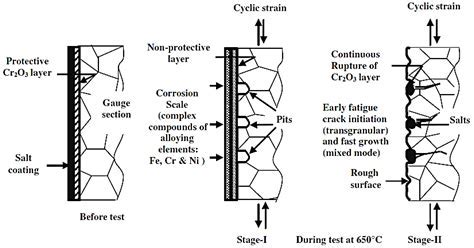
Understanding the root cause of the Intermediate Pressure (IP) turbine blade failures was paramount to developing a lasting solution. Investigations revealed that the thermal barrier coating (TBC) on these blades was eroding prematurely due to “hot corrosion.” This aggressive form of corrosion was exacerbated by high concentrations of atmospheric sulfur, often found in polluted air around major industrial cities, particularly in the Asia-Pacific region. The erosion of the TBC exposed the base blade material to the harsh engine environment, leading to low-cycle fatigue and eventual cracking. The initial fix involved developing a revised base material for the turbine blades and applying an improved, more resilient coating designed to counter this specific type of hot corrosion. By September 2018, this initial fix had been installed in over 62% of the affected Trent 1000 fleet. Laboratory testing of this newer turbine blade design showed satisfactory results, and its enhanced lifetime was expected to be proven through ongoing in-service inspections, with some engines already completing 1,000–1,500 cycles without recurrence of the issue. Rolls-Royce collaborated with UK and European universities on an extensive materials test program. These tests confirmed that the new coating effectively prevented the diffusion of corrosive agents into the main blade material, thereby avoiding the formation of microcracks that could propagate into larger failures. A predictive model was also developed to estimate exposure to corrosive agents, helping to optimize inspection schedules and sequence the retrofitting of new blades across the fleet.
However, the IP turbine blade corrosion was not the only challenge. A distinct issue emerged with the IP compressor blades. The failure mechanism in the compressor was not clearly understood when it was first discovered in March 2018, after four compressor blades on the first IP rotor and one on the second failed in a high-time engine. Subsequent vibration surveys revealed that the wake from the fan was adversely affecting the compressor blades. A critical factor was a 100 Hz frequency difference between the rotational speeds of the IP and LP spools, which inadvertently set up an eigenmode synchronized vibration in the first two IP compressor rotors. This resonant vibration caused excessive wear and tear, leading to the formation of microcracks at the blade roots. These microcracks could then grow into full-fledged cracks, ultimately failing after approximately 1,000 cycles and, in some instances, resulting in an inflight shutdown. To counteract this damaging eigenmode, Rolls-Royce engineers redesigned the affected compressor blades by strategically shifting the blade mass from the center towards the periphery. This alteration changed the blade’s natural frequency, moving it away from the resonant frequency induced by the fan wake. Testing of the redesigned compressor blade showed no damaging vibrations, and it was anticipated to receive certification approval by the end of the year, with production of the new blade commencing in advance. While the Trent XWB has a different IP rotor design (often referred to as ‘Trent XWB-style’) that does not exhibit this eigenmode susceptibility, the lessons learned prompted a redesign of the same stages for the Trent 1000 TEN and the derivative Trent 7000 engine as a precautionary measure. In March 2018, as a conservative measure, Rolls-Royce limited single-engine operation at maximum continuous power to 140 minutes, which directly led regulators to restrict ETOPS capabilities for affected aircraft. It was noted that only one engine had actually failed among over 100 that showed small cracks (representing about one-third of the suspect population of 366 engines), indicating that crack propagation was relatively slow. To further understand the crack behavior and potentially support the easing of ETOPS restrictions, Rolls-Royce conducted a ground test at its Derby facility. An instrumented Trent 1000 engine with known cracked rotors was run for 10 hours at maximum continuous power with no observed crack propagation. This engine was then mounted on Rolls-Royce’s Boeing 747 testbed aircraft in mid-September 2018 to confirm that the issue was not a high-cycle fatigue problem. These flight tests, planned to begin off the California coast and include cold weather tests in Alaska, involved running the engine at FL120 (12,000 feet) at maximum power to simulate a single-engine ETOPS diversion scenario. By December 2018, the number of grounded engines remained high, but Rolls-Royce projected significant improvement in the first half of 2019. Following EASA and FAA approval, the redesigned IP compressor blade for the Package C Trent 1000 began installation from January 2019. Despite these efforts, new challenges emerged. By November 2019, Rolls-Royce was aiming for fewer than ten aircraft-on-ground by mid-2020. However, a redesigned High-Pressure (HP) turbine blade for the Trent 1000 TEN, intended for introduction in early 2020, was found not to be as durable as expected during evaluations. This setback delayed its introduction until the first half of 2021, marking it as the last required major modification for the Trent 1000 family. The cumulative financial impact of these issues continued to grow, with Rolls-Royce expecting to take a £1.4 billion ($1.8 billion) charge in 2019, nearly double the £790 million absorbed in 2018. The total costs spread across 2017–2023 were revised upwards to £2.4 billion, from an earlier estimate of £1.6 billion made in mid-2019.
Reliability and In-Service Incidents
Prior to the widespread emergence of the blade cracking issues, the Rolls-Royce Trent 1000 had demonstrated a commendable level of reliability. Up to March 2016, the engine fleet boasted a dispatch reliability of 99.9 percent. During this period, there had been four in-flight shutdowns (IFSDs), resulting in an IFSD rate of 2 per million flight hours, a figure generally considered acceptable within the industry for mature engine programs. However, the subsequent durability problems significantly impacted its operational record. One highly publicized incident occurred on August 10, 2019, involving a Norwegian Long Haul Boeing 787-8 (registration LN-LND) operating flight DY7115 from Rome Fiumicino Airport (FCO) to Los Angeles (LAX). Shortly after takeoff, the aircraft’s left Trent 1000 engine (Package C) suffered an uncontained engine failure. The crew managed the situation effectively and performed an emergency landing back at Rome without injuries to passengers or crew. Debris from the failed engine, including parts of turbine blades, fell over urban areas near Fiumicino, causing minor damage on the ground. The aircraft itself sustained damage to its left wing, horizontal stabilizer, fuselage, and main landing gear tires from ejected engine parts. Investigations suggested that a single turbine blade broke off, potentially causing a cascade failure of other blades. This incident, along with other less publicized in-flight shutdowns and diversions necessitated by the engine issues, underscored the severity of the component durability crisis that Rolls-Royce was working to resolve.
Variants and Specifications of the Trent 1000
The Rolls-Royce Trent 1000 has been developed into several variants to cater to the different thrust requirements of the Boeing 787 Dreamliner family (787-8, 787-9, and 787-10) and to incorporate performance improvements over time. These variants have received certification from the European Union Aviation Safety Agency (EASA) on various dates:
- Initial Certifications (August 7, 2007): Trent 1000‐A, Trent 1000‐C, Trent 1000‐D, Trent 1000‐E, Trent 1000‐G, Trent 1000‐H.
- Package B Upgrades (September 10, 2013): Trent 1000‐A2, Trent 1000‐C2, Trent 1000‐D2, Trent 1000‐E2, Trent 1000‐G2, Trent 1000‐H2, Trent 1000‐J2, Trent 1000‐K2, Trent 1000‐L2.
- Further Upgrades (May 6, 2015): Trent 1000‐AE, Trent 1000‐CE, Trent 1000‐AE2, Trent 1000‐CE2.
- Trent 1000 TEN Variants (July 11, 2016): Trent 1000‐AE3, Trent 1000‐CE3, Trent 1000‐D3, Trent 1000‐G3, Trent 1000‐H3, Trent 1000‐J3, Trent 1000‐K3, Trent 1000‐L3, Trent 1000‐M3, Trent 1000‐N3, Trent 1000‐P3, Trent 1000‐Q3, Trent 1000‐R3.
These variants offer a range of thrust ratings:
| Designation | Take-off Thrust Rating | Continuous Thrust Rating |
|---|---|---|
| Trent 1000-E | 62,264 lbf (276.96 kN) | 58,866 lbf (261.85 kN) |
| Trent 1000-H | 63,897 lbf (284.23 kN) | 58,866 lbf (261.85 kN) |
| Trent 1000-A | 69,294 lbf (308.24 kN) | 64,722 lbf (287.90 kN) |
| Trent 1000-G | 72,066 lbf (320.57 kN) | 64,722 lbf (287.90 kN) |
| Trent 1000-C/D/L/P | 74,511 lbf (331.44 kN) | 69,523 lbf (309.25 kN) |
| Trent 1000-J/K/Q | 78,129 lbf (347.54 kN) | 71,818 lbf (319.46 kN) |
| Trent 1000-M/N | 79,728 lbf (354.65 kN) | 72,691 lbf (323.35 kN) |
| Trent 1000-R | 81,028 lbf (360.43 kN) | 72,691 lbf (323.35 kN) |
Technical Specifications
General Characteristics:
- Type: Three-shaft high bypass ratio turbofan engine
- Length: 4.738 m (186.5 in)
- Diameter (Fan): 285 cm (112 in)
- Dry weight: 5,936–6,120 kg (13,087–13,492 lb)
Components:
- Compressor: Single-stage Low Pressure (LP) fan, eight-stage Intermediate Pressure (IP) compressor, six-stage High Pressure (HP) compressor
- Combustors: Single annular combustor with 18 fuel spray nozzles
- Turbine: Single-stage HP turbine (nominal speed 13,391 RPM), single-stage IP turbine (nominal speed 8,937 RPM), six-stage LP turbine (nominal speed 2,683 RPM)
Performance:
- Maximum thrust (Take-off): 265.3–360.4 kN (59,600–81,000 lbf) depending on variant
- Overall pressure ratio: Approximately 50:1 (for Trent 1000 TEN, varies slightly by variant)
- Bypass ratio: >10:1
- Air mass flow: Approximately 1,090–1,210 kg/s (2,400–2,670 lb/s)
- Thrust-to-weight ratio: Approximately 6.01 (for Trent 1000‐R variant at maximum take-off thrust)
Legacy and Future: The Enduring Impact of the Trent 1000
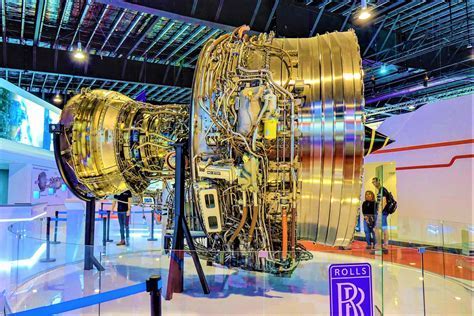
The Rolls-Royce Trent 1000 occupies a significant position within the esteemed Trent family of engines. It was developed from the earlier Trent 900 (powering the Airbus A380) and, in turn, has contributed vital technology and operational experience to subsequent Rolls-Royce powerplants, most notably the highly successful Trent XWB (exclusive engine for the Airbus A350 XWB) and the Trent 7000 (powering the Airbus A330neo), which is itself a derivative incorporating Trent 1000 TEN technology. Despite the considerable operational challenges encountered, particularly the intermediate pressure turbine and compressor blade durability issues, the Trent 1000 program has provided invaluable lessons for Rolls-Royce. These experiences have undoubtedly influenced future engine design philosophies, material science research, predictive maintenance protocols, and the company’s approach to managing in-service issues. The extensive and costly rectification programs have underscored the complexities of modern aero-engine technology and the critical importance of long-term durability in highly stressed components operating in extreme environments. The engine’s journey, marked by initial success, significant hurdles, and intensive engineering efforts to overcome them, reflects the demanding nature of the aerospace industry. The Trent 1000 continues to power a significant portion of the global Boeing 787 Dreamliner fleet, and its story is a testament to engineering resilience. For those interested in viewing this piece of advanced engineering, a Trent 1000 engine is on display at the Museum of Making in Derby, UK, the historic home of Rolls-Royce, allowing the public to appreciate its scale and complexity firsthand. Its legacy will be defined not only by its technological innovations but also by the profound learning experiences that will shape the future of aero-engine development at Rolls-Royce and across the wider industry.